The Evidence Collective elects Dr. Raven Baxter as a member
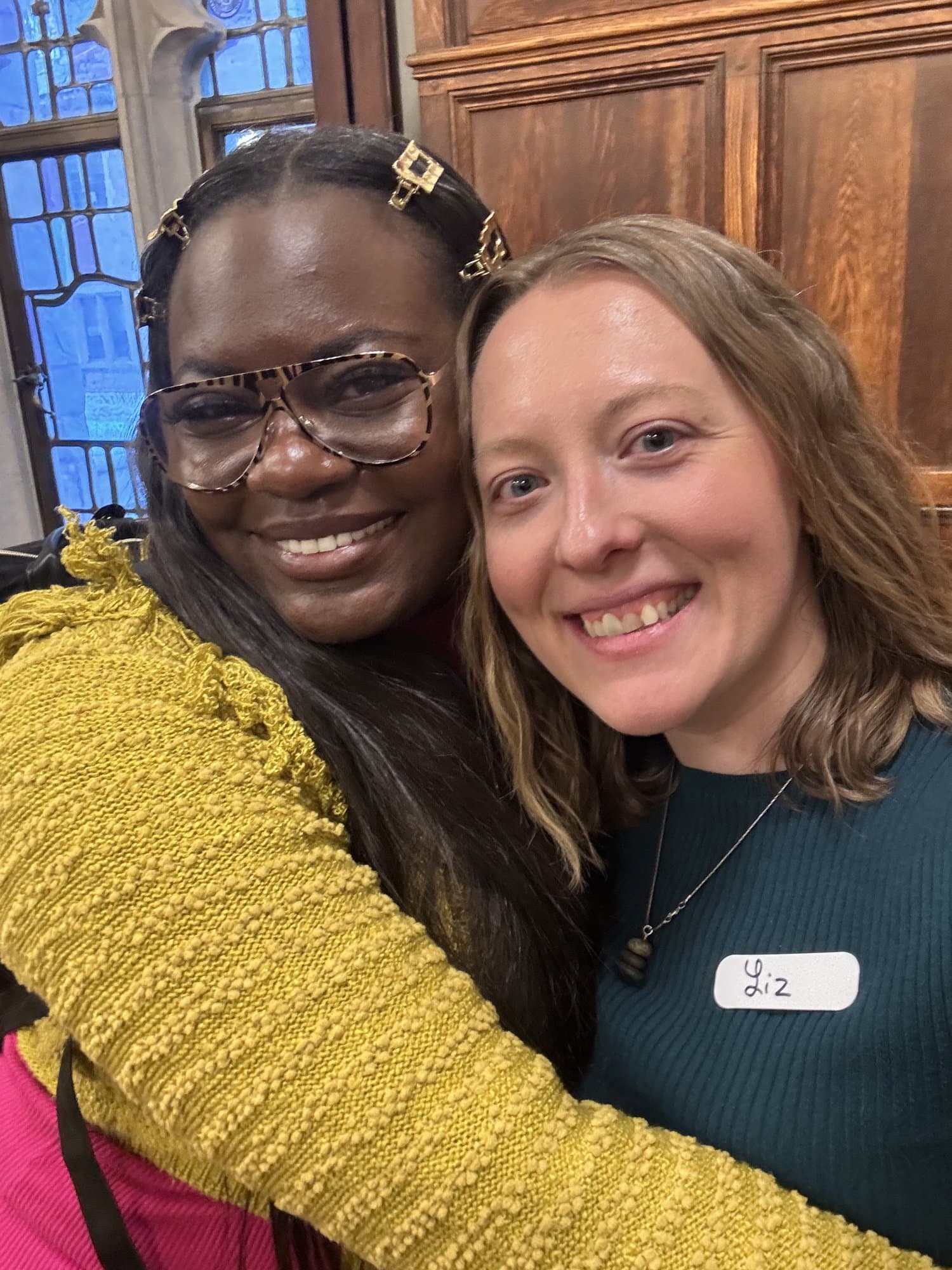
Members of The Evidence Collective, a network of scientists, clinicians and communicators, elected Dr. Raven Baxter to the group on March 4, 2026.

Launched in 2021 by the Aspen Institute's Science & Society Program, Our Future Is Science pairs high school students with graduate-student scientists on projects in their communities

Dr. Raven Baxter joined the Advisory Group of Our Future Is Science, the Aspen Institute's national youth science initiative, in October 2025. On Oct. 30, she gave the keynote at the program's 2025-26 kickoff, held on Zoom for its high school mentees and graduate-student mentors.
She centered the keynote on a story from her junior year of college. She had spent a year testing how drought, flooding, chemical exposure and temperature affect soil bacteria. For the student research symposium, she made her poster by hand from rhinestones, feathers, scrapbook paper and glitter. The research won an award.
"Whether or not my poster had rhinestones on it or not, the hypothesis was going to be the same. The data was going to be the same. The rigor was not going to be any less," Baxter told the students.
Between April 18 and 25, 2025, the National Science Foundation canceled more than 1,000 active research grants, AIP's FYI reported. They included 213 in its Division of Research on Learning, which supports research on STEM learning in K-12 schools and museums. NSF also awarded 1,000 graduate research fellowships in 2025, compared with more than 2,000 a year since 2021.
In December, an Aspen Institute report on supporting young people in STEM said "recent and rapid policy shifts" had raised "fundamental questions about our nation's social contract for science." Baxter is among the report's listed participants.
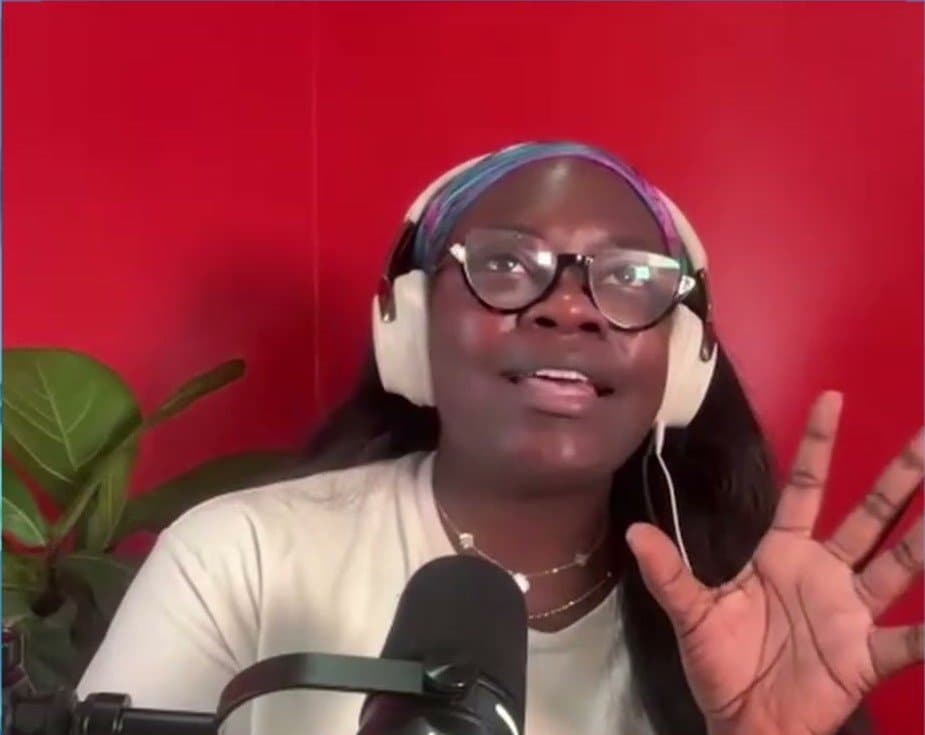
 The program introduces Baxter at its 2025-26 kickoff on Oct. 30, 2025. Image: Our Future Is Science video
Baxter told the mentees how she came to her work. She earned bachelor's and master's degrees in biological sciences, then worked in cancer research at a drug discovery firm. "I ended up leaving because I saw that there was a huge gap between science and the public," she said. "I wanted to make sure that everyone in the world could understand the groundbreaking science that's happening."
COVID-19 arrived while she was in graduate school studying science education. She wrote a song on hygiene, then one on how vaccines and antibodies work, and played both for the students. She called the approach culturally responsive science communication, the subject of her dissertation research.
The award, she said, "had nothing to do with the physical appearance of my poster. It had everything to do with the actual rigor of my work." Students from other majors had lined up to ask her about soil bacteria. "You can be taken seriously while navigating outside of the traditional stereotypical representation of science and scientists," she said. "It's not a me problem if other people don't see me as valuable because I don't fit a stereotype."
Earlier, she asked the mentees how they wanted to present themselves in science. They answered accessible, lighthearted and reliable. She told them they would meet people who do not share those values, and would have to work out what those values mean in practice.
"I want you to exercise that muscle of understanding who you are in relation to what everybody else expects you to be," she said in closing. "Be yourself. It is okay. I give you license to just be yourself."
Dr. Jylana Sheats, a member of the initiative's leadership team, had introduced Baxter as "the newest member of the Our Future is Science Advisory Group." Afterward, she called the talk "truly inspirational." It showed "the role of storytelling but then also just being yourself and knowing that that is enough," Sheats said. Time ran out before questions, which moved to the chat.
The Aspen Institute was founded in 1949 and is headquartered in Washington, DC. Biophysicist Aaron F. Mertz founded its Science & Society Program in 2019, with seed support from the Alfred P. Sloan Foundation and Johnson & Johnson. The program conceived Our Future Is Science in 2020 with the design firm Coda Societies and launched it in 2021.
Aspen's report calls it the program's flagship youth initiative. Teams pair students aged 15 to 17 with graduate-student mentors for the school year. Together they create Science Engagement Projects for their communities, and mentees and mentors each receive a $1,000 honorarium. For 2025-26, its mentorship teams were based in New York City, North Carolina and Tennessee.
The Advisory Group "offers expertise, experience, and counsel to ensure the initiative stays true to its mission," according to the initiative. Baxter serves with 3M Chief Science Advocate Jayshree Seth and CUNY Hunter College chemist Mandë Holford. Other members are Invent the Change founder Jay Flores, Omar Gowayed of NYC March for Science and FLi Sci founder Gabriel Reyes. Past members include Dietram Scheufele of the University of Wisconsin-Madison and Emmy-winning producer Adnaan Wasey.
In 2026, Baxter was one of three judges for Ideas to Impact, the initiative's national video contest for ages 14 to 24. Each entrant makes a short video that answers the question "How can science make a difference in your community?"
A molecular biologist by training, Baxter has shared science with the public since 2016 and is known online as Dr. Raven the Science Maven. Her Ph.D. research at the University at Buffalo studied science communication through hip-hop.
The initiative lists its Advisory Group on its website. Our Future Is Science posted the full kickoff recording on its YouTube channel.
Members of The Evidence Collective, a network of scientists, clinicians and communicators, elected Dr. Raven Baxter to the group on March 4, 2026.
Dr. Raven Baxter founded the Science Communication Consortium on Ethics at the Association of Science Communicators, which held its first meeting on Jan. 26, 2026.
Dr. Raven Baxter launched a Change.org petition on Nov. 4, 2025, asking universities and accreditors to require communication and public engagement training in science degrees.