On March 27, 2023, the Smithsonian's National Museum of African American History and Culture released a career conversation with Dr. Raven Baxter. It came three days after the museum opened its Afrofuturism exhibition.
Asked what Afrofuturism means to her, Baxter answered in the present tense. "I think that our culture is changing where the future is now," she said. "I'd like to think that Afrofuturism is today."
The conversation was filmed in the museum's Oprah Winfrey Theater for Through the Window and into the Mirror. The video series introduces middle and high school students to African American professionals in science, technology, engineering and math (STEM). Other guests in the series include NASA astronaut Jessica Watkins, physicist Chanda Prescod-Weinstein and science communicator Joel Bervell.
The exhibition, Afrofuturism: A History of Black Futures, opened on March 24. Late in the interview, the museum's STEM education specialist, Dr. Belinda Cheeseboro, said she had heard Baxter was "featured a little bit here and there" in the exhibit. Baxter connected the mention to her answer. "Which is maybe why I'm in the exhibit," she said.
In an April 2022 Pew Research Center survey, a 54% majority of Black adults said more Black high achievers in STEM would make young Black people a lot more likely to pursue those degrees.
Defining Afrofuturism
Baxter said she was still learning about Afrofuturism. She described it as "a coming into a new era of thought for Black people, people across the Black diaspora and in Africa as well."
She called it creativity, inspiration and "innovation in every facet of our culture, from fashion to technology, science, I mean, everything." She added, "I feel like we are in it now."
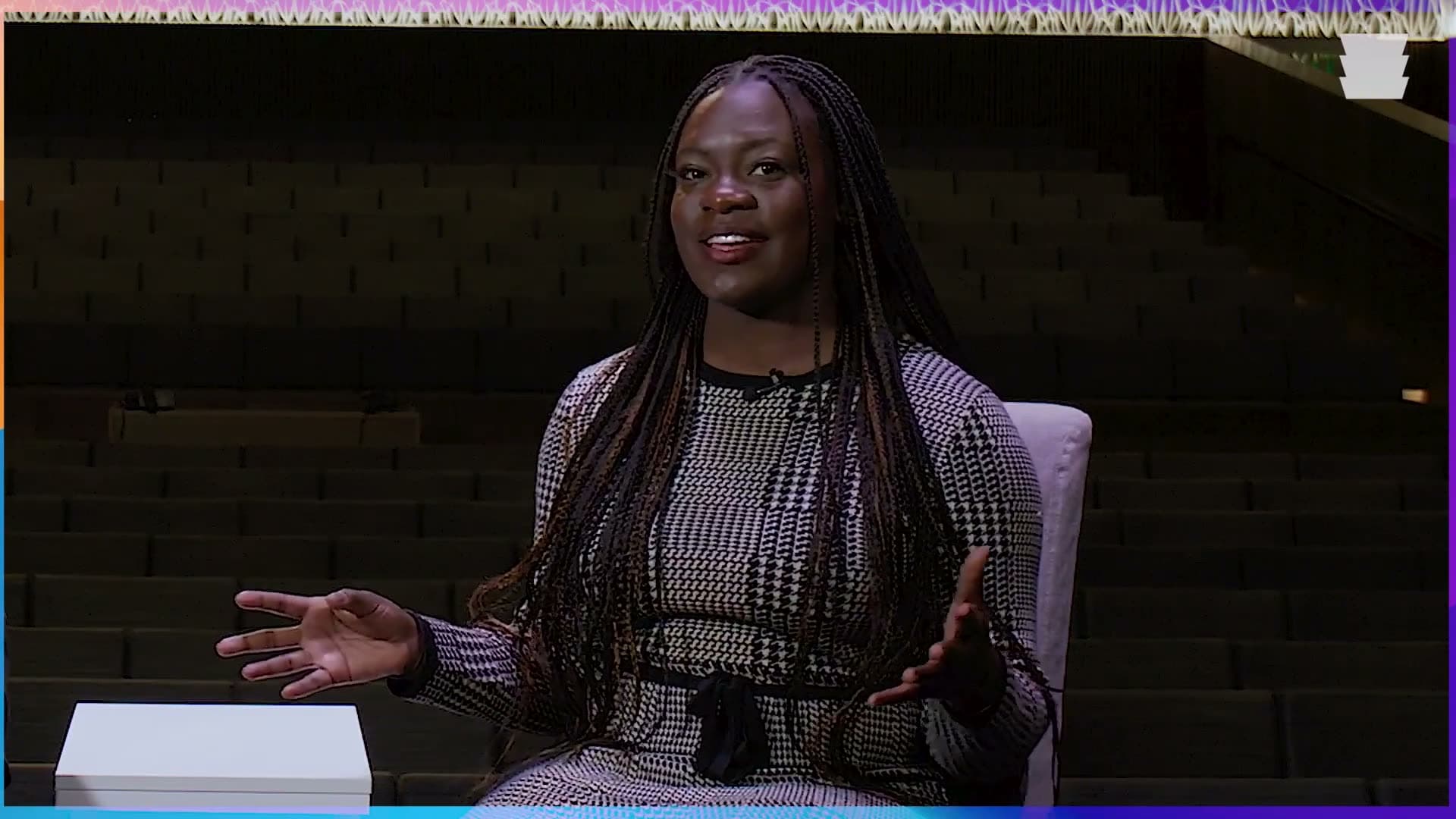
 Baxter answers Cheeseboro's question about Afrofuturism. Image: National Museum of African American History and Culture video
Black representation
Asked what Black representation stands for, Baxter pointed to her doctoral research on the subject. "What's important in the representation is that it's authentic," she said. "And so for me, that means that I show up unapologetically, no matter what I'm doing."
"I don't ever want to show up as a caricature of what a Black scientist is supposed to look like," she continued. "I'm not here to make people comfortable necessarily. I'm here to just be myself."
She said being herself makes her better at her job, because she is not working around stereotypes.
Her science communication
Baxter told students she blends training in molecular biology and science education to reach the public. "My goal is to make sure that science is fun for everyone," she said. "I like to say that I am making the biggest science party on the planet."
She described her role as storyteller, "dot connector" and "party host." Her example was a long train ride. She told the passengers that NASA's Artemis missions would put the first woman and person of color on the moon. The crew, she told them, would be announced soon. By the end of the ride, she said, the passengers were "super excited about this NASA mission."
A week after the episode's release, on April 3, 2023, NASA named the Artemis II crew. The agency said the crew included "the first woman, first person of color, and first Canadian on a lunar mission."
Baxter also told students that science communicators do not have to know everything. "I think that there's a big misconception in science communication that you have to be the expert on everything," she said. She said she relies on scientist friends, including an ornithologist, a herpetologist and an astrophysicist. She called science communication a three-way process among experts, the audience and the communicator.
Her closing advice was for students who love STEM. "If you have a passion and interest in STEM, just know that no one can take that away from you," she said.
National Museum of African American History and Culture
 Cheeseboro and Baxter in the museum's Oprah Winfrey Theater. Image: National Museum of African American History and Culture video
Congress established the museum in 2003. It opened to the public on Sept. 24, 2016, as the Smithsonian's 19th museum.
Curated by Kevin M. Strait, the Afrofuturism exhibition used more than 100 objects to cover more than a century of Afrofuturism. They came from music, film, comic books, fashion, literature and more. Its four sections were Musical Futures, Space is the Place, Speculative Worlds and Multimedia Afrofuturism. Smithsonian Magazine listed Chadwick Boseman's Black Panther costume, Nichelle Nichols' Uhura uniform, Octavia Butler's typewriter and astronaut Charles Bolden's flight suit among the objects. The exhibition ran through Aug. 18, 2024.
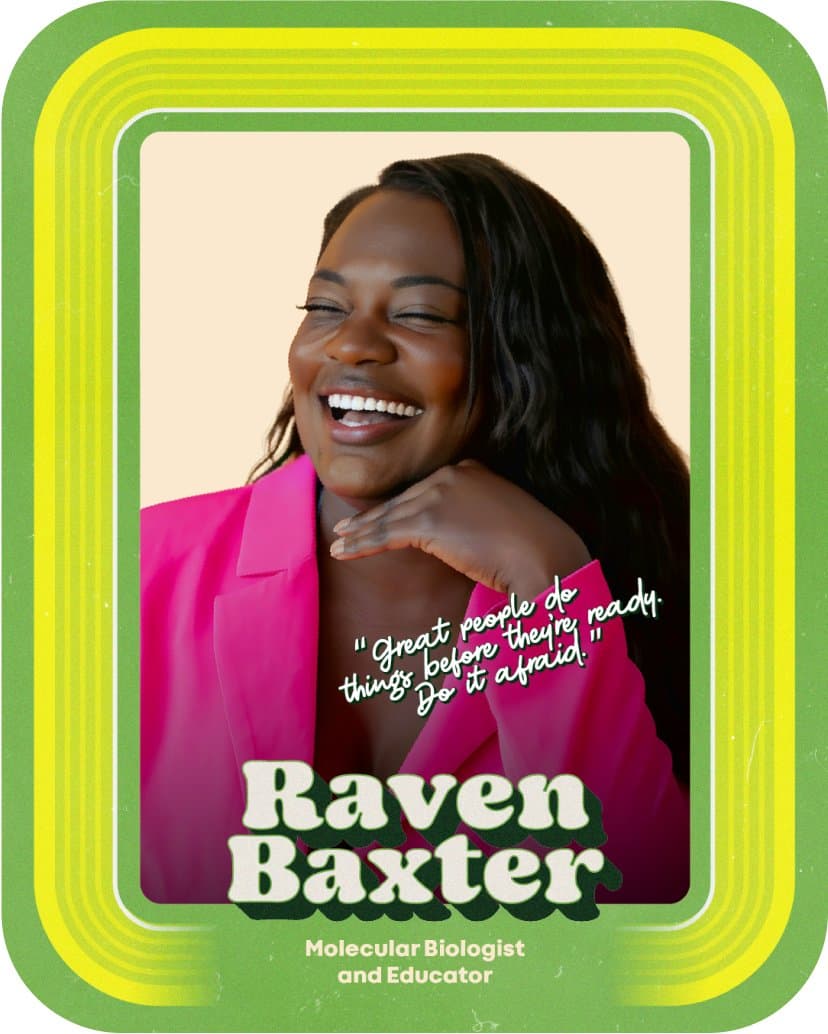
Baxter is a molecular biologist and science communicator known online as Dr. Raven the Science Maven. She earned her Ph.D. from the University at Buffalo in 2022, with a dissertation on culturally responsive science communication through hip-hop.
The full interview is on the museum's series page and below.
https://www.youtube.com/embed/b0Ap25w1GA4