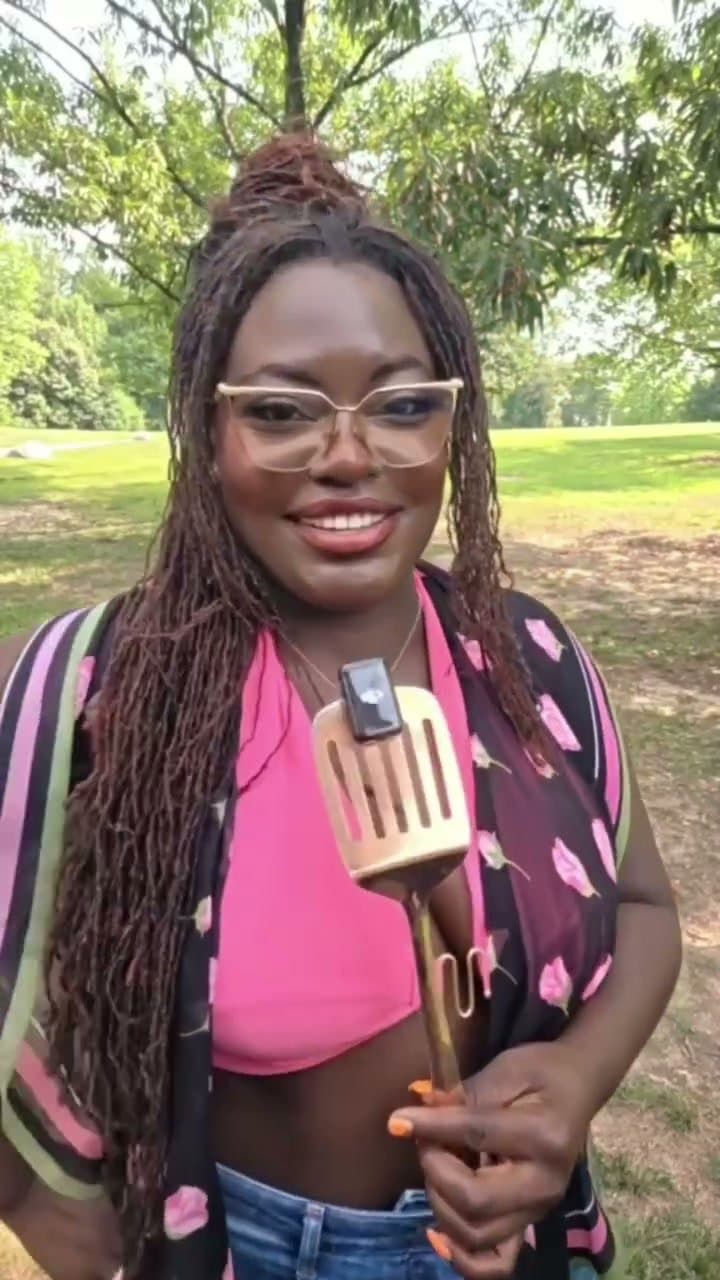
BiotechTV invited me to its first U.S. Science Summit in Kendall Square, Cambridge, Massachusetts, on July 21, 2026. I sat in the front rows at MassBio's headquarters with about 20 science creators, among biotech CEOs, investors and communications staff.
"I don't think these two groups have really ever been under the same roof," BiotechTV founder Brad Loncar said in his opening remarks. BiotechTV science correspondent Chloe Kirk introduced the creators as a group with a combined following of "three million plus." Loncar told the industry side of the room that when the creators speak, "as many if not more people hear it than when the biggest companies in our industry say something."
"It feels like our country is starting to pull back from science," Loncar said.
Industry leaders on science communication
Loncar called for persuasion. He borrowed "choose science," the theme of Noubar Afeyan's annual letter, and said science can't be forced on people. Afeyan, the founder of Flagship Pioneering and chair of Moderna, pressed the point from the stage.
"One cannot say I'm a scientist, I'm not gonna communicate, somebody else can do that, I need communicators. There's no such thing," Afeyan said. "Every scientist has to be able to articulate." He put a challenge to the room. "If not us communicating, then who? If not now, then when?"
Elias Zerhouni, a former director of the National Institutes of Health, placed the problem elsewhere. He described a gap between what science promises and what patients face, from high drug prices to denied prior authorizations. "So we have a real structural problem. It's not a messaging problem," he said. "It's basically aligning yourself with the patients."
Zerhouni also pointed to influencers who talk to their audiences on the "same wavelength." "We need to encourage that," he said.
Creators and patients on stage
 From left, Alex Dainis, Maynard Okereke and Gabriel Astorga on the science communicator panel at MassBio, moderated by Chloe Kirk. Baxter is not pictured. Photo: BiotechTV U.S. Science Summit attendees
On the science communicator panel, creators Gabriel Astorga, Maynard Okereke and Alex Dainis described how they reach their audiences. Dainis asked the companies to look past content. "So don't just think about us as good storytellers," she said. "I want you to also talk to everybody up here about the trust and the relationships we can bring you as well."
Patients made the case in person. Jimi Olaghere, one of the first people to receive a CRISPR gene therapy for sickle cell disease, described years of hospital stays before treatment. Asked what gave him the confidence to join a clinical trial, he answered, "What gave me the confidence is not wanting to die."
Bob Coughlin, a former MassBio CEO whose son lives with cystic fibrosis, told the room to lead with purpose. "We assume that the public understands the how. One thing we do know is the public understands the why," he said.
Ginkgo Bioworks CEO Jason Kelly raised China again on the CEO panel. "I'm sort of like Paul Revere in a lab coat or something, but the Chinese are coming and we are losing," he said. "We're in the process of losing Kendall Square." Drug Discovery Online's coverage on July 24 called competition with China one of the summit's most urgent themes.
Inside the labs
 Summit creators outside Moderna at 325 Binney Street in Cambridge, July 21, 2026. Baxter is at back right. Photo: BiotechTV U.S. Science Summit attendees
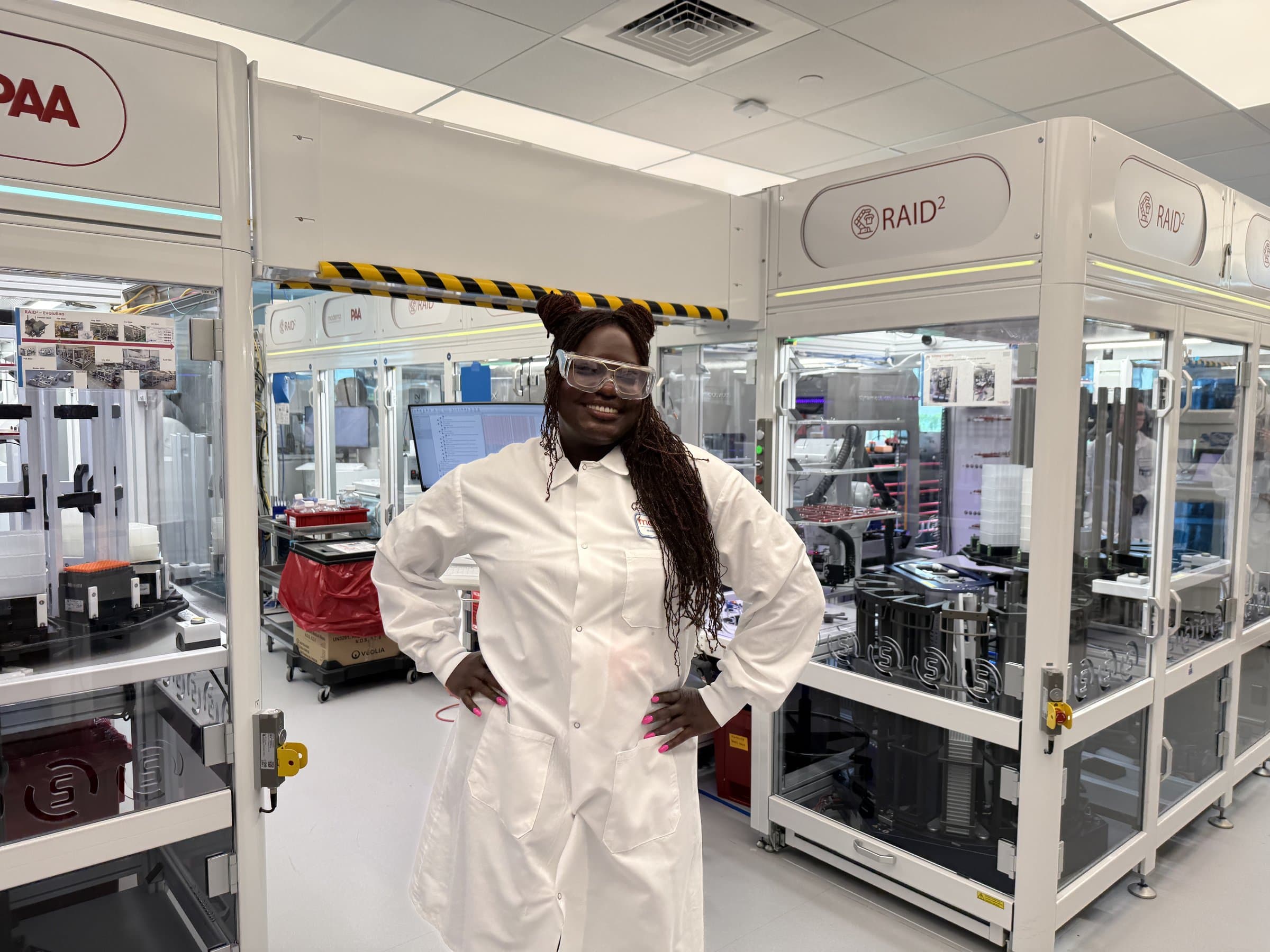
That afternoon, the creators toured labs at Moderna, Aera Therapeutics and Strand Therapeutics. At Moderna, I put on a lab coat and goggles and walked through its automated lab, where robotic workcells run behind glass walls. The next morning, the summit closed with a breakfast and science talk at Alnylam Pharmaceuticals.
Loncar, a longtime biotech investor, founded BiotechTV in June 2023, the Boston Business Journal reported. Its video studio sits inside MassBio's headquarters in Cambridge. "I literally started it with just myself and my iPhone," he told the room. MassBio, founded in 1985, represents more than 1,700 member organizations. It sponsored the summit with the Biotechnology Innovation Organization.
The summit page set out a goal to "turn around the narrative on science in the United States." It lists me in its SciComm Lineup as @RaventheScienceMaven.
I am a molecular biologist and science communicator. I worked in drug discovery before I earned my Ph.D. at the University at Buffalo.
BiotechTV's session replays are on its summit page.
BiotechTV covered travel for many of the invited creators, as Loncar said from the stage.