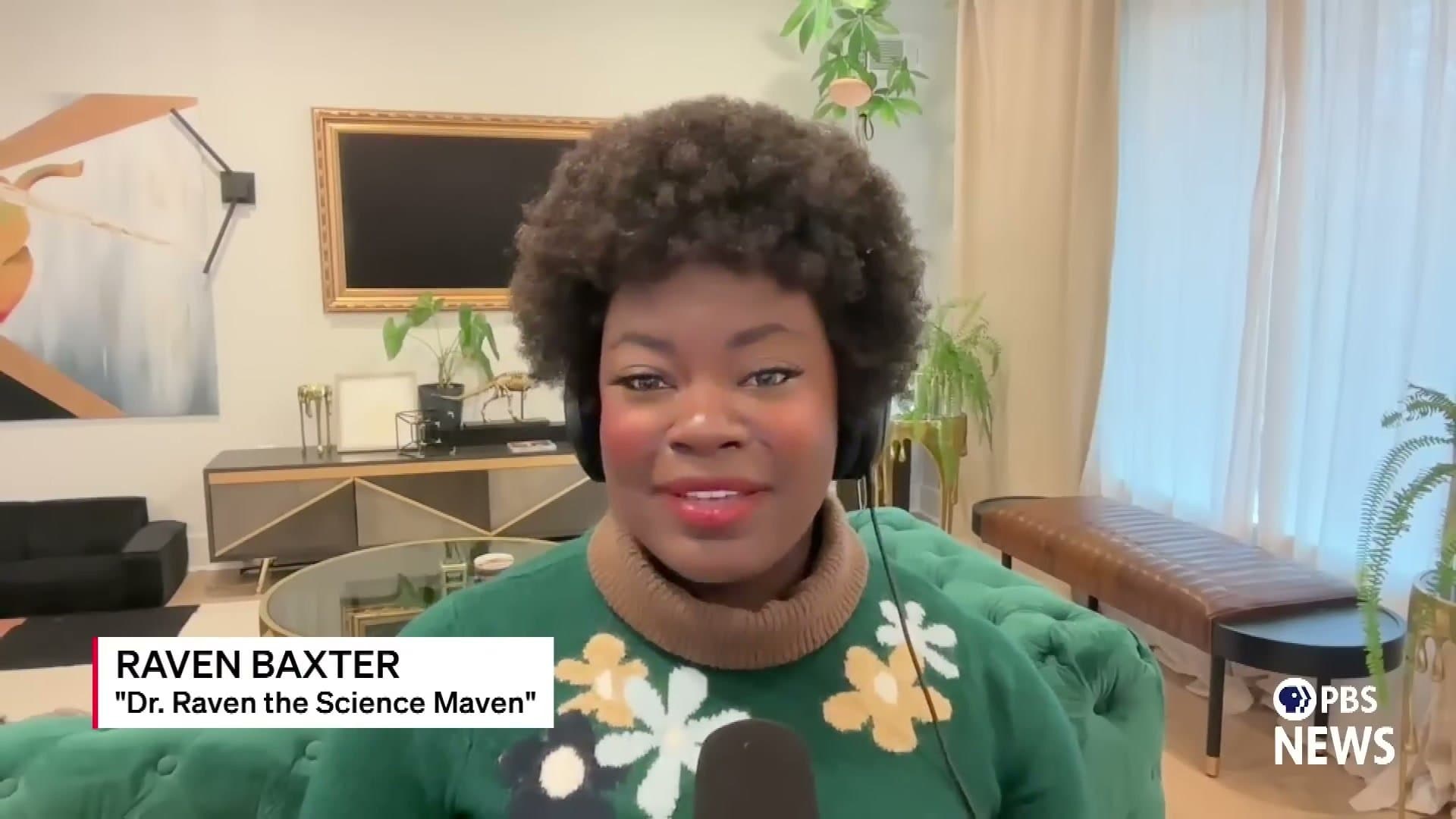
Dr. Raven Baxter joined PBS News on Dec. 10, 2025, for "Tipping Point: Turning Science Into Solutions," a livestream special paired with a Reddit "Ask Me Anything." She appeared remotely in its segment spotlighting content creators, with Climate Town creator Rollie Williams and climate researcher Miriam Nielsen.
Science correspondent Miles O'Brien and digital anchor Deema Zein hosted from the PBS News studio. PBS centered the special on how fact-based information can break through misinformation, media silos and polarization. Viewers sent in questions from Reddit, YouTube, TikTok, Facebook and X. Guests across the day included Katharine Hayhoe, Joe Hanson, Hakeem Oluseyi and Hany Farid.
O'Brien has hosted earlier PBS specials under the Tipping Point name. In November 2021, he led an hourlong live event from Phoenix on the Colorado River Basin that PBS said would foster "a solutions-based dialog." In July 2025, he hosted Tipping Point: The Mighty Mississippi at the University of Minnesota's Saint Anthony Falls Laboratory.
PBS opened her segment with a clip of her Antibody Song, rapped in a lab coat beside a diagram of B cells. "Every time I look at your work, I just smile," O'Brien told her. After the clip, he added, "Clearly, you're gonna reach an audience that we're not gonna get typically on the PBS NewsHour."
 Zein and O'Brien in the PBS News studio with Baxter. Image: PBS News video
Training scientists to engage the public
O'Brien asked Baxter how academia should change. She said she once applied to two doctoral programs at one school, one of them in biology. "The biology program ended up rejecting me at the final stage of my application process," she said. She had told interviewers she "also wanted to have a public engagement and education component" to her doctoral work.
She went on to earn a Ph.D. in curriculum, instruction and the science of learning. That path, she said, "undergirds all of my work as a science communicator." She told viewers she is not the only scientist who has faced that choice.
"Scientists must be equipped to engage the public," Baxter said. "They must understand learning theory for us to break this cycle that we're currently in."
 Baxter describes her path to a doctorate. Image: PBS News video
Nielsen later picked up the point. "As Raven said, I mean, hopefully the academic space is becoming a little bit more conducive to outreach being a major part of your academic career," she said. She recalled being told during her own Ph.D. applications, "don't mention the YouTube channel." O'Brien answered, "It should be part of what gets you tenure, frankly."
Music and personal stories
Baxter called music "essentially a universal language." "I can't name a culture that does not have a musical facet to it," she said. She said she uses songs to connect people around the world to "a positive emotion" about science.
She said her personal stories online serve a purpose too. "One thing that we have over robots and algorithms is our humanity and what makes us actually human," Baxter said. The question for audiences goes beyond whether a voice is AI. "It's do you know this person's story? Do you know why this person cares so much about what they're talking about?"
Talking with the public
"A lot of people have never met a scientist before," Baxter said. O'Brien then brought up one of her Amtrak trips. On a 12-hour ride from Chicago to Washington, D.C., a young man noticed her bedazzled "Dr. Raven the Science Maven" laptop cover. He asked why a triangle drawn near the North Pole on Google Maps changes shape. He said it meant "they're hiding something from us." Baxter recognized a flat Earth conspiracy theory.
Baxter drew a grid of latitude and longitude lines on a napkin from the cafe car. Then she crumpled it over her fist. The triangles near the top warped, while the ones in the middle held their shape. He decided the grid "should be round." He now follows her on social media, she said.
Showing the process
In the segment's final question, a Reddit user with a Ph.D. in physiology asked how health organizations can "regain the trust that has been lost." Baxter said institutions too rarely walk the public through how they reach answers.
She urged "helping people understand that our knowledge is evolving. This is what we know today. It may change tomorrow, but at least offer transparency on how we come to these conclusions today." Agencies should also share the people and history behind their guidance, she said. "The history of the FDA is literally to protect lives. That is why it was created," she said. "We're saving lives. It's a team effort."
Public television's flagship newscast
PBS NewsHour began with public television's gavel-to-gavel coverage of the 1973 Senate Watergate hearings by Robert MacNeil and Jim Lehrer. In 1983 it became what PBS calls "the nation's first and only hour-long nightly broadcast of national news." It took the PBS NewsHour name in December 2009. Today more than 350 PBS stations carry it, reaching 98% of the nation's television households.
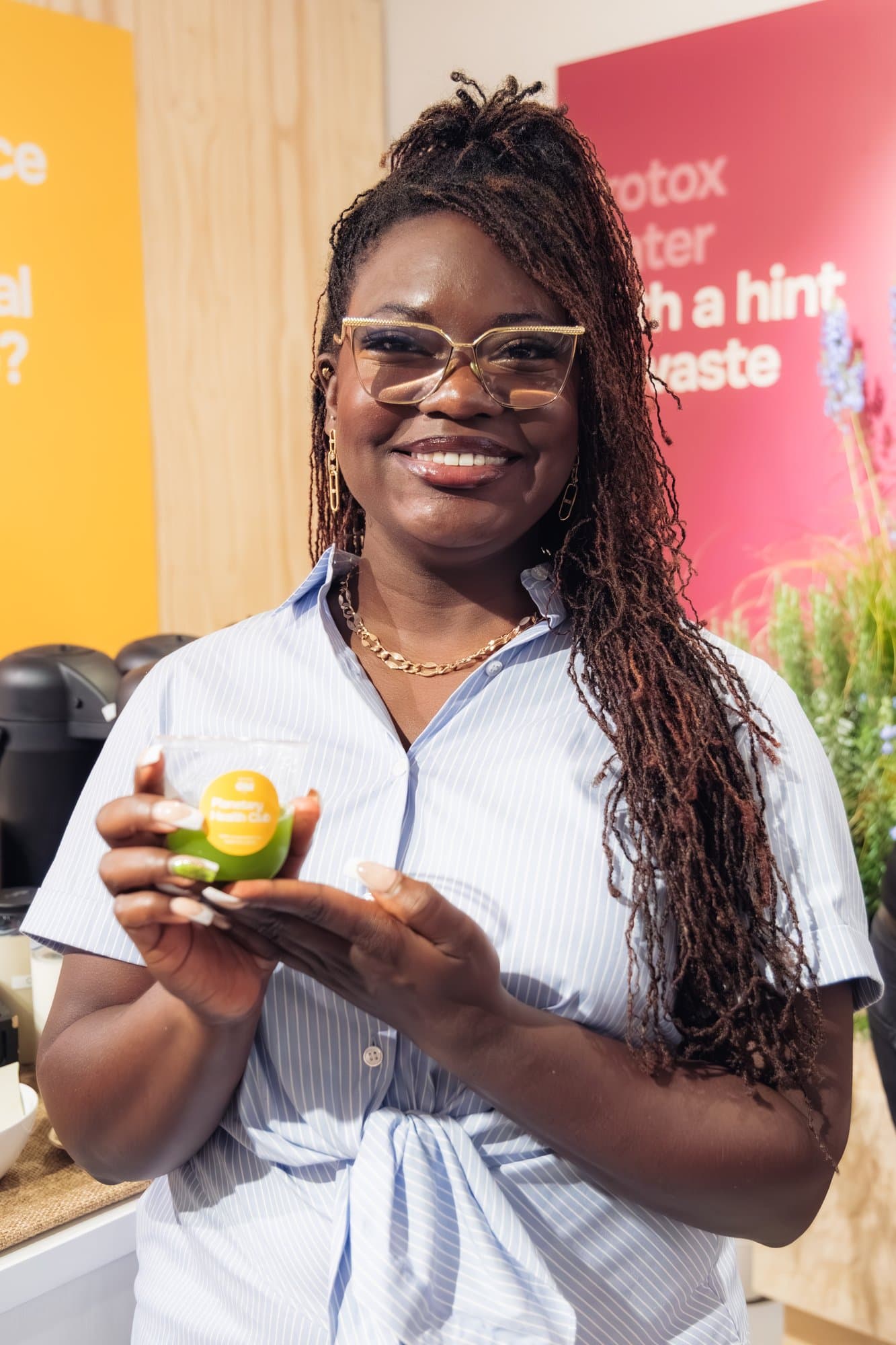
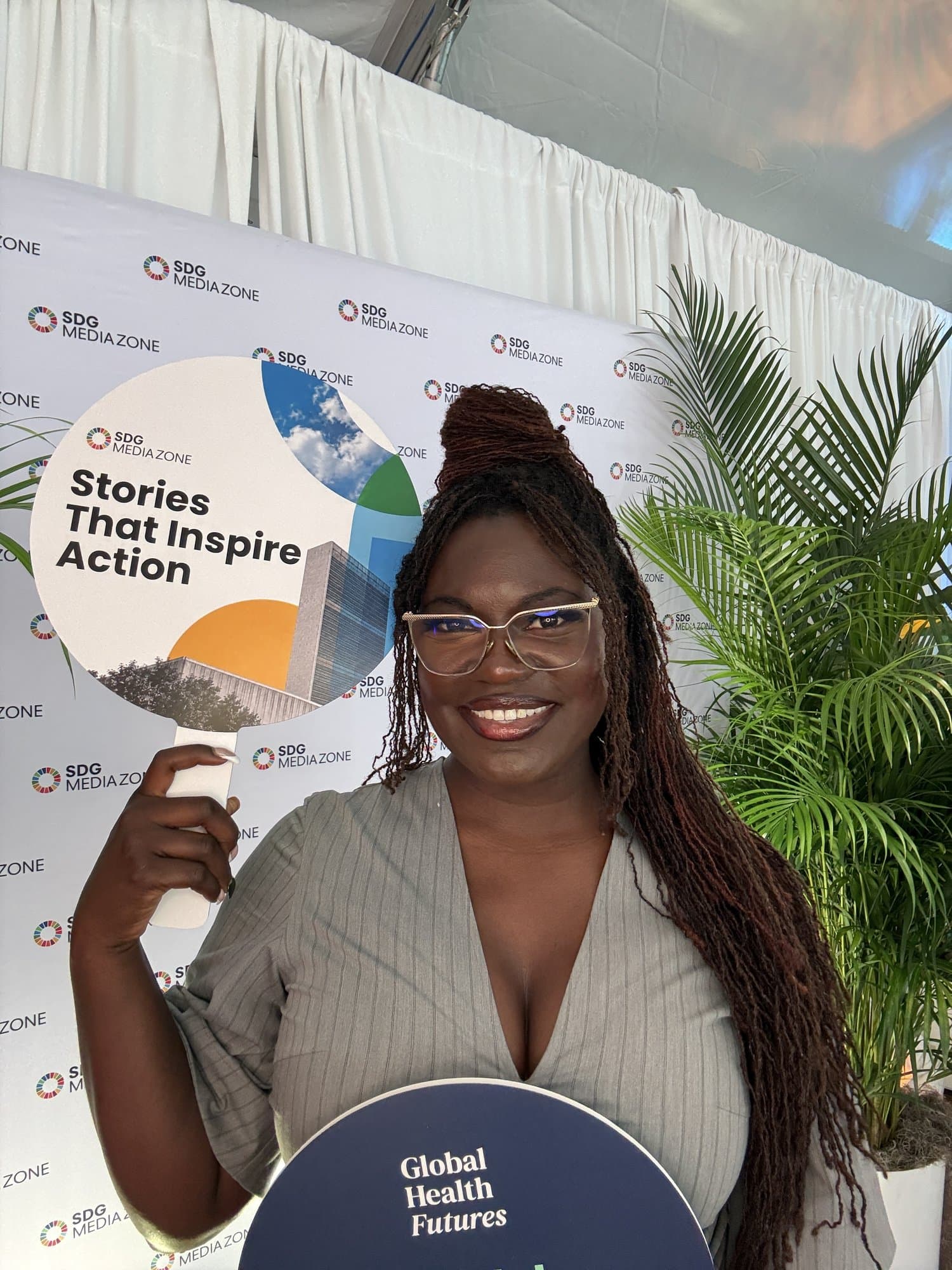
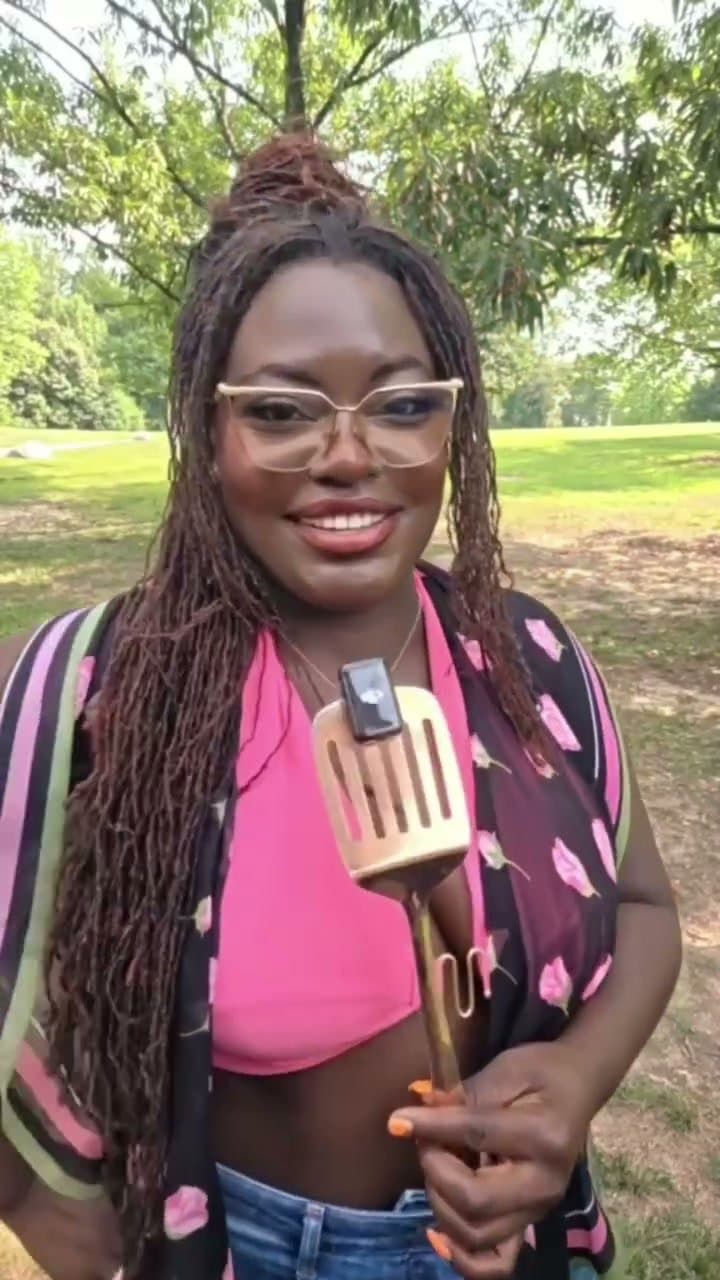
Baxter is a molecular biologist and science communicator who raps about immunology and other science as Dr. Raven the Science Maven. Her doctoral research at the University at Buffalo looked at communicating science through hip-hop.
PBS NewsHour posted the full three-hour, 48-minute special on its YouTube channel. Baxter's segment begins at 1:35:14.
https://www.youtube.com/watch?v=UPKxk3s-8Yc