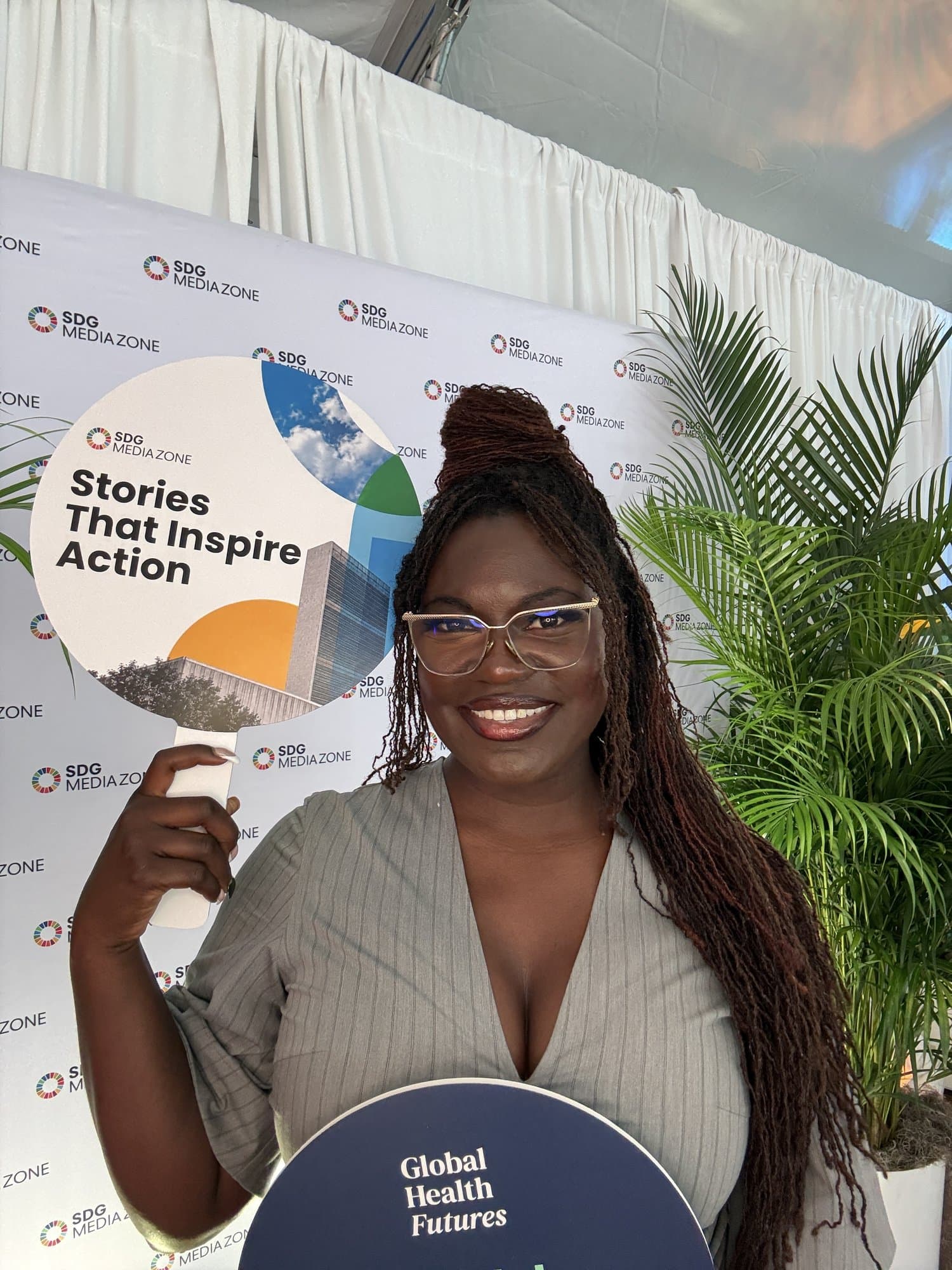
Dr. Raven Baxter joined Consumer Reports' Black Hair Matters virtual public forum on Feb. 27, 2025. The hour-long Zoom event shared new test results on synthetic braiding hair, and Baxter spoke as a panelist and molecular biologist.
That same day, Consumer Reports published its findings. It had tested 10 top-selling braiding hair products and detected carcinogens in all 10, reported Leigh-Ann Jackson. The tests found benzene in three and lead in nine, the highest at 610% of California's Maximum Allowable Dose Level.
"This is not to fear monger," Baxter told the forum. "This is to give you information so that you can make important choices on how you want to conduct your life."
On Feb. 18, Personal Care Insights reported on an Environmental Working Group report made with Blk + Grn. It rated about 80% of more than 4,000 products marketed to Black women as moderate to high hazard. That story quoted Baxter too.
Test results
Jim E. Rogers, Ph.D., who leads product safety testing at Consumer Reports, presented the results. Black mothers helped choose the 10 products, and nine were labeled Kanekalon. His slides showed lead in nine brands, cadmium in six and no arsenic. When the hair was heated, 18 of the 65 volatile organic compounds tested for were detected.
 Rogers' slide on heavy metals in the 10 products. Baxter is not pictured. Image: Consumer Reports video
Rogers said the companies "would not even confirm with us that they do testing of their products for harmful chemicals."
Explaining the science
Moderator Maya Owens, founder of The Black Mom Tribe, asked each panelist to define beauty justice. "To me, beauty justice means giving people the opportunity to understand the information that they need to make important decisions about their bodies," Baxter said. "I think that knowledge truly is power."
She framed the findings as a matter of consumer protection. "When we say protect Black women, this is what we're talking about," she said. "Millions of Black women around the world and really anybody who wears synthetic hair fibers is impacted by this in some way."
Her part, she said, was making sure people understood "what the chemicals are, what is a carcinogen, how are these studies conducted."
 Baxter thanks the Consumer Reports team for taking on research few had done. Image: Consumer Reports video
Baxter said people have worn synthetic hair fibers for decades, and she called how little is known about them "very mind-boggling." She asked viewers to look further. "This is a moment where we can not only look at just synthetic hair and its contents, but other things that we use on a daily basis that we take for granted the fact whether they are safe or not simply because they exist on our shelves," she said.
She told the audience they could push for change whatever they wear. "So even if you decide to not continue or continue using these products, there are avenues for you to advocate for change, regardless of what your personal decisions are."
An audience member asked how much exposure comes from wearing braids. "We do know that you can absorb harmful chemicals through the skin. That is a fact," Baxter said. She said researchers do not yet know what that means for braids and the bloodstream. "But that is the next generation of research that needs to be done. You all are just laying down the initial bricks of the foundation."
Panelists and the Black Beauty Justice campaign
The panel also included Jackson, Beatrice Lors-Rousseau of Mocha Moms Brooklyn and Zenda Walker, a hairstylist, educator and children's author. Fourteen groups co-sponsored the forum.
The forum supported Consumer Reports' Black Beauty Justice campaign, launched in honor of Black History Month. The campaign pushes federal and state governments to act on the safety of beauty and personal care products. Owens said the testing grew out of a tour of the Consumer Reports lab and a listening session, where Black mothers named the braiding hair they use and voted on which brands to test. The evening closed with calls to sign the organization's petition to the FDA and to join WE ACT's New York Beauty Justice Act lobby day on March 4.
Consumer Reports was founded in 1936 as Consumers Union. The independent nonprofit runs 63 labs at its headquarters and testing center in Yonkers, New York.
In April, an Associated Press story by Kenya Hunter covered the pilot study and its limits. It quoted Baxter on research funding. "A lot of the work that scientists do, we're able to do it because a funder deemed it as important to support that research," she said. Baxter had also discussed synthetic braiding hair on SiriusXM's The Lurie Daniel Favors Show in January.
Baxter is a molecular biologist who worked in drug discovery before turning to science communication. She later sat down with Rogers for an episode of her podcast, The Science of Life, released April 8, 2025.
Consumer Reports posted the full recording of the forum on YouTube.
https://youtu.be/Dhp9HbILdfg