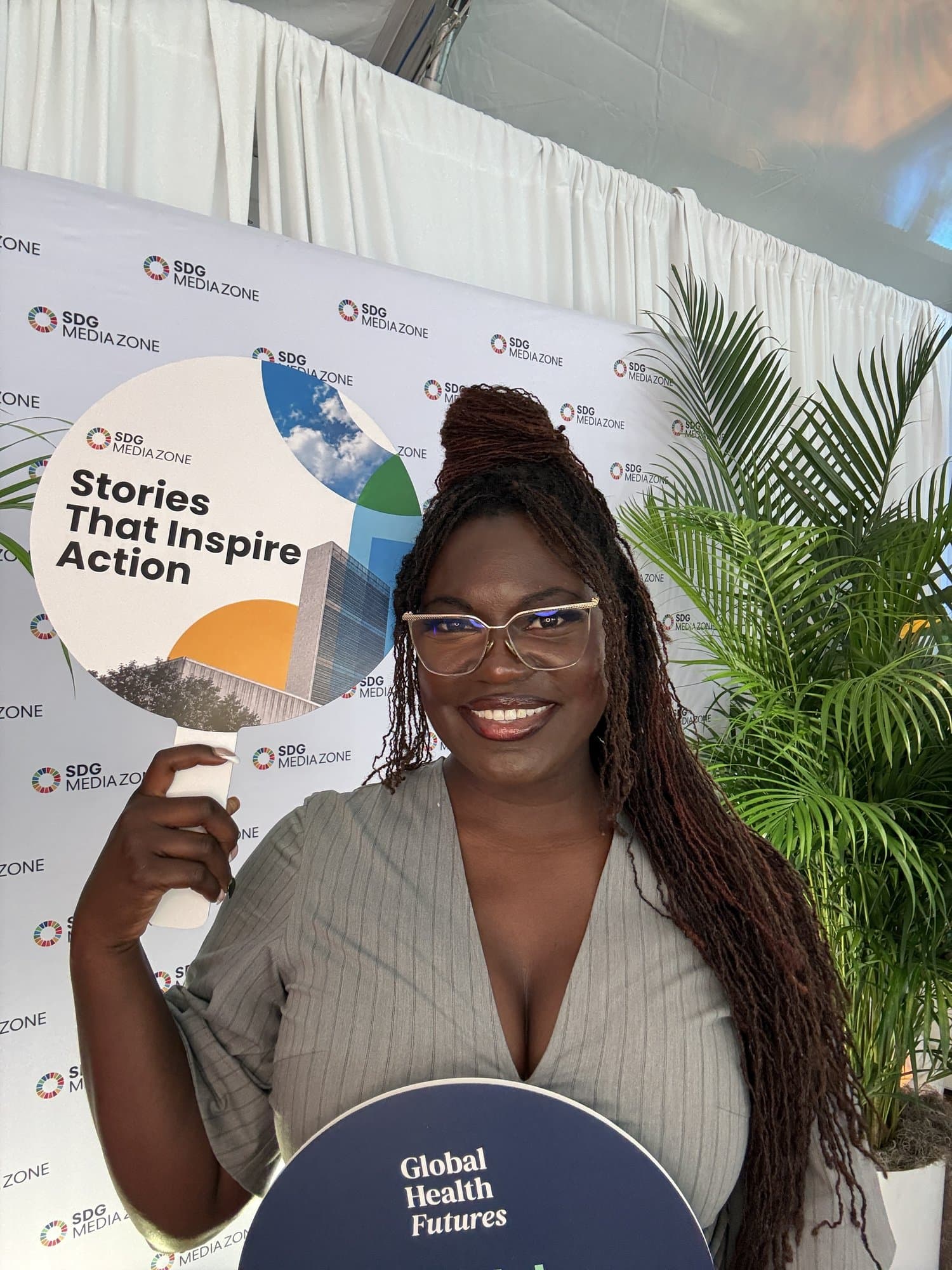
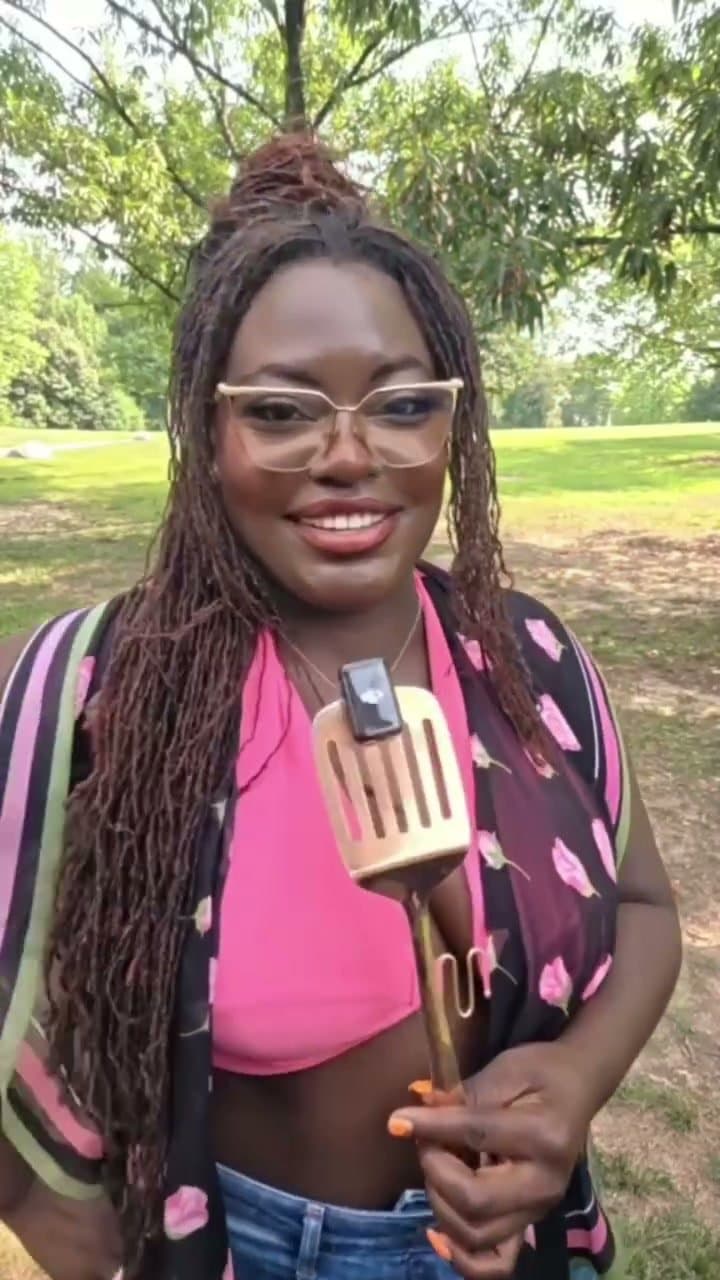
Science magazine quoted Dr. Raven Baxter on March 19, 2024, in a story on how a possible U.S. ban of TikTok could affect science communicators. The ScienceInsider story was written by Sean Cummings, and a version appeared in print in Science, Vol. 383, Issue 6689.
Of the five creators quoted, Baxter spoke most directly about the app's faults. She told Science that TikTok moderators had sometimes flagged her videos for misinformation, even when she clearly cited her scientific sources. Others in the story noted that the algorithm that carries their science also serves fake news and pseudoscience.
Baxter told the magazine she might be more supportive of the bill if its backers had done more about misinformation. "If the rationale had been to combat misinformation or protect against algorithms radicalizing people into terroristic behavior, I'd be like, 'Yeah, let's do this,'" she said.
The story followed a fast vote. On March 13, the House passed the Protecting Americans from Foreign Adversary Controlled Applications Act by 352 to 65, the Associated Press reported. ByteDance, TikTok's Chinese parent company, would have about six months to sell the app or see it removed from U.S. app stores. The bill had been introduced March 5 and cleared committee 50 to 0 within a week, Tech Policy Press reported.
Backers cited national security. Chinese law requires ByteDance to provide user data to the Chinese government on request, Science noted. TikTok had 150 million U.S. users, and the federal government and several dozen states already banned it on work devices.
The other creators described what they stood to lose. Brooke Fitzwater, a University of Alabama doctoral student who posts about marine biology, reached some 250,000 followers. Emily Zawacki of the EarthScope Consortium said the app shows science to people who never follow science accounts. Kyne Santos and Geo Rutherford described income from sponsorships and art sales.
Showing the source on camera
On March 14, the day of the interview, Baxter described it during McMaster University's Science Stories conversation. "I talked about this actually earlier today to a reporter who was interviewing me about the potential TikTok ban," she said. The bill had passed the House, she noted, and was headed to the Senate.
She laid out the trade-off. "What are the pros and cons of a social media site like TikTok, right? One of them being people like me have an avenue, another avenue, to disseminate scientific information, but a con being the rapid spread of misinformation," she said.
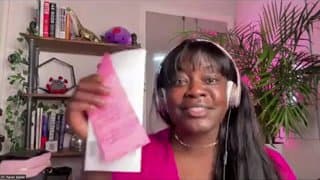
Her answer is to show her sources. "What I've been in the habit of doing lately is actually printing out the papers that I reference when I am creating a video that is teaching science," she said. She highlights and annotates each paper and holds it up for viewers. "I will put a link to the paper in the comment section or wherever, somewhere that they can access it, so they can see for themselves."
Credentials are easy to fake online, she said. "You can buy a verification mark," she said. "You can make a video about anything and claim you're an expert." She wants checking to become routine. "I want people and scientists to start making it the norm to prove your credibility," she said.
Science and its publisher
Science was founded in 1880 with financial support from Thomas Edison and became the journal of the American Association for the Advancement of Science in 1900. The association formed in 1848 as "the first permanent organization formed to promote the development of science and engineering at the national level," according to its history page. It calls itself "one of the world's largest multidisciplinary scientific societies," with members in more than 91 countries. ScienceInsider is Science's news section on science policy.
Five weeks after the story ran, President Biden signed a revised version of the bill into law as part of a foreign aid package for Ukraine and Israel. It gave ByteDance nine months to sell, with a possible three-month extension, and TikTok said it would sue, NPR reported.
Baxter, a molecular biologist known online as Dr. Raven the Science Maven, studied how antibodies find their targets for her master's degree. She later earned a Ph.D. at the University at Buffalo with research on science communication through hip-hop.
The full story, "Possible TikTok ban has U.S. science communicators on edge," is on Science's website. The McMaster Alumni Association posted the Science Stories recording on YouTube, and her remarks on the interview begin at 40 minutes.
Sources
- Sean Cummings, "Possible TikTok ban has U.S. science communicators on edge," Science, March 19, 2024, doi 10.1126/science.zx9vekx
- McMaster University, Science Stories, "From Complexity to Clarity," March 14, 2024, McMaster Alumni video