Raven Baxter was the special guest for the final main-stage session of the NASA TechRise Student Challenge Virtual Field Trip on Sept. 24, 2021. NASA and Future Engineers, the challenge's administrator, hosted the online drop-in event for students in grades 6 to 12.
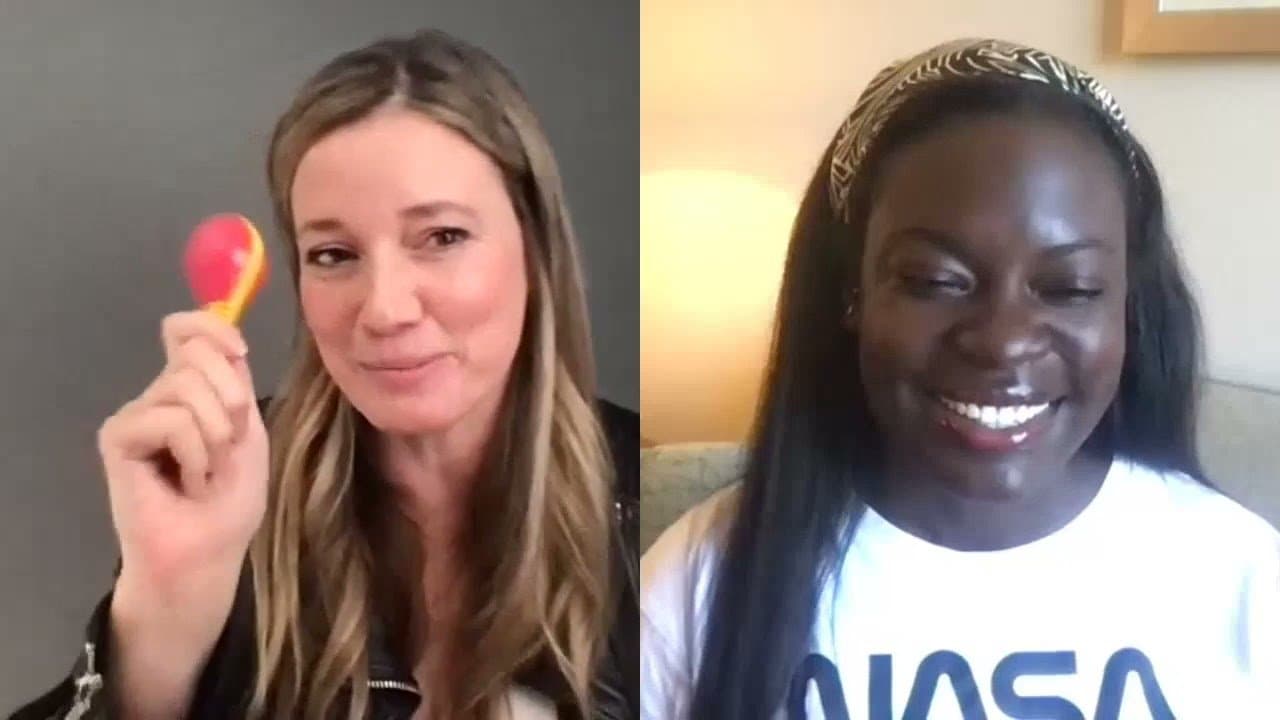
On stage, Future Engineers founder and CEO Deanne Bell unveiled a flight-box prototype her team had built from Baxter's sample experiment idea. It asks whether a maraca would sound different in microgravity.
"So what would it sound like since the gravity is different? I'm really curious to know," Baxter said.
NASA announced TechRise on May 25, 2021. Student teams propose experiments for a high-altitude balloon or a suborbital rocket with about three minutes of microgravity. Each winning team gets $1,500 to build its experiment and a NASA-sponsored flight. One of the challenge's rockets, Blue Origin's New Shepard, flew its first crew on July 20. The field trip came six days after SpaceX's Inspiration4, the first orbital flight with only private citizens aboard, returned to Earth. NASA's EXPRESS newsletter invited grades 6 to 12 classes to drop in, with NASA astronaut Reid Wiseman also among the guest speakers.
The maraca experiment
Baxter chose the rocket over the balloon. "I was really excited about the rocket and the idea of being in weightlessness and exploring space and astronaut life, and I wanted to design an experiment that could be done in those conditions, the conditions that I've been dreaming about," she said.
Biology, her own field, was out. The challenge does not allow living things such as tissues, plants or animals on board. She turned to music. Producing her own beats, she said, "involves a lot of understanding sound, what different sounds can sound like and even manipulating sounds." So "I thought it would be really cool to take a musical instrument to space."
Her hypothesis was that it would sound different. On Earth, she said, when a maraca is shaken, "all of the little particles inside of the container are hitting the inside of the instrument at the same time together because of how gravity is functioning on the planet. But in microgravity it might be different."
The prototype fits a shaker egg into the challenge's 4-by-4-by-8-inch experiment box. A micro servo motor swings a lever to shake the egg. A microcontroller serves as the "brains," and a camera records both image and sound. Linked to the TechRise flight simulator, the box starts shaking once flight reaches microgravity. A recording made on the ground would serve as the control.
"I love how simple it is but how just curious it is and how relatable it is," Bell said. She added that the team had no plans to fly it, because Baxter is not a sixth to 12th grader. The build was a worked example for student proposals.
Advice for student teams
Asked what entrants should do, Baxter said, "Really be true to yourself, what you're curious about, and put a proposal together that really speaks to what you are curious about about the world." She also asked teams to "think about things that can help people on the planet."
She treated failure as part of science. "Failure is not a bad word, it's a growth opportunity," she said. "It just matters what you do after you fail. Just keep going and don't give up."
 Baxter during the field trip session. Image: Future Engineers video
Her own path changed several times, she told the audience. She began college in environmental policy and law, moved into molecular biology and cancer research, then into science education. As a child she read every weather book she could find, then turned to space and went to Space Camp. Her first experiment, at age 6 or 7, involved a Silly Putty kit. She covered the family's TV remote in putty, hoping to copy it into a second remote.
Asked why she teaches through music, she said music "has always been used to tell a story or to send messages." She added, "We can tell stories about science and teach science through music."
Her parting words went to the entrants. "At the end of the day we're all scientists and we're all learning together, so good luck to all of the future engineers," she said.
Future Engineers and TechRise
Future Engineers runs free online innovation challenges for K-12 students. Its first, in 2014, was a 3D printing in space challenge sponsored by the ASME Foundation with technical help from NASA. It produced the first student-designed 3D print in space. Bell, an engineer and television host, founded the company. TechRise is managed by NASA's Flight Opportunities program at Armstrong Flight Research Center.
Entries for the first round closed Nov. 3, 2021. In January 2022, 57 winning teams were announced from nearly 600 applying teams, about 5,000 students in all. The more than 600 winning students came from 37 states and territories.
Baxter, a molecular biologist, had defended her doctoral dissertation at the University at Buffalo that June. She had worked as a cancer research scientist before moving into science education.
Future Engineers posted the session, "Does Music Sound the same in Microgravity? Exploring the NASA TechRise Challenge," on its YouTube channel. The TechRise challenge page, as archived in October 2021, lists all four field trip sessions.
https://www.youtube.com/watch?v=wCciCYUvbq8