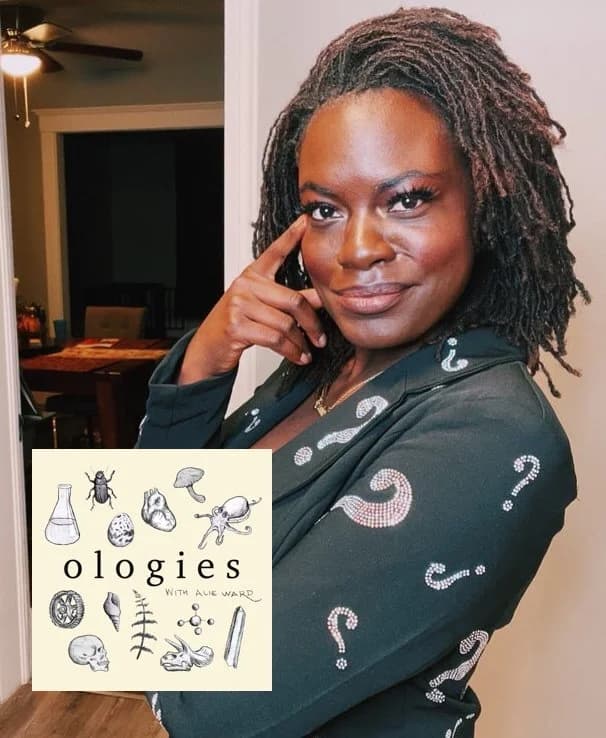
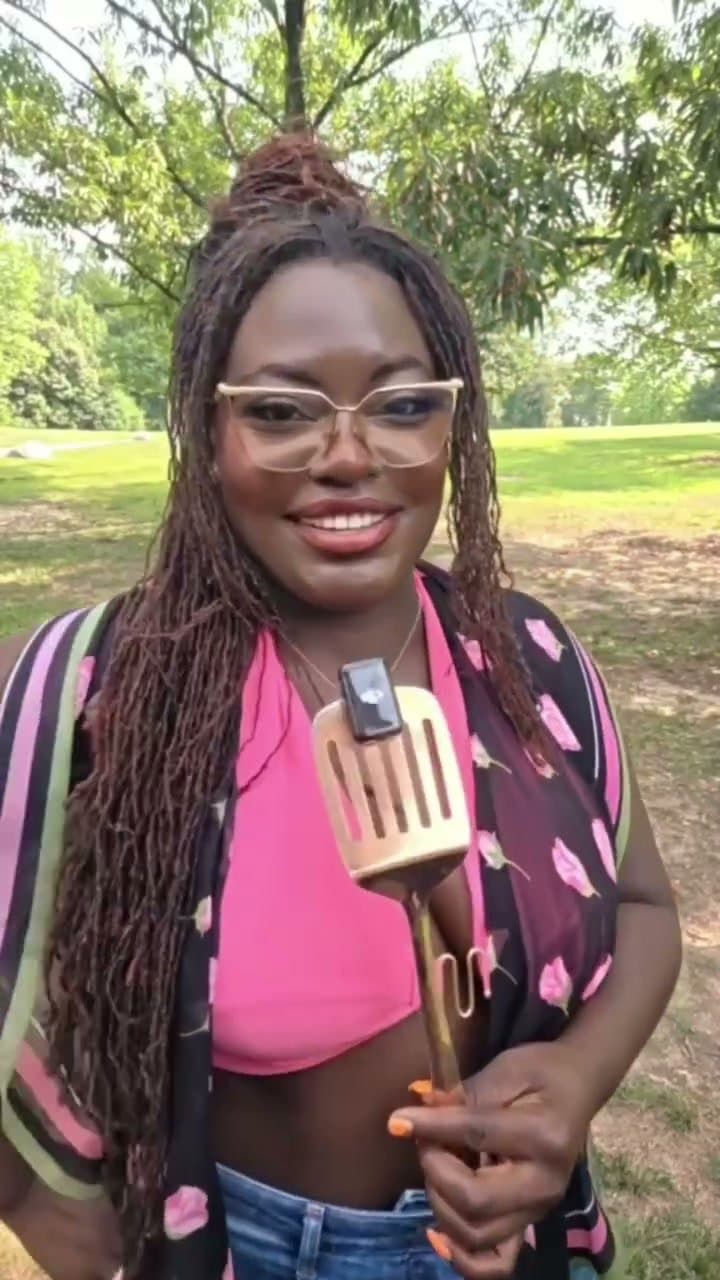
Raven Baxter was the featured expert on the Ologies podcast on Feb. 16, 2021. In a 74-minute episode with host Alie Ward, she explained molecular biology and the craft of science communication.
Ward asked her about the hardest part of her work. Baxter said it was making sure the information is right. "Oftentimes people may not necessarily go directly to the source for their primary understanding of what's going on in the science world and they're looking at people like me or going on social media to get their information," she said. A 2017 Pew Research Center study had found that most social media users saw science posts, and that those who distrusted the posts outnumbered those who trusted them about two to one.
She told listeners she speaks only on subjects where she is an expert. Otherwise, she points people to a resource or a person who is. "I definitely think that it's important to always be accurate first and then be engaging second," she said. "You can do those things at the same time, but definitely not one without the other."
The episode aired during the early COVID-19 vaccine rollout. In December 2020, the Pew Research Center reported that 60% of Americans intended to get a vaccine, up from 51% in September. Ward opened the episode with a clip of Baxter's "Antibodyody" song about vaccines and antibodies.
Cell biology
Baxter described the cell as a city. "It's a super simplified version of it where your DNA is the mayor and the mayor's staff are proteins that are carrying out different functions," she said.
She then traced how DNA is read into RNA, and RNA into protein. "As the protein is being made, it's basically like a spaghetti noodle as it comes out of this polymerase, and then as it's coming out it folds into these different shapes," she said. Beta sheets look like a brick of ramen noodles. Alpha helices look like fusilli.
She explained how the Golgi apparatus packages proteins into vesicles for shipping. Answering listener questions, she described motor proteins called dynein and kinesin, which carry cargo in opposite directions along a cellular highway, powered by ATP. Prions, she explained, are misfolded proteins.
AlphaFold and protein folding
Listeners also asked about AlphaFold. In November 2020, DeepMind's program had predicted protein structures in a contest, in what a Nature news headline called a gigantic leap. DeepMind called it a solution to a 50-year-old grand challenge in biology.
"I should say that my entire master's degree is about protein folding," Baxter said. She had spent two and a half years characterizing the structure and function of a chaperone protein, which helps other proteins fold. "The AlphaFold program can probably take the same information and do it in less than a minute, if not seconds," she said. AI predictions of folding, she added, will help scientists learn how proteins interact.
Her lab career
Earlier in her career, Baxter worked at a contract research organization. Large drug companies hire such labs for parts of their research. She did cell transfections and CRISPR projects, developed new cell lines, and isolated DNA from E. coli by the gallon. She used a PerkinElmer Opera high-content screening system to test drug compounds on cancer cell lines. With neuronal cells, she searched for drugs to treat Parkinson's and Alzheimer's diseases. "When you talk about clinical trials, that's where it starts," she said.
Her doctoral training in education changed how she thinks. "I feel like I've truly mastered how to think like a STEM scientist, and now I'm mastering how to think like a social scientist," she said. She cited the book How People Learn, which describes people from rural and urban settings reading vertical lines differently. "Not only am I trying to teach them something, but I, in the same space, should be trying to learn as much about that person as possible so that I know how to teach them," she said.
She also told the story of an undergraduate research symposium she joined as a college junior. She brought a poster decorated with glitter. People lined up to talk with her, and she won a student excellence award for her research. "When people are denying you an opportunity to be yourself in a space where you belong, just as you are, you don't have to take that denial," she said. "You can say no to that and come as you are, and nobody gets hurt."
Ologies
Ward launched Ologies in September 2017. Her website calls it "a comedic science show named one of Time Magazine's top 50 podcasts." Ward is a Daytime Emmy Award-winning science correspondent for CBS's The Henry Ford's Innovation Nation with Mo Rocca. Each episode, Ologies donates to a cause the guest chooses. This one went to Project for Awesome in Baxter's name as that weekend's drive reached $2 million.
In her introduction, Ward noted Baxter's TEDx talk, her place on Fortune's 40 Under 40 and Megan Thee Stallion's retweet of her antibody song. In 2024, Ologies released a shorter cut of the interview as Smologies #37.
Baxter was then pursuing her doctorate at the University at Buffalo, with a focus on science communication. She holds bachelor's and master's degrees in biological sciences from SUNY Buffalo State.
The full episode and transcript are on the Ologies website. The episode is also on Apple Podcasts and Spotify.