
[0:00] Thank you, everyone, for listening. This is another episode of The Science of Life with me, Dr. Raven Baxter. And today we have a very special guest. My psychiatrist is here, and I thought that this would be a really important conversation to have because of the role that mental health plays in all of our lives, whether we think about it or not. Once I understood the science behind mental health, I was able to understand my experience with mental health so much more. And so, yes, I would love for you to introduce yourself, Dr. Mike, and tell everyone about yourself, what you do, how did you even get into this field?
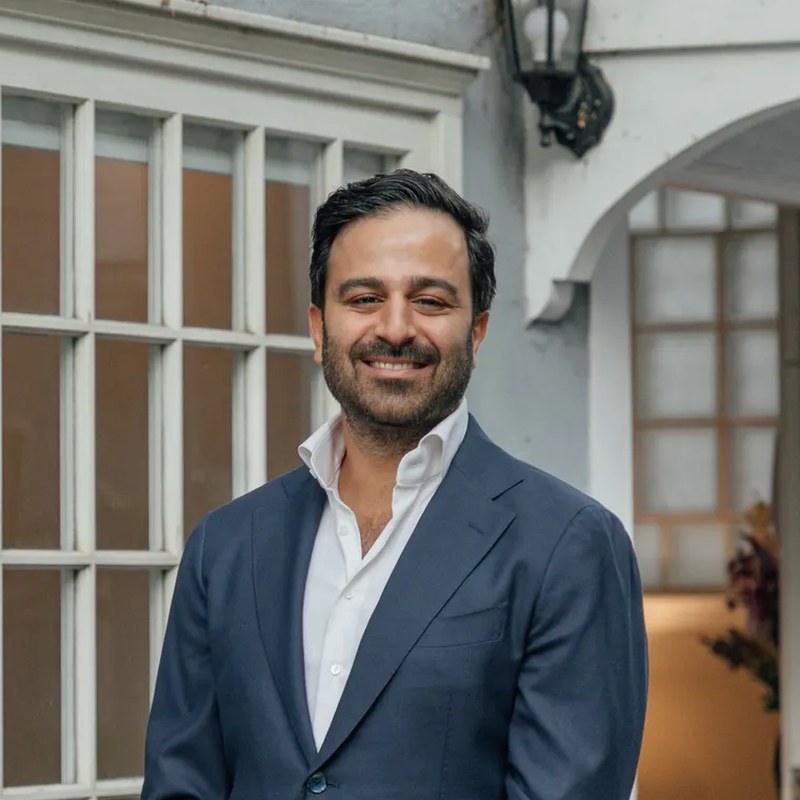
[1:08] It's so nice to be here. Thank you for having me, Raven. Quick bio. My name is Dr. Mike Magarefta. My patients all call me Dr. Mike. I grew up in Southern California. I attended college and medical school at UC Irvine. I did my residency in psychiatry at UCLA. I graduated residency about three years ago and dove straight into private practice. I'm a psychiatrist in private practice. My specialties are mood, anxiety, trauma. I see a lot of ADHD. And I'm first and foremost a clinician. So what I spend my days doing is seeing patients. Raven is one of my wonderful patients who has done exceptionally well.
[1:50] It's a privilege to be here. And I'm happy to talk about whatever you guys would like. So let's dive in here. I think that this is a really special opportunity and I get full consent to talk about like my medical thing here because I've been really open about like my experience with mental health. And it's just a unique opportunity to have that, have what does it look like to talk to a psychiatrist and model that in real time. I'd love to give people the context in which I decided to pursue getting a psychiatrist. I would like to say that it was a culmination of me being in a horrible marriage and then also a few major life changes like moving across the country.
[2:33] And then on top of that, I became very ill with COVID. And really it wasn't the COVID itself that I was sick with, but more so just the long-term, long COVID, neuropsychiatric that occur after having the virus was really impacting me really severely. And so I really was in a, for lack of better words, like a shit storm. My social life was chaotic. My physical health was in the worst condition that it had ever been in. I really felt like I needed some help. I was doing all that I could to stay in touch with reality. I was really struggling deeply with anxiety. I think that after I got COVID, panic attacks just started going through the roof.
[3:26] And I was in panic attacks from sunup to sundown. Later, I would learn that was attributed to my autonomic system being in overdrive, which is why I was having panic attacks when I was waking up and also panic attacks while I was eating. Those are things that we take for granted, like our body's ability to regulate our reactions to waking up and to consuming food. When your autonomic system, which is the system that drives all of these things that we don't think about, like breathing and our heartbeat, when that system is messed up, then you start to get lots of things that you take for granted start to become impaired.
[4:09] There was also the thought that my vagus nerve was also dysfunctional at the time. So my body couldn't really tell whether I was in danger or not. And so panic. And I found that really interesting because I didn't, up until that point, I didn't realize that being sick with the virus could give you anxiety and panic attacks. I'm sure that having some underlying or even family history of anxiety and panic probably doesn't help the situation. In my sick state, I had the ability to find Dr. Mike, who has amazing ratings, by the way, on every type of review platform out there. I was like, okay, I don't even care.
[4:58] I don't care what I got to do to get in this guy's office. I have to see him because everyone is saying he's the real deal. He's legit, like a five-star guy. And like, you were amazing to talk to, one of the best providers I've ever had. And just really understanding, really flexible, because even at the time that we first were in contact, I could barely speak to you because I was so in panic. I could barely communicate. And so I had to communicate through my mom sometimes. And he was just very flexible and accommodating. And so thank you for that. But I want to talk about that.
[5:36] Like, my situation was very extreme, I would say. And I say that as someone who's not even a psychiatrist and has no other points of reference other than nobody that I know has experienced these things. But what are the red flags? How does one know when they should seek professional help? When there's a range of normal human distress that everybody goes through just being a human being. And not everybody reaches a point where they need or it's advisable for them to seek professional help from a psychiatrist. Patients that come see a psychiatrist, these are the ones that are distressed. They often have sought help from their support system.
[6:23] And they've often tried to help themselves. You do your best to calm yourself down, to attend to your own symptoms, to go through your support network. And you're still not having relief. And when that distress is significant enough that it is preventing you from being present throughout your day socially, professionally, when it's interrupting your sleep, when it's getting in the way of your mood, when it's getting in the way of your hope for the future, your optimism, when it's impacting your personality, when it's causing problems functioning just overall. And if you're doing your best to attend to this, to feel better, and you go to your support system, and even further, you go and seek like a therapist, someone who's not utilizing medications, not a psychiatrist, and still you're doing your best and you're not having relief, that is typically when people come see a psychiatrist.
[7:21] And for those who don't know, a psychiatrist differs from a psychologist in the sense that we're medical doctors and we have the privilege and ability to prescribe medications. So that's usually when someone sees a psychiatrist, when they've done all they can, and still they're not having enough relief to the point where they can live their life and function optimally. Yeah. And so I guess being that psychiatrists have this special role in a person's healthcare community, I actually was surprised by how many people didn't understand that a psychiatrist was different from my therapist. And so what is the role of a psychiatrist compared to other mental health professionals that people might be more familiar with?
[8:10] So what makes a psychiatrist unique is that we're medical doctors. So we've gone to medical school. We've done a residency, which is like the years of training you have after medical school. So we're trained in both the mind and the body and the connection. A therapist, therapists come in different varieties. You have therapists that are social workers, marriage and family therapists, and then you have psychologists that have like PhD training. The way a psychiatrist is different is we study the connection between the physical body and the mind. That I would say is the biggest difference. And we have the ability to prescribe medications. We also have the ability to rule out physical causes of psychological suffering.
[9:07] There's all sorts of stuff that we screen for thyroid problems, vitamin deficiencies, anemias. We have the ability to order imaging and making sure that there's no like tumors or any sort of anything that could be causing this sort of like psychological distress. So that's what we specialize. I didn't know. We can check my vitamin levels. Yeah, of course. Checked. We can check like vitamin D levels. We can check B12 levels. We can check to make sure people aren't anemic. We can check all sorts of stuff. The thyroid is a common one that people look into. So there's all sorts of physical abnormalities that can lead to psychological distress.
[9:54] And they can feel the same. Like someone that's got low thyroid hormone can feel the same sort of depressive symptoms as someone that has normal thyroid levels and is having a clinical depression. They can feel the same. I, that actually just blew my mind because I think that people would be under the conception that like, okay, if I suspect that my, like I'm having a thyroid issue, then I would have to go see a thyroid specialist or something to get that test done or gosh, I just never really thought about that. Wow. Would you say that psychiatrists should be the people that you go to?
[10:44] If you're having, if you're suspecting something going on with your mental health, is that something that you would recommend going through your GP for? Or would you advocate for people to go to a psychiatrist first? If you have the privilege of having easy access to a psychiatrist, it would be nice to start there. Typically, starting with your primary care doctor who should be ordering these labs on you is the best place to start. Typically, patients come to me as a referral from a primary care doctor or a therapist. There are some patients that start off by seeing me, but usually I'm step two, not step one.
[11:30] Okay. So for me, you were step one, but I think it was because I was super desperate and I actually didn't have a relationship with a primary care physician at the time. And so that wasn't even a route that I considered taking. I will say the caught to that is there are patients, you were one of them, you were having severe symptoms. So when a patient is having significant psychiatric symptoms, sometimes it's absolutely appropriate and the best idea to start off by seeing a psychiatrist. Okay. That's a fact. Yes, I agree. I reflect on that period of time and I truly learned that your mental health is literally everything you have.
[12:14] And I feel bad now. I do feel as though the term mental health has become so oversaturated and overused, but you don't truly value it until you don't have it. And then you realize it's truly gold and let's talk about maintaining mental health. I don't know if it's like this for everyone, but to me, it feels like a tightrope walk. Like you don't want to lean too much on one side. You don't want to lean too hard on the other side. You have to find your balance. So what does that look like from person to person? Like for me, I'm trying to figure out how to have new hobbies, like plants now.
[12:55] I have a worm farm. I have a little hydroponic garden. I'm trying to exercise more. And then I'm also doing things like having a podcast and talking to people. And then I have my medication. So is that pretty much what you cross the board for everyone that they are doing this tightrope walk and trying to find their balance? There is a final. Yeah. You do have to have a balance, but there are some just universal truths as far as maintaining mental health as a human being. What are those universal truths? Now, it's important to keep in mind that we are animals, right? We are living organisms.
[13:36] We are animals. The first step is just making sure you maintain the fundamentals. What does that mean? That means your physical body, diet, water, sunlight, exercise, sleep, not poisoning yourself with habitual alcohol and drug use. Step one is just making sure that your physical body is taken care of. And that's universal across all of us. Now, the deeper you get, the more individualized it gets per patient. But there are just universals amongst humans. Yeah. Sleep was really important. I think actually that was one of the things that we addressed first was, hey, are you sleeping? And I'm like, no, I'm actually not sleeping. So we got me on medication, or you got me on medication to make sure that I got sleep.
[14:35] And then we went from there. But sleep is super important. And I'm getting great sleep now. Yeah. So I guess I want to talk about some of these stigmas and misconceptions about medication. Because when I also have ADHD, right? I was diagnosed with ADHD when I was seven. But when I was seven, the drugs to treat ADHD were really new on the market. I'm about 30 years old. So in the 90s, or early 2000s, actually, that was like in the year 2000, my mom didn't want to give me new medication as a child. So I freestyled it. I really freeballed it. And I didn't start taking medication for ADHD until I was in high school and college.
[15:20] But that is when I became aware of the stigma around taking medication for ADHD is a disorder. Taking medication for disorder or for anxiety or depression later on in life when I started taking SSRIs, there's always been this underlying conversation of, well, are you sure you need it? And like people around me hesitant about my decision to medicate. So where does that come from? Now, I suppose the stigma, it's a big question. And it's definitely, there's no universal answer. I would say that there is a huge cultural element towards stigmatization of mental illness, mental health, medicating your mental illness, neurological development, whatever. So I don't know if I have one big universal answer.
[16:15] I would say that generally speaking, people will erroneously assume that if they're taking a medication for some sort of psychiatric illness, that it means that they haven't tried hard enough or that they are somehow defeated or that there's something wrong with their will. So that is commonly what I find. And that's a problem, I would say, because there are people that are doing their best. They're putting in their best effort. They're listening to professionals. They're taking the steps necessary. They're getting their sleep in order. They're getting their physical body in order. They're taking care of their primary relationships. You name it. And still, they're having trouble feeling well.
[17:04] And these people will oftentimes benefit from medication. So just because you're taking a psychiatric medication does not mean that you have not put the effort in, that you're not trying your best. People that have mental illness are under this level of scrutiny and stigmatization that people that have certain physical illnesses are not. And that provides an additional challenge, which is unfortunate, because a lot of people thus go unmedicated and then suffer. Oh, that's in the suffering is important. Like, I have people who have... So when I'm online and I, once upon a time, may disclose that I have ADHD and I take medication... I actually don't take medication for it right now.
[17:48] We can get into that later. I have taken it in the past. And I've also been open about taking medication for anxiety and depression. But every time I do that, people don't realize that they're suffering. Like, they don't... So for example, I say, I've said, oh, something along the lines of, I really struggled with executive functioning prior to taking ADHD medication. And now that I'm medicated, I get through my task like this. And it's a no-brainer. And it just removes those barriers to me carrying out basic everyday tasks. And so I remember days where I would just be, I would actually drive somewhere and just sit in the car.
[18:33] Like, I would have to go to the grocery store. But instead of me driving the car to the grocery store and getting out of the car and going grocery shopping, I would sit in the car for half an hour before going into the grocery store. I don't know why. But that was something that when I took my ADHD medication, I stopped doing that. I never did it. And so when I pointed that out, people were like, oh, I didn't even know that was a part of ADHD. Apparently it is. And medication helps. I think it's been really interesting. And that's why these important conversations should be happening.
[19:10] Because I don't think people know that they're suffering. And the suffering may not be like the ADHD itself. It's just that it gets in the way of so many things that it's affecting your quality of life and the opportunities that you have and your relationships and things like that. So there's that. Speaking of talking about medication, I think we'll probably get into this with the next question. But I decided to share, like, people were asking me, actually, they were asking me, Raven, how did you get out of this rut that you were in? And I told them, I'm like, I'm on medication, guys. I'm on two different kinds of medication.
[19:50] I'm on esotelopram and mirtazapine. And I've done a little bit of research, but I'm sure you could tell us more. Those are two different kinds of medications that are acting on two different parts of my biology. And they're serving different purposes. And people didn't know that you could be on two different kinds of antidepressants at the same time. And it actually encouraged people to revisit their attempt at tackling their anxiety and depression because they just gave up. When in reality, they may need to have a conversation with their provider about even putting a separate one along with that. But going back to the stigma, I think people would never have thought to ask for that because it's, dang, I'm already on one.
[20:42] Why would I be on two? So what's the science behind that, Dr. Mike? Yeah. And it's not their responsibility to ask for it because what should they know? Now, as far as being, see, so this is why one goes and sees a psychiatrist. The type of antidepressant, the combination of antidepressants, the timing of when you take each one, the dosage of the antidepressant, all of things. It's such an art and it's so personalized to the individual that it really, this is what the entire subspecialty or the specialty of psychiatry is. Oftentimes, people will get started on a Lexapro, a Zoloft, a Prozac, an SSRI by their primary care.
[21:34] But the primary cares, it's not within their scope of practice to understand and know the literature and the evidence behind these medications past just a basic level. For instance, understanding that depressive symptoms will go into remission at low to medium doses of a Lexapro. You might need to get to medium to high to target anxiety disorders. If you want to start targeting obsessive type symptoms and OCD or certain eating disorders, you have to go to really high doses of SSRIs and outside of this normal FDA approved range. This is why one should see a psychiatrist is that it's its own science and art of using these medications that are often prescribed even by a primary care doctor.
[22:26] Now, the science behind it, psychiatry is such an interesting field because there's so much that we don't know. For instance, with depression, we have not proven that a lack of serotonin is what causes somebody to be depressed. What we do know is that if you increase the serotonin that's available in someone's brain for X period of time, the symptoms of depression will improve. Same thing with anxiety disorders. So it's really an interesting field because the experience of the person oftentimes is more of a marker than what we think is happening like on a receptor level. And a lot of psychiatrists get too carried away if you ask me as far as what's happening on a receptor level.
[23:16] For instance, some people will be on a stimulant for ADHD and then will be on a medication that if you look at receptors is opposing the stimulant. They're like, Doc, how are you on both of these concurrently? If you pay too much attention, I would say, to the science, you may not be treating the patient optimally. Listen to your patients. Listen to your patients' experience so that you can apply the science where necessary to help alleviate the struggle that they're experiencing or the symptoms that they're experiencing. Bingo. Yeah. And when you think about it, it's like, how many SSRIs do we have? Zoloft, Alexa, Alexa Pro.
[23:59] Each one, if you look it up, okay, it's an SSRI. And okay, it's doing this sub-receptor here and so on and so forth. But it really matters on listening to your patient. There's subjective experience, asking the right questions. And that is really what leads us to picking a suitable agent rather than just taking a look and what receptors it's targeting. And it really matters about how the patient is experiencing their medication. And so then that just goes back to these five-star reviews that you have all over the place. One thing that I kept reading was that you were a great listener and that you were very attentive.
[24:44] And honestly, I was so stuck on the textbook definition of what a psychiatrist is. It wasn't until we met and we spoke that I understand. And I said, oh, he has to be, like, in order to be a five-star, like, provider, you need to know how to listen to your patients. Especially in psychiatry, really in any profession. Every good, really outstanding, excellent, extraordinary physician that I've spoken to has said the same thing across the board, which is listen to your patients. Everyone has said that across the board. And now you join this group of people that have said this to me. And it's just really fascinating.
[25:23] Now, how, and I don't know how well you can answer this, but is it common to find people like you in your profession? It depends where you're looking. Now, I have the privilege of being a cash-pay psychiatrist, not beholden to any sort of insurance companies or healthcare systems. And I chose this avenue on purpose because it's incredibly difficult to be a good psychiatrist, an active listener, a curious doctor. If you are a volume-based, you get 10 minutes with the patient, divide therapy over here and psychiatrist over here, and just strictly a med manager. Those doctors, psychiatrists that work in those systems are at a huge disadvantage.
[26:18] I have the ability and privilege to spend time and be curious and have the time to ask the right questions and listen actively. So, I would say that, to answer your question, it's not uncommon to find great psychiatrists that are in the cash-pay world. One, because if you're not great, you're not going to make it. Because there's certainly a premium towards seeing a cash-pay psychiatrist. It's a highly competitive environment. They can either pay you out of their pocket to come see you or go see an insurance-based doctor at a fraction of the price. So, purely speaking, from just money and professional standpoint, if you're not excellent, you're not going to survive.
[27:08] So, you have to be excellent if you're in the cash world. So, in my world, the cash world, psychiatry, West Los Angeles, so on and so forth, a lot of excellent physicians. A lot of my colleagues that I refer to, a lot of my colleagues that I meet with on a regular basis and go over cases, a lot of excellent doctors. In the insurance-based world, also a lot of great doctors, but again, a lot of their hands are tied. A lot of them don't have the time to spend with the patients. So, a lot of good doctors there, too. Just because someone's a doctor does not mean they're a good doctor.
[27:45] Just because someone's psychiatrist doesn't necessarily mean that they're a great listener. And that's the case with every profession. Just because someone holds, like, some sort of professional title does not necessarily mean they're excellent, unfortunately. But there's a lot of great doctors out there, and I'm colleagues with a lot of them, yeah. That is a really good point that you brought up. Let's just assume that there are many people listening who can't necessarily afford to see a cash-based provider. What recommendations do you have for people who are seeing they're a psychiatrist, or even if they think that they're experiencing mental health issues, what is the best way for them to convey necessary information in that very short amount of time that they have with their providers?
[28:33] Yeah. Great question. It should be in the hands of the psychiatrist to guide the patient and to get the necessary information from them to have a complete assessment with a great plan by the end of the visit. So, the responsibility of that, of making the most of the visit, should fall on the psychiatrist. They're there to lead the dance. Now, what a patient can do, because I believe in self-responsibility and you want to make the most of your time, and so on and so forth, I would show up and I would reflect on how I've been feeling. And I suppose more specific advice for seeing a psychiatrist is they're going to ask you about your sleep.
[29:24] They're going to ask you about your anxiety. They're going to ask you about your mood. They're going to ask you about prior trauma. They're going to ask you about your family history of mental illness. They're going to ask you about your substance use. If you come in with an organized history addressing these things, that might help make the visit more efficient and make sure that you cover all your bases. Yeah, but I will again land at it is the responsibility of a good provider to lead the dance. And they will have ways to make you feel like you're listened to, but push you along to get all that information.
[30:08] One of the questions that I get, and I work at Mount Sinai Hospital now, and I do a direct science communication at one of their centers for chronic illness. And so I do a lot of interfacing with various groups of people, providers, patients, caretakers. And a question that I get frequently, and we touched on this earlier, a question I get frequently is what tests can I ask for? And so people, this is just through the nature of the work that I do in chronic illness. You have a lot of patients who are, they end up having to advocate for themselves. And so you have a lot of people who, like you said, have tried everything, they're doing everything they can.
[30:50] And in many cases, they've been going from doctor to doctor trying to get answers. And so I guess with that in mind, what are some things that come front of mind that could potentially give someone information or point them in a right direction that they could potentially ask for during a visit? Yeah, basic labs are a good place to start. Making sure someone's not anemic, making sure their thyroid is not up, making sure that their vitamin, there's no vitamin deficiencies. Making sure that they're not having some sort of liver or kidney abnormality. Some people will go get their hormones checked. I don't do hormonal testing.
[31:32] I refer to either like a urologist or OBGYN. That sort of specialized testing, unless you're like clearly in the window being perimenopausal or something like that, that's not usually first line. But having just basic labs like what I just mentioned is certainly a good place to start. Rarely are scans like a CT scan, an MRI like scanning your brain. Rarely are those indicated. Those are usually indicated if like you have an 18 or 20 or some like young patient come into the emergency department and they're like acutely psychotic with no family history or drug abuse or so on and so forth. Like when you have something like big time coming in from a very unlikely patient, perhaps like head imaging is indicated.
[32:21] But I would say those basic labs that I mentioned is really the first place to start. That you've just hit on something that I learned recently and maybe I've heard passively in the media about traumatic brain injuries causing personality disorders. Can you talk a little bit more about that and also like how traumatic do brain injuries have to be to see any psychiatric manifestations? Can I just accidentally fall and hit my head on the cement or concrete sidewalk and have neuropsychiatric manifestations? Great question. Once you can see brain tissue or evidence of brain tissue that's diagnosable and that then falls under the realm of neurology.
[33:12] So when you have patients that come in with traumatic brain injuries, so on and so forth, the neurologist typically is the primary. Now, as far as how severe does a head or brain injury need to be to lead to psychiatric personality changes, it's really hard to say. I certainly would be stunned if someone had like a concussive trauma once that then led to psychiatric manifestations arising from some sort of neurological damage. Now, if you go towards it was traumatic and there's some sort of like post-traumatic stress and there's some sort of emotional and fear component leading to changes psychiatrically personality wise. Then that falls certainly into the realm of a psychiatrist, emotional part of it, the psychological, the fear, the trauma, and what springs out of that.
[34:14] There are other things out there that can actually impact your mental health and your perception of reality. Like you could hit your head and need psychiatric help. You could get bitten by a tick and need psychiatric help. You could go through a divorce and need psychiatric help. It's a lot. That's why I say you don't really value your mental health until you lose it. But all of the ways that you can lose it, I don't think that people are necessarily aware of. Our mental health isn't guaranteed. Any of those things can happen to us. Then what do you do? I advise everyone to have a plan for if you lose it.
[34:52] Who is going to be taking care of you? What if you need to go to a residential facility near you? You don't want to wait until you're in a mental health crisis to have to go on Google to find where am I going to stay? Who accepts my insurance? Who am I going to call? Right? What are my preferences? You don't want to wait until you're in the hospital bed to figure that out. That might sound extreme, but that's just one less thing that you have to think about when and if you do end up losing your mind. So, yeah, I mean, is there, I don't know.
[35:28] If someone wanted to just do a baseline check of am I good or not, what are some questions that they maybe should be asking themselves? Or do you really just have to be suffering and know that you're suffering to then start getting ahead of this? Some baseline things. Am I sleeping well? Am I hopeful for the future? How is my mood? Do I have an ability to be present? Am I attending to my responsibilities? Am I attending to the relationships in my life? Am I progressing towards my goals? Am I engaging in any sort of self-defeating behaviors? This is a place to start. Now, oftentimes, I'm struggling to think of a situation in which someone will have a significant problem and they're unaware of it.
[36:19] But in those cases, usually the loved ones will start bringing it to your attention. Now, there are such a thing, and it's common when people will be in denial, but evidence of the problem will be there even if acknowledgement of the problem is not there. But I would say starting with that list I just rattled off is a good place to start. Wow. That's a really good set of questions. I wonder if there's like a questionnaire that I could put on my website where people could just go through and click through. My dog has something to say. Amazing. What's the dog's name? He's Carbon. Carbon.
[37:01] How fitting for a science nerd. You probably keep up with things that are happening in the field. Are there any promising things or interesting or innovative things happening in this space to look out for? I mean, has it just looked the same for a really long time, or does it ever change? It's certainly changing. A lot of exciting things going on right now. I would say what's exciting me the most right now, when I actually just attended like a great conference a few weeks ago, and the cutting edge of psychiatry, if you ask me right now, is looking at new ways to treat depression. So we have been using this model of monoamine, serotonin, norepinephrine, dopamine, and the medications that we use have been modulating these neurotransmitters.
[37:51] What we're looking at now is what's called like the NMDA receptor antagonists, and these are your ketamines. These are your dextromethorphans. Now, the science of this and the model of what's causing depression is totally different like than the serotonin model, but I would say that this is the new and exciting things. This is what's the sciences behind your ketamine clinics, your ketamine-assisted psychotherapies, new medications like Ovelity that have a mix of Wellbutrin and dextromethorphan, which is also working with the NMDA receptor. So this is the frontier of medicine right now, or psychiatry right now, in addition to the psychedelics. Your psilocybin, your MDMAs, also ketamine can be considered a psychedelic.
[38:45] I would say this is what has my attention, the attention of the field of psychiatry right now. Do you think that there will be an even greater challenge to patients considering these drugs, given that psychedelics have their own stigma attached to them? Absolutely. I mean, stigmatized by culture is one thing. Made illegal and stigmatized by the federal government is another. Now, there's all sorts of political whatever reasons. It's not in the scope of this podcast or even my expertise to get into as far as psychedelics. Being made illegal, blah, blah, blah. But yes, certainly more of a stigma towards utilizing these medications, call them what you want, that have been either controlled medications, illegal at some point, psilocybin, for instance, or MDMA, which is now in phase three clinical trials, even at the VA, for instance.
[39:40] So definitely more stigma with pursuing these modalities, medications, whatever you want to call it, for sure. But very promising. A lot of the evidence coming out is very promising. I'm very excited about it. And the field is excited. Really? So what is the data really showing? Is it showing an even greater improvement of symptoms or quicker? There's a lot of great evidence for ketamine. Absolutely. There's great evidence for psilocybin. Absolutely. People, I encourage people, you can go to Google Scholar, you can go to PubMed, go to one of these like reputable places to look up literature and evidence. Just type these things in, psilocybin, ketamine, and you're going to see a lot of legitimate science and legitimate evidence towards using these medications.
[40:32] Wow. I have a funny story about that, but maybe I won't tell it on this podcast. But I am interested in reading that data. My brain is very high maintenance. If it ain't broke, don't fix it. I like what we have going on right now. You're doing wonderfully. And yes, no change in management today, if this were our visit. No, nothing today. Let's, what are some, let's talk about some of your success stories. Do you have any favorite stories? If I were to look at, you were, and again, I know you gave consent to talk about, you were literally wheelchair bound at one point. Yes.
[41:09] And you, unique case, when you have an illness like COVID and long COVID with all of this uncertainty and you have anxiety, there is so much that can sprout out of that combination. And the lines are so blurred. What is a manifestation of anxiety? What is a symptom of this illness of which we know very little about? And when the doctors aren't sure, how can you be sure? And how can you be, feel secure and optimistic about your future? Talk about a threat. Talk about something that's going to spike anxiety. And then with that anxiety, so is that anxiety grounded in reality? Is it out of proportion to reality?
[42:03] What is reality? It's an unknown illness with unknown long-term, you really had this perfect storm and you have recovered so beautifully, not to mention the context in which you had this illness. You talked about your prior marriage. If you're in this insecure relationship with this, your primary relationship and your support, really a perfect storm for you. And look at you now. You have done so beautifully and you have brought so much thought and effort and such a will to improve. I'm so proud of you. I'm so impressed by you and your audience. There's a lot to admire here with Raven. So I would, it's apt to bring you as an example of a patient that I'm very proud of and a true success story.
[42:53] Thank you so much for your time. Thank you so much for your time. I'm going to link your website and you can tell everyone where we can find you, actually. So my website is www.mahmd.com, mahmd.com. I'm also on social media like Instagram and TikTok, Dr. Mike Ma, Dr. M-I-K-E-M-A-H. They can find me on there and it's been a privilege and it's been a pleasure and it's so great seeing you and Carmen. Yes, thank you so much, Dr. Mike. I'll see you soon. Have a wonderful day.