
[0:00] How are you going to send a bunch of professionals out into the middle of space and beyond farther than humans have ever been and not have no fucking Lexapro on the fucking shit? At least an emergency stash, you know what I'm saying? An emergency stash.
[0:30] Naya, welcome. Thank you. Welcome, welcome, welcome. I'm so glad that we have this opportunity. I, um, how have you been, first of all? Like, how have you been? Oh, my goodness. It's so good to catch up with you. But life's been, um, definitely.
[0:59] She didn't know. She got hands, okay? Right. Ma'am. Earrings off, but God is still good. It's just definitely been an eventful last few months between very long hours at the lab, which is pretty usual, but it's been, it was exacerbated by some pretty big test campaigns. And then, um, a couple of freak accidents. So, yeah. But we're alive and we're here to tell the story and that's what matters. So, how are you doing? I'm, I'm great. I mean, you know, it's some shenaniganery going on, but life is lifing. But I'm overall great, like, really excited about the show and to have you on. And, like, one of the things that I was, I thought was hilarious is just that the show was called The Science of Life.
[1:48] And we study the, like, we talk about the intersections of the life sciences and society. But I also wanted to have this part of the show where I bring on my friends and whether they're not there in the life sciences, um, we talk about, like, their work in the context of society. So, like, think of this episode as friends of Dr. Raven, you know, friends of Dr. Raven on The Science of Life. But, um, let's talk about you and what you do. Like, first of all, Naya Butler-Craig, you are a, you are an aerospace engineer. Yes, me and I. Rocket scientist. Sure. Yeah. I can't say it.
[2:34] Do you, like, you, you can't say it? It just feels so, like, not cliche, but what, I don't know, obnoxious whenever, I can't refer to myself. Like, pretentious. Like, it's accurate still. Because people generally don't even know what rocket science is and they just know it's a term to throw around when you're talking about, like, a super smart person. But, like, what is rocket science? Absolutely. I would say rocket science would encompass all things rocketry. So, if you work with rockets, if you build them, if you design them, if you test them, if you're working to understand them, make them better, optimize them, I would consider that rocket science.
[3:19] I believe there's science that goes into all aspects of rocketry for sure. How the hell did you get into that? Like, do you, did you like building stuff when you were a kid or were you like, damn, what if I could build Ferraris, but just if the Ferraris could be in space? Like, is that what? Yeah. Honestly, thanks for bringing that up because I am Bugatti's spaceship. So, yeah. Yo!
[3:43] What, I guess my, I definitely always loved building things. I actually have a funny story that my mom loves to tell everybody that when I was, like, seven years old, I had these model cars that I would see around my uncle's house. I grew up with, like, my uncles and cousins and they're all boys. So, they had model cars and I drew the underbody of a vehicle, but I modified it in my seven-year-old brain to run on oxygen. And I just knew that it did. I just knew that it did. I wish I still have it. Obviously, it probably did not. But in whatever creative way I thought that that could work, I had drew a diagram of it.
[4:25] And so, I knew I liked engineering based off of that because that was pretty standard for me. Like, my uncle would also take apart computers for fun as a kid, but we were both around the same age. So, I'd just be around him watching him. But then it wasn't until eighth grade that I learned about, I was in a class called Earth Space Science. And that's where I learned about the Earth. I learned about space and all different kind of physical phenomena as it's related to, yeah, space and space exploration. And that kind of sparked my curiosity regarding space and being just curious and intrigued by the universe itself and how vast it was.
[5:07] I remember this exact thought, like, wow, there's just infinite, boundless place right above our heads and I want to know everything about it. And that just excited me so much that you can't know everything about space, that it's that vast. So, that's kind of where it started. But I've always been an engineering geek and then space came later. And then aerospace literally formulated after I took that class because I started researching careers that included science, engineering, and space. And I never looked back from eighth grade. I absolutely love that. So, you had this early engineering interest. And you had an interest in space. So, I guess it only made sense to figure out what you could engineer in space.
[5:58] And you landed on rockets. But did you ever consider other things to engineer, like space stations or, I don't even know, space suits? That's a great question. Actually, I liked satellites. I liked space ships, per se. And in my head, the, you know, spaceships is a very, like, pop culture term, sci-fi term. But the spaceships in my head were like satellites. That was like the manifestation of that in reality. And so, my first internship at NASA Glenn, when I got the Pathways internship, I worked on CubeSats. And so, CubeSats were actually what I was really excited about because of how modular, small, easy they are to procure and then fly.
[6:44] And then when I learned about my current propulsion field, what I, what my initial goal was to integrate the two. So, basically, miniaturize electric propulsion thrusters, which I learned about later. But miniaturize them to be used on miniature CubeSats. And basically, send a bunch of them out to do really cool science in deep space. That was my goal. So, yes, I wasn't always a propulsion geek, per se. I knew I liked it. But my first, I was most intrigued by CubeSats when I kind of learned more about aerospace. So, are CubeSats, like, literal, are CubeSats actual cubes that are satellites? Exactly. Like, what do you put in them?
[7:27] Great question. Ooh, can I go grab my, my Mach one really fast? Yeah. Okay. One second. BRB. I'm back. So, this is a CubeSat. Ooh. Yeah. So, what it is, is this would be essentially a 1U CubeSat. The way that they're classified is by a number in U, meaning one unit. So, one unit is supposed to be, what is it, four, I forget the dimensions. I think it's four inches by four inches. So, it's an actual cube. But this is a 3U CubeSat, which is just when you stack three on top of each other. And so, what they're meant to do is condense the traditional satellite into a volume as small as this.
[8:15] And so, the way you do that, or the way most CubeSats do is through printed circuit boards, which are basically like the various subsystems you'd find in a traditional satellite. So, subsystems, meaning the little components of the total system that help it to do what it needs to do. For an example, this is a model of a CubeSat, but it actually has the different subsystems in here. So, there's a communications module. There's a power processing unit to provide power. There is a attitude control unit, which controls the attitude in space and helps you orient your spacecraft. There is, and the payload. And payload is typically like, what are you actually doing in space?
[8:59] Like, what's your goal? So, your payload would be designed specifically for whatever mission or objective you're trying to carry out. So, yeah. How big are they? Is that to size? This is to size. This is to scale. And I tell people, a 3U CubeSat is literally the length of like a loaf of bread. And so, imagine traditional satellites are like one ton. They're huge. But, you know, with the invention of CubeSats, printed circuit board, and basically nanotechnology, we've been able to condense all that into this tiny volume. And these are supposed to be solar panels that would kind of coat the outer chassis and then, of course, help you provide power or solar power that would be converted into electrical power.
[9:41] And this is an antenna. So, CubeSats. And middle schools launch these and have them already in space. That's how cool it is. Doing what? I'd have to look at the actual, like, missions they've sent up. But I know my school launched a couple of CubeSats, like, last year, two years ago, and it just got into whatever orbit it was looking for, or it just finished whatever mission. But, I mean, there's so much you could do. I mean, I think they have expanded their capability so much because these came, started becoming more prevalent in the industry when I started grad school, maybe? What was my first time hearing about them?
[10:21] I think, yeah. No, no. My first time hearing about them was my first time working on them, which was 2017. And so, by now, there's probably so much more you can do. So, my information is probably outdated. Oh, have you met Cadence before? Cadence Payne? No. Dr. Cadence Payne. She just defended from MIT with aerospace engineering. She used CubeSats to look at, and I went to her defense, so this is why I know this. So, excuse me, Dr. Payne, if I mess this up, but she used CubeSats to look at the ocean color and, I guess, document it for some kind of climate reason and help inform on climate change topics, I guess.
[11:01] But that's one use case of using them. So, you can do a lot. It's pretty cool. So, like, let's talk about propulsion. Okay. Because now I have questions relevant to your field, and let's, how do the CubeSats, how do they get into space? And then, you mentioned one of the projects just got into the orbit, their desired orbit. What, like, clearly they're not just flapping their little wings and, like, flying. That'd be great. Anywhere. But, like, so, what do you have to take into consideration to get something into space and then also maneuver something in space? Excellent question. So, the first one was how do they get to space?
[11:47] So, that's another reason why these are so much more affordable than traditional anything, honestly, but definitely traditional satellites, because these can go on something called a rideshare rocket. And so, the mission- Not an Uber. It's a space Uber for a CubeSat, girl. We are living- Who's doing that? So, they got a- Is there an app for this? Like- I wish. I believe. So, my- The CubeSat I worked on at NASA Glenn from 2017 rode on a rocket from Rocket Labs, I believe. Yeah, it's called Rocket Labs, and it's something called Elena. It was, like, a program where a bunch of organizations who built CubeSats could basically buy their ticket onto this rocket, and they go in something called Peapod deployers.
[12:36] So, these Peapod deployers will house your CubeSat, and then literally shoot them out whenever you're supposed to, according to whatever your mission objective is. Mm-hmm. But those Peapod deployers, you can put a bunch of them with these CubeSats installed into the payload of a rocket, and depending on what you're trying to do, it will basically blast those CubeSats out.
[13:00] Typically, I'm assuming it would be at apogee, so the highest point the rocket goes. That's basically, like, your orbit insertion. And so, it depends on what orbit you want, of course. So, say if I'm going to, like, a very low-Earth orbit, that's a little bit more straightforward than me going to a higher orbit, per se. Higher orbit operations would require an auxiliary or an additional form of propulsion. There's a lot of micro-propulsion out there. I believe there's electro-sprays. There are cold gas thrusters, which basically just, like, shoots cold gas out of the thruster in one direction. And you're able to choose the direction that happens so that you can adequately travel to where you're trying to go.
[13:41] Electric propulsion has been miniaturized for, I believe, it hasn't been commercially available yet. It's definitely something that universities are working on and the, you know, research scientists are working on. But there definitely is a use case for miniature thrusters small enough to fit in, basically, the propulsion devices for this type of CubeSat or this small payload. I want to talk about, like, the nature of space and, like, the actual science of propulsion. So, and you can correct me if I'm wrong. Of course. I'm thinking, mind you, I do the squishy stuff, the little itty-bitty squishy molecules. I love it. I mean, in contrast, you know, we can draw contrasts in the parallels between space, like, the nature of space and the nature of cells, right?
[14:35] In cells, it's full of molecules. There's the cytosol, there's, you know, there's floating proteins, there's biomolecules everywhere. Everything's, like, in contact with each other, you know. And then there's space where everything is, like, vastly empty. So, when I hear, like, I think, I don't remember what you said. Electric? Did you say electric propulsion? Purple? What? Electric pul-pul-pul. It's the worst. No way. There's no way I can't say this. I refuse to believe that I'm going to struggle with this. It's okay. The whole episode. Listen, I still get some- Propulsion! There you go. There it is. Oh, my God. Okay. Yes, ma'am. So, is it using electrons to propel the spacecraft?
[15:30] Great question. So, yeah. Not quite electrons. Electrons are involved. But the actual thing that gets accelerated to produce the thrust are the ions, actually. So, in electric propulsion, it is an acceleration of the positively charged particle, which is the ion, and that is how we produce thrust. What happened? You're going to have to, you got to, you got to- I got to take it deeper? Okay. You got to take it deeper. Yes, ma'am. Okay. So, basically, when- What's the best way to explain? You have ions and electrons, right? And, you know, I guess you learn this in chemistry that ions are the positively charged particles.
[16:17] Electrons are negatively charged. The difference is ions are a bit heavier. Or they're pretty, they're not just a bit heavier. They're orders of magnitude heavier than electrons are. And so, you can create ions by bombarding an electron with a neutral atom and basically freeing that neutral atom of the outermost shell of its electron sphere. So, when that's free, it becomes positively charged. So, that's what an ion is. Thoughts? I'm loving the faces. I need this kind of feedback with- Because I'm trying to remember my knowledge of ions and, like, chemistry. So, there's positive and negative ions, right? Like, cations and anions? That's a good point.
[17:14] Yeah. We don't get into that. That's a bit deeper than sister has touched, at least with respect to the plasmas we work with. Oh, okay. But, for us, ions are always positively charged. Really? Mm-hmm. In the plasmas that we work with and produce with our thrusters. Because they're losing electrons. Exactly. Right. To what? They are basically- I guess you're not losing it to anything in particular, but the electron is just leaving. Now, where it goes is a matter of plasma physics. How did they just- How did they do that? Like, because in my world, okay, maybe this is just the intersection with the life sciences.
[18:00] Sure. You- That happens through chemical reactions. Like, one atom has to take an electron, remove an electron from another atom. Right. Or there is a- The chemical environment, whether it's temperature or acidity, that will drive- That can drive energetically electrons to move in certain ways. So- Right. Or pressure, even. So, like, you're saying that the electron is just leaving? No. In space? Like, is it just like, yeah, actually- Right. Peace out. I'm clocking in. I'm out. I know. It was great, but I, you know, I gotta go. You ain't gotta go home. I gotta go. No. So, what happens is you have the neutral atom, and an electron then bombards it.
[18:45] That ionizes that neutral atom. So, it frees- To make it- Yes. It will free an electron in the process of bombarding it. Oh, so it's just smacking the shit out of the- That's one way to say it. The ion. So, it's just like- Right. And in the process, it's losing electrons, but also gaining electrons at the same time? Not necessarily. So, that can happen. That's something called recombination, where you have an ion that then gets interacted with a free electron, and it becomes neutral. And that's something that does happen for us. But, no, the goal is for them to remain ions. And then, when they are, when ions are produced, they're quickly accelerated away.
[19:35] And so, if you think of it like a ball, when I think of thrust, I think of throwing things in a direction to produce thrust. So, what you're throwing, if I have a ball in my hand, is the ion itself. It's moving too quickly, and that's the goal at least. It's too quickly to recombine until it's at a length far enough that it's produced a thrust we've already wanted it to produce. And so, Hall effect thrusters, and well, I'll just say electrostatic thrusters, that encompasses both Hall effect thrusters and ion thrusters. What they do is they ionize the gas, accelerate it with an electric field, and then they have a cathode that will produce electrons that will go to recombine with those ions, and eventually it's called a neutralization pathway.
[20:20] But that's just because we don't want our thruster to become too negative or too positive and start doing weird things. But the goal is for the ion to be produced, and then quickly accelerate it out to reduce that thrust. So, I need help understanding the movement aspect and how, because now we're basically saying, I don't know if it's correct to call this chemical reactions, but I'm just going to say chemical reaction because that's how we would describe something like this in the life sciences. Okay. I need help connecting how a chemical reaction can drive a movement, like a directional, a desired directional movement for a spacecraft.
[21:07] How chemical reactions, oh, understood. Okay. So, you're asking, how are we controlling what direction that ion moves when it is? Yeah. Great question. Yeah. So, that is through the electric field that is produced by the anode and the cathode in that thruster. I know about those. Period. Okay. Exactly. So, that's going to create a direction of propagation for the ion, which is usually out and away from your thruster. I love the dance. I love it. Period. Hair behind the ear. The Debbie Ryan. I know some of those words. Yes. So, so, basically, it's like magic. Yeah. Can you see this stuff happening? Like, is there any visual aspect to this?
[22:12] There is a plasma produced. It's a very pretty one.
[22:18] Have I shown, oh, how do we, I wish we could, like, pull it up. Oh, maybe I can pull it up on my phone. Show us. Show us. Show us. I could probably show you from the other day what I was doing, because we've been running thrusters for the last, like, six months. But these wouldn't look like. Oh, my God. Yeah. Tell us what's, tell us what's in the picture. I want to know. Sure. Okay. So, what you have is, this is a Hall effect thruster. So, electric propulsion can be classified in three ways. There's electrostatic, electromagnetic, and electrothermal. The way they're classified is basically the method by which the ions are physically accelerated.
[23:00] Electrostatic, we use electric fields. Electromagnetic, we use both electromagnetic fields. Electrothermal does something that I haven't paid attention to in a long time, but I'm sure it's great. My focus is electrostatic thrusters. And so, two thrusters that fall under that umbrella are Hall effect thrusters and ion thrusters. They work very similarly, but they have, well, I won't say they work very similarly. They do the same thing, but they have different ways of doing it. This is a Hall effect thruster. This is my core competency, per se, and what we do in the lab. And what it looks like here, actually, let me find one where it's not running.
[23:38] This is what they typically look like. This is from NASA. Yeah. I don't know if you can see that too well. But you see how there's like a big gap in the middle of those two like circle things? Yeah. So, that big gap is something called the discharge channel. So, all that blue stuff, plasma, is coming out of that discharge channel. Damn. Yeah. And so, within this thruster, there is the actual thruster body housing. There's some electromagnets because in order to continue the ionization process we talked about, we need to have a Hall drift of electrons going around that channel consistently. So, they can keep bombarding the neutral gas propellant that you're injecting into that channel.
[24:16] You want that to be continuous because you don't want to lose, you need ions to produce those. And so, the neutral atoms are coming out of the back of that discharge channel. The electrons are circulating, bombarding them, creating ions and thus creating our pretty blue plasma. But that is the thrust. And so, we have the electromagnets. Oh, I'm sorry. I didn't explain why those electrons will continue to circulate. There's a radiomagnetic field that's applied to these thrusters that will confine these electrons into this Hall current drift. It's actually like a physical phenomenon that it's called. It's called a Hall effect. And so, that's how they remain in that discharge channel.
[24:59] And they're not accelerated. Well, they're not supposed to be. They will be due to inefficiencies of stuff. But in a perfect world, they're not supposed to be accelerated. They're supposed to stay in the channel. And so, the last component is the cathode. The cathode is my personal baby. I've had to go to a couple of those. And there's a lot of really interesting plasma physics that happens just in the cathode alone. But the cathode produces those electrons that we want to circulate. And it does that. That was going to be my next question, actually. Where the fuck does this shit come from? Yes, yes. Help me break up this explanation because I could talk for years.
[25:32] Because I want to know, like, so, in my head, right, until, up until this moment. All right. I'm thinking y'all just got a bottle of this shit. We got a bottle of rions. We got a bottle of electrons. Period. And we just, yeah, in that tube or in the middle of that circle and boom, plasma. But you're saying the electrons come from a cathode. Yes, ma'am. So, tell us more. Yes, ma'am. So, the cathode is very cool. The cathode is both your negative electrode because it's providing those electrons. And it's your neutralizer. But we'll get into neutralizers later. Or what that is later. Because I think we talked about it briefly.
[26:24] But I feel like that might confuse things. But the cathode, essentially, what it has is something called a thermionic emitter inside of it.
[26:36] And the cathode is actually three main components in a traditional hollow cathode. I'm sorry. I should be specific. A hollow cathode for hollow effect busters. There are three main components. There's the cathode body. There's the heater. And then there's the keeper. I know it sounds like a lot. But basically, the cathode body houses a thermionic emitter. That just means that it's a material that requires a certain temperature to get up to. And then when it does hit that emission temperature, it will begin to emit electrons. And so, that's where our electrons come from. But while we're heating up that emitter to start emitting electrons, we're actually also pushing neutral flow through the center of this hollow cathode as well.
[27:22] So, then you have another dense region of ionized gas right in the middle of your cathode body. In order to pull that dense cloud of plasma out of it, we will also provide an electric field between the cathode body and something called the keeper. And that is the outermost kind of component of the cathode. And then from there, you would then apply your voltage or your electric field between your cathode body and your anode, which is, again, the positive. And then those electrons will flow out and into your discharge channel and do our Hall current drift that we talked about. Fiend. No, we're not finished.
[28:08] I have more questions. I actually commissioned a graphic that I can show. I don't know how well it's going to show up on here, though. Let's see it. Let's see. Okay. Ooh, not me looking thick. Okay, wait. There we go. So, I don't know if you can. Can you see that? Okay. Yeah. Probably can't see the names of things. But do you see that plate in the back with the holes in it? Yep. Okay. That's our anode. So, the anode is not just the positive electrode. It's also your gas distributor. So, those holes are how the neutral propellant will get into that gap, that discharge channel that we talked about.
[28:46] Then, down here, you see that cathode. And I don't know if you can see those. Are they orange? Yes. Those orange dots are electrons coming from the cathode. Now, watch this. Mm-hmm. Because of that magnetic field, which she pointed to, the electromagnets on the side, that magnetic field is radial. So, it's going to confine those electrons into the discharge channel, and they will get caught in a hollow drift. As you can see. I think you can see that. Now, you can see the neutral propellant coming in through the back. I think it's pink. It's kind of hard to differentiate. But what those are going to produce are blue ions, and you'll see the ions come out.
[29:22] She's fighting for my life. But that's it. That's how it works. All right. So, it's making sense. Good. Good. It's making sense. Yes. So, I have questions. Okay. Everyone thinks this is a book, but it's actually, like, full of blank pages. I love it. Just so you know, I'm not reading a book about rabbits and their history. I wouldn't fault you. But I got this at a hipster store, and I felt very hipster just carrying this around. It gives. It gives. It completes the look. Debbie Ryan, yes. Like, oh, wow. What an interesting book you're reading. I'm like, thanks. There's literally nothing in it. I'm actively writing it, actually.
[30:14] Exactly. Literally. So, is there a fuel? Like, what is the fuel source? So, we don't typically call it fuel in our application, but it's the same thing. Well, we call it as propellant. Just because we're using atomic gas to produce or as our propellant. So, propellant and fuel could be interchangeable. Fuel just usually corresponds to a specific type of, like, fuel, which are used in, like, combustible processes. We use propellant, and so we use all the noble gases. I know you know this, because you're the periodic table queen. So, we use argon, or the most, I would say the most popular was xenon, of course.
[31:05] But xenon got super expensive. So, yeah. That gets political. None of my business. But xenon was, like, the most utilized. Now, the industry's kind of shifted to krypton. But there's, I believe, SpaceX pioneered using argon, at least commercially. And I've worked with argon a couple times. In some very, in the older thrusters, I believe the ion thrusters, they've used mercury.
[31:37] And now, that's not a noble gas. It sure isn't. So, I believe that's kind of why they don't use it anymore. I don't know if there were kind of interactions. Or I won't say anymore, because I can't speak for the whole industry. But I don't say it. But iodine was another option. Also not a noble gas. Exactly. And they hated that one, because it was convenient for the fact that, I believe, it was, like, easier to, like, package, per se, or compactable. Maybe that's not a good word. But it damages. Would it have to be in gas form? Yes. In my experience. At least, definitely, the atomic gases need to be.
[32:19] Okay. And how, I guess, fuel efficient, propellant efficient is gas. Like, how quick are you running through? How much gas does it take to fuel? Like, what are those CubeSats? Great question. So, that's one of the major, what's the best way to say it? Despirability points for electric propulsion, it is extremely, they, well, I won't say fuel efficient, but it has a high specific impulse. And so, in rocketry, we use something called ISP to be a measure of efficiency. And that typically, I believe the best way to translate that is how much thrust per unit mass. So, you have all this thrust, but how much mass are you required to use all this thrust?
[33:07] And so, the higher that number, the more efficient you are. Electric propulsion has a very high ISP, typically. I think the highest reported that I've heard, again, I can't speak for the whole industry, so haters, I'll be, you know, trying to correct me, is 3,000 seconds. That's pretty high. I wish I could think of an ISP for, like, a chemical rocket to compare, but it's much more fuel efficient than a chemical rocket would be. 3,000 seconds. And that's per what? That's your, that's your specific impulse. And what exactly is that again? So, it's the thrust per unit mass. Yeah, you have to do the SI units to work out how you come back down to seconds.
[33:58] But the point is that it's very high. What's that? Dimensional analysis. Yeah, go ahead and, you gonna, you gonna do it? Maybe I can. I'm not going to do it. Okay, excellent. We, we don't gotta do it. We don't gotta do that. Right. You know what? It's for the listener.
[34:18] I am starting to understand rocket science a little more. So, what I'm very curious about is what kind of classes did you have to take? It sounds like you had to take some physics. You had to take some chemistry. Yeah. And it sounds like probably materials engineering too. So, what class, like what actual classes, I have guesses, but what did you have to take? That's exactly right. Um, the, the core classes in any AE coursework were typically physics. Um, I had to take material science too, but a very basic thing. Um, thermodynamics is extremely important. Um, I'm thinking, I'm talking undergrad right now. And of course, math.
[35:04] And, um, we do, at least in my undergraduate curriculum, we had to do electrical engineering, like 101, so circuits and all that good stuff. And that, and that's actually extremely relevant to me now. And I kind of wish that it was more integrated into my coursework, but that's just the nature of electric propulsion. It is extremely interdisciplinary. And I didn't know this, but even like the niche ways, like the niche parts of electric propulsion are very interdisciplinary. So, uh, my research is focused on like laser diagnostics for these thrusters. And so, hold on, hold on, hold on, hold on, hold on, hold on. Yeah. There's another can of worms.
[35:46] She done fucking said lasers. Yes, ma'am. We got some lasers. So when we talk about lasers, first of all, what is a laser? And what is a laser diagnostic? Like, look. Dang, wait. For a thruster. Like, whoa. I know. I wish I could just like show my Instagram. Laser diagnostic. But so, I mean, I guess from my perspective, diagnostic means you're trying to diagnose like a disease or like analyze something or assess something. So. Right. What, what is a laser diagnostic? Okay. So. For a thruster. No, you have it exactly right. A laser is exactly what you think it is. It's a coherent beam of like photons.
[36:32] Right. But when you talk about diagnostics in the, as it's relevant to electric propulsion or honestly, any propulsion, what you want to know is what's going on in your thruster. So we use diagnostics for that. And typically they're called like probes. And so I'm just going to throw some names out there, but I won't go into what they are. But there's like Faraday probes, Langmuir probes, retarding potential analyzers and stuff like that. Those are like the typical probe suite for our type of thruster. What they tell you about the plasma is the electron temperature, the electron density, the, um, you can learn about ion density using other laser diagnostics, but, uh, basically you want to understand the dynamics of the plasma that you're producing.
[37:24] Um, and you can, you know, learn that through various ways. Um, and you want to understand its plasma properties. So that's typically related to electronic, I'm sorry, temperature and density. And so traditionally we will use metal probes to diagnose these stressors or to learn about metal probes, metal. Oh, metal probes. I'm like, girl, damn, manoprobes. Oh no. Oh no. Keep me away. Got it. But yes, metal, metal, metal probes. I got you. Yes, ma'am. And so that's great. But when we're talking about a plasma, the plasma that's being produced, because it's, it's also plasma propulsion technically, right? So the plasma being produced is just comprised of what ions and electrons.
[38:14] So when you have an elect, uh, sorry, a metal probe, which is typically conductive and has its own electrons associated with it, it will go into your plasma and change things. And you don't want that because then you're not measuring the pure properties of that plasma. You're measuring the perturbed properties due to that probe being in that plasma. So we use lasers because it's a non-intrusive way to measure those same properties. So like I said, electron. Okay, sure. And we care about the ions too. I'm just thinking about my specific, um, my specific laser diagnostic, but you know, ion-electron temperature, ion-electron density, um, drift velocities, and there's more.
[38:59] But of course, that's kind of like the baseline of what you definitely need to know to understand what's going on near a druster. Okay, so let's, I understand now. I think I understand. Guys, I'm not a rocket scientist, but I can confidently say I understand an aspect of rocket science. Current rocket science, which is really cool. And thank you for explaining all of that. That's like, a lot of people would not be able to articulate all of the things that you just said. And so the fact that I'm able to understand it really just speaks to your ability to communicate your science and like rocket science.
[39:38] I mean, granted, I have, I also have a background in a science that involves understanding very small things. Yeah. Um, so I can tangentially understand, but like, it's still even for me hard, but let's, let's bring it back to, um, like the intersections with society. Yeah. So we are kind of going into a time where space is becoming more accessible basically by, through the commercialization of the state's industry. Right. So how do you feel about, I mean, what do you feel, what are your, what is your attitude towards that? I guess I would love to know as someone who is studying how to drive these crafts in space, like, and actually getting them to move, you know, do you ever think about the social implications of your work and like, okay, like I'm a rocket scientist and I'm studying propulsion, but what am I propelling?
[40:45] Who am I propelling? Like, what, what is my actual role in this broader space ecosystem? I would love to know your thoughts on that. No, I love that question so much because I think my research and even like what I'm doing in school from the day to day or like on a day to day basis is so focused that like that perspective is feel so far all the time, but I feel like I am in a very, um, I'm very blessed to be in a position just through social media and through my networking that I'm asked those kinds of questions about like, what are the ethical implications of what we do and like taking it away from EP and deep space, like just, you know, just rocketry itself or, um, or this, the space industry itself, what I'm trying to say is I'm grateful that I'm in those conversations, but what I feel and what I've always felt to my core is like, I'm not a fan of doing anything just
[41:41] because it's cool. One, I believe that we should obviously have like purpose for doing things and we should consider all the parties involved. And that's kind of why space was such a big driver for me as a kid. And now, because I felt like it was this huge unifying force where like the world, uh, literally could work together to advance and, um, evolve our humanity to explore space. And that's always been my kumbaya like dream. And that's always something I've thought about, but when it comes to say deep space exploration, and if you think of the words that were thrown around a few years ago, like Mars colonization, those things would make me very uncomfortable because I was like, are we just doing this because it's fun and if we're doing it, are we considering all of the implications that, um, that come with settling somewhere?
[42:36] And are we bringing the same attitudes from back home and how we've colonized and settled in places back home to new celestial bodies? And is that healthy? And I feel like that is a conversation that needs to be so much more prevalent in our industry because we get so wrapped up in the kind of small microscopic components of our fields. But when you think over the broader perspective, we should like, it should be a, it should be in the coursework. Like what are the ethical implications of what we do? For example, I came across this on Twitter. So not in school, which I wish I would've, um, I came across this article on Twitter about how rocket launches off the space coast were affecting bird migrations.
[43:20] And it's not something I haven't even thought about. We're coming full circle back to the bird. Yes. It's, it's all, it's, it's, I love it. I need help on that one. You know, that ain't me, but I care. Every episode, every episode comes back to birds. That's so crazy. Every single one. Wow. That is so cool. Just laying it out there. What do the birds know that we do? But go on. No. Birds are special. Huh? Okay. We need to attack Karina. You know, she's the, the, the bird scientist. Oh, Karina. Oh yeah. Karina. Yes. Yeah. Yeah. So. Shout out to Karina Newsome. Yes. I'm a name drop, um, all my favorite people, but, uh, yeah.
[44:17] So that was something I had just kind of happened upon. And there were like societies that were trying to appeal to our field about how we are having, let's just say, you know, on the kind of smaller scale, an effect on our local environment, you know, and then obviously you can, you can, you can work it into the more, um, societal things by like, just how does the, like, what communities are you launching rockets in, you know, because that affects their quality of life too. And typically, you know, and I won't say this happens now, but typically if there are black communities, we tend to get the short end of the stick in a lot of ways.
[44:58] And so it's much easier to just plant very disruptive things in black communities because historically nobody cares. And, um, and so it just got me thinking, it just got all the gears turning, like, huh, you know, how we affect the local wildlife is not something I'd ever thought about. And I think that's a problem. And so I'm always an advocate of like, how do we make space and space enthusiasts and space scientists alike more cognizant, more concerned about the implications of our work and the broader implications of our work. And so, um, yeah, I love that question. I believe it should be a question asked at every space conference.
[45:35] Um, and even the political aspects of things, when we talk about space inclusivity, I get uncomfortable yet again, because we have inextricable ties to defense. And it's like, how do we reconcile that with an inclusive, it's our inclusive message when we are tying ourselves to defense and companies that are actively harming people that are interested in this field. So it's a lot, but, um, it's definitely things I think about. I don't have all the answers. I don't have all the perfect words to talk about it, but, um, that is generally how I feel. And I think we should all care more. I couldn't agree more.
[46:10] That's why I love this podcast, because I mean, I, I really only invite people on here who are willing to talk about all of it. Like, let's talk about the science, but let's talk about the context around the science and also how we feel about it. Like the scientific method is a process, but it's a process that requires, you know, it requires a pure process so that we can get reliable data that isn't influenced by anything other than the variables present within the realm of the experiment or the, you know, whatever's going on, but we, it's very rare for us to have a space where we can discuss all of the things, right?
[47:02] Like I was just saying earlier today, there's, we can, we can do a study on water quality and like assessing the impact of a factory on local water supply. But, um, but that creates data, sure, on the local water supply and the pollution, but then it's like, okay, what is the broader societal context around that? Are, is there legislation being, being passed to protect the, the citizens that this is affecting? Or, you know, do the citizens even know that this is going on, right? Like there's so much, there's so many implications to the work that we do as scientists and the knowledge that we generate through our research, um, that, you know, people, people need to know about this.
[47:55] And I do feel like there certainly needs to be more interdisciplinary collaborations. Um, like to your point, people in the space industry collaborating with ecologists to make sure that like we are monitoring our environment in protecting the species and the ecosystems that might be impacted by the work that we are doing in our respective fields. Like there's, there's a lot of missed opportunities because of the structure of science is very siloed in many regards. Yeah. Um, and very rarely do you see people in the social sciences and talking to the people in the hard sciences, let alone, like even within the hard sciences, people speaking to each other cross-disciplinary, like I've been in, in, in biology departments, the cell biologists will only talk to each other versus like, and, and the ecologists who study, you know, things that are in nature, in the outdoors, they, they, they're in their own group and very rarely are there the,
[49:05] is there the, the cross, um, interactions. It's, it's not necessarily rare, but it's not necessarily the norm, but I think it should, it should be like, it's, I don't, I don't know, you know, I need to do research on when this attitude in science evolved, but I think it's fascinating. It's so fascinating. Um, I was talking in a previous interview about like the fact that, um, the people who decide like in the government, like in the government who gets funded to do research government, like by the government, there's just this body of people who are so stuck in the past with their thinking. And when new ideas come through, it's very hard sometimes to get them funded because it, it poses a challenge to these old people who, you know, have this authority.
[50:00] And if, if something is threatening their work and could make their work, like basically, uh, obsolete, they will put bound, like put barriers so that that stuff doesn't get funded. And that stifles the progress of scientific research. So like, I say all that to say, there's so much, there's so much underlying just crap. And, um, I guess bureaucracy is a word. Yeah. A lot of isms going on, you know, and it's, it's going to take people like you, Naya, to really use their voice so that we can raise awareness and then signal to other people that, Hey, we need to talk about this. Yeah. Like, and I'm willing to put my foot down and, and make my stance known and say, Hey, I'm not complicit.
[51:00] Like I'm, you're still a student, so you can only really do so much. But I want to say, like, I'm really proud of you in the example that you've been able to set for other people in science in using your voice. And I know that you've struggled with that. And it's been really cool to see you find, um, a way to do both. Like it is not, what you do is not fucking easy. Okay. Like, it's very scary and I don't, I don't want to get you emotional and I'm going to shut up, but I want to, I want to honor that. Like that is not easy.
[51:38] And there's, there are people who come up to me at like, after I give a keynote or I'm at a conference, a lot of the questions that I get are about Raven. How did you figure out how to use your voice? Like people who are even senior to me, like who are in C-suites or who are provosts or, you know, they're still at their level trying to figure out how do I stand up for what I believe in? And those are people who are making decisions that impact us. And so the fact that you're exercising this as a student is amazing. Like, I just want to honor that and I'm going to shut the fuck up.
[52:18] Oh, you got me crying on your podcast, girl. Oh my gosh. I, you just said like, you need to package that into like a monologue. That was so profound, Raven. And like, the whole time you're talking, all I could think about was how proud I am and grateful I am that you are creating a space where this is safe to do. Like you're asking the questions. The fact that you asked that question shows me enough that like you are creating a whole platform and you already have a platform. So this is perfect because it's going to catapult the message where it needs to go. But it's like, you're creating the platform for these conversations to happen.
[53:00] And like, when you think about it, I'm going to be honest, when I get, when I get invited to speak on panels with organizations that should be having these conversations, they would never, they wouldn't touch half of this stuff for the 10 foot pole. And so you were one of the first people that said it, like, we're going to have to create these spaces ourselves. And you're literally doing that. And so I'm honored and I'm grateful for people like you. And I'm, I'm loving to hear that people are coming up to you asking those questions because I think as a student, obviously, you know, everything's on the line, but you know, at this point, do I know like, it's, it's like, okay, shoot, we just go have to do what we do.
[53:44] But if enough of us do that, which I've been so inspired to see across the nation, like these young people standing up for what they believe in, that is what it takes that we can't wait for permission. We're not going to get it. So you taking the initiative to put something together like this is, is like a enzyme, you know, enzymes, it's, it's, it's a catalyst. Exactly. So I'm honored and I'm grateful that I have a safe place to say this without, I mean, God knows where this is going to go. Of course, not the confetti yet. That was cute. That was adorable. That is too cute.
[54:30] Can I do that? Foul. Not the. Are you on a Mac? I'm not. I'm not. Oh, not the, uh, the Apple supremacy.
[54:48] Funny, hilarious, hilarious, hilarious. It's okay. We go. I'm going to have my little Android version someday. But I say all that. No comment. Oh my God. Anyways, I say all that to honor you because one, thank you for having me. And two, like, like that, this is what matters. And like, this is what gets me like, Ooh, especially when you talk about the interdisciplinary stuff. Cause yes. Why aren't we talking? And the one person that is getting this right. And I wish, um, or I I'm praying for the day that it's like super mainstream is made Dr. May Jemisin with a hundred year starship because she has, or her goal or mission with that is to engage all of the disciplines so that we can have basically a civilization that can, you know, be interstellar.
[55:43] And I mean, that's incredible, but the implications of what she's doing is so relevant to right now. And we do not have an inner, you know, we're not interstellar species yet. So, um, she's one of the people getting it right. And, um, um, I'm, I'm excited for that to continue to mature and, uh, be, um, one day, hopefully become mainstream. People talk about it and understand that that's the philosophy we should all take in our approach to science collaboration. Cause what is the point? So we're, you just casually were like, yeah, we're not an interstellar species yet. Yeah. Good point. So like, it would, like, not with, like, like, is that just a casual thing that we just throw around in the, in the field of rocket science?
[56:36] Like, yeah, we're just not an interstellar species yet, but like, we're getting ready for that. And like, yeah, that's the doctor made Jemisin's on it. So like, right. She's, she's got it. Yeah. I mean, I won't say I, I mean, okay, that's a good point. I have not thrown that out before as casually, but. Of course, the goal is for us to explore beyond, not just our, what do you call it, gravitational pull of earth. Like we're trying to go to different celestial bodies, to different solar systems eventually. At least that's my goal. I would like for us to go far and learn and bring it back and all that good stuff.
[57:15] Like, I'm not trying to abandon earth. Let it be clear. Let me be clear. I love me some earth too. But of course I do want us to evolve. I feel like that's our next state of evolution for sure. It's just like pushing past the boundaries of what we know. And I mean, I don't know, electric propulsion, it's a very good primary propulsion system for deep space, long duration missions. And so it's something I'm, I'm excited about and want to do and see for our species for sure. Oh, okay. So does that mean that you're going to apply for the astronaut candidate, um, being the astronaut candidate pool?
[57:56] Yes, ma'am. You already know. I am going to try. And that's, um, maybe we can get into that. I don't know. Um, with regard to- We can get into whatever you want to get into. Okay. Well- This is your platform now. Oh, too much pressure. Well, I guess that's a good send way, I guess, into the book that has just been published called Profiles and Mental Health Courage by, um, Patrick J. Kennedy, which is John F. Kennedy's nephew and, uh, Stephen Freed or Freed. I'm sorry. Stephen, I messed that up. But he profiled, like, a bunch of different people in their mental health journeys and I was part of that.
[58:39] And a big component of that was me talking about my fear of seeking out mental health services because of how stigmatized it is in anything pertaining to flight, which would be obviously pilots, but it is also relevant in the astronaut conversation. And so, I do genuinely worry about my chances now, but I'm obviously still going to try. But I have been very candid about my mental health, um, experiences. And so, um, that's something I'm hoping changes and I'm sure it will. There's a lot of legislation happening and this book is a part of Patrick's, um, goal to further destigmatize and push legislation forward to increase mental health resources across the nation.
[59:22] But, um, that is, that's also near and dear to my heart, too. That's a conversation that I think should also be, you know, more ubiquitous. Yeah, I, I think about that. Like, I've seen, I've, you know, bore witness to some of your struggles with mental health and I, as well, struggle with mental health. And it's a very, it's a historically stigmatized, um, area. And, you know, even understanding the implications of you being open about your mental health struggles has encouraged me to be open about mine because I do feel like across the board, we need to normalize these conversations and I think a lot of people hide things, um, just to escape judgment, but that doesn't help to move the culture forward.
[1:00:21] We, we can only move the culture forward based on things that we see and know. And if we hide stuff, then we're not actually able to address the actual needs, right, of the people that are in our society. And so, you know, if, if more people are transparent about their experience, we can drive change because it's not going to be this hidden aspect anymore. Like it's, you know, I would love if shit, if the president would be open about their struggles with depression. I can't imagine that there has been, there hasn't been a president that struggled with depression. Imagine all they have to deal with.
[1:01:02] And like the fact that we've never heard about it ever, like all of these people who have, who hold high ranking offices, who are potentially serving the military. Like you can't tell me that they haven't, you know, struggled with anything. So, right, we'll be doing, we'll be doing mental health is how mental health is how and I think emphasizing like how to take care of that, because I think the impression it's stigmatized because people don't, it's really the help part that people are ashamed of, whether it's going to a therapist or taking medication, like that's the part that I feel like is stigmatized either people don't want to help.
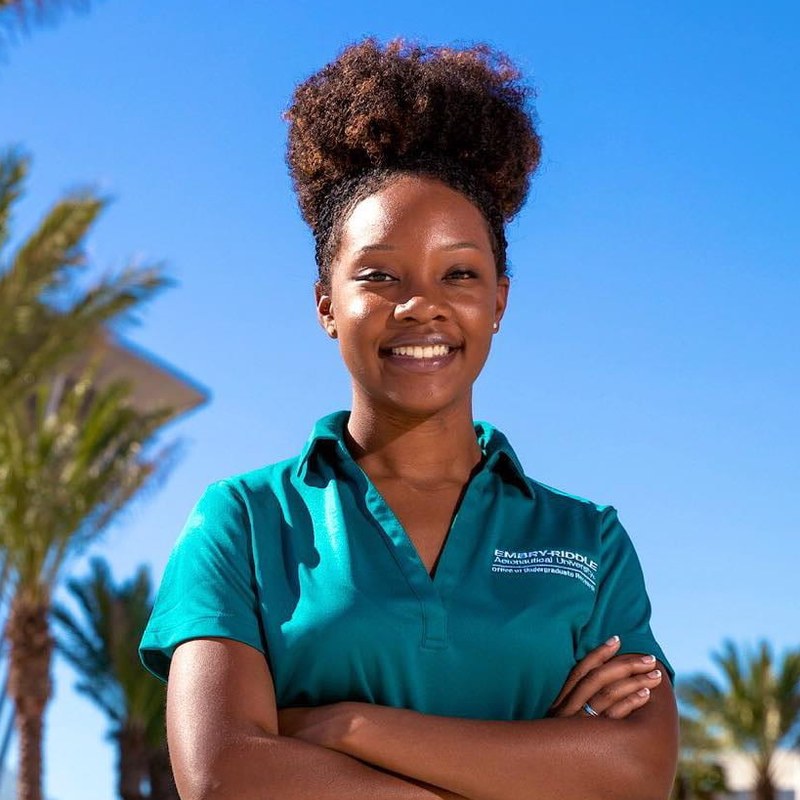
[1:01:47] Yeah. Or they think that it's not a part of your overall health. Yeah. And how do you imagine, like what support would you call for? Are you calling for in being a part of this movement? Yeah. For potential astronauts? Like what would you like to see? That's such a great, thank you for that question because I think you hit the nail on the head is to help. And that is the part that is, I won't say criminalized, but that works against you in certain respects. Like I remember vividly, I went to Embry-Riddle Aeronautical University, which is a flight school and I had friends that would not go to the therapist because they were afraid of getting grounded.
[1:02:33] And my thing is don't penalize people for seeking help. I'm going to the therapist. I'm dealing with a very natural human reaction to something that is distressing. Don't penalize me for doing the right thing, which is getting help. That should be looked, that should be a positive thing. So, and regardless of how drastic it is, now I understand there are definitely going to be things that just preclude you from certain jobs, for example, you know, that's just going to be how it is for certain jobs. But I don't think it should be generalized under this whole umbrella of like, okay, you're not fit to do this because you need help with this.
[1:03:12] I think that is the major mindset change. And you said it perfectly. Like it's not the actual illness that's stigmatized, but it's the getting help. And it has, it has discouraged me for years. And I talk about that in the book a lot, like how I'd get prescribed antidepressants and just ghost my psychiatrists. I've done it multiple. I was like, okay, no, we got to go. We got to go until I had no choice. So I still had to do it. But now I'm years later when I probably could have been living a better quality of life. And I'm not saying I'm super pro medication.
[1:03:47] I'm pro whatever you need, you know? Yeah. And, you know, you don't know what you need until you ask. And so it's that, it's that attitude that like seeking help should not be, should not be a penalty. And I think that honestly, because we haven't done like super long distance human space flight, we don't even know the long term implications of what that means for the people on those flights. Like just because you didn't struggle with anxiety and depression on Earth doesn't mean you not gonna struggle with it on Mars or on your way to Mars. Like, yeah, that is a really foolish, foolish thought.
[1:04:34] And so if we don't prepare for that, what the fuck are we doing? Like how, how are you going to send a bunch of professionals out into the middle of space and beyond, farther than we've ever, than humans have ever been, and not have no fucking Lexapro on the fucking shit? At least an emergency stash. You know what I'm saying? An emergency stash. Like, and why, why wouldn't people who have already been through those mental trials on Earth, why wouldn't they actually be the most qualified? Good point. To go to a different planet and, and, and counter those mental, like, you know what I mean?
[1:05:24] Like, why wouldn't you encounter, why wouldn't you actually opt in to choose people who have already been stabilized from, like, mental trauma or, like, you know, have proven that, I don't think people realize this. Like, by the time you get to the point where you need psych meds and stuff and, like, interventions, you've already thugged it out quite a bit. Say that. Okay. So on top of that, like, raw dogging life, basically, untherap, untherap, uh, therapized or whatever, and unmedicated. So you've got that experience. And then, boom, I sought help, and I've balanced, like, I have the chemical formula to balance myself. Right. How are you going to tell me I'm not fit for space travel?
[1:06:20] Like, especially for long-distance space travel or anything that is just mentally taxing. Like, I've already been through it all. Exactly. I've already been to the psych ward. I've already lost my mind. Right. Literally. Thank you. You ate, you ate. Does it not make sense? How late, but you at the dome. No, literally. Like, that is such a profound statement, and it's nothing I've heard before, and, like, you, you put that into perfect words. Like, why not? And I ain't even trying. Don't fucking put me in no spaceship. I got real anxiety problems. Okay. I'm sorry. Let the record show. I don't even go on airplanes.
[1:07:04] But I'm just saying for y'all who want to fly. Yeah. Okay. Like, that does not make sense to me. It doesn't. So, boom. You said it. At that point, that's an address to the powers that be. What are we doing, friends? Like, don't be mad at me because the world is a mess, and I'm trying to cope. You know what I'm saying? You know what I'm saying? Yeah. Like, imagine a bunch of people who have never had a mental breakdown before going through a mental breakdown for the first time on Mars. In space. Yeah. Ooh. That's so good. And there are no prescription medical, there's no prescription medical interventions available, or therapists around, or any type of, like, pre-organized support system for mental health.
[1:07:56] Like, what the fuck? What to do? That's just going to exacerbate problems. Like, I never even thought about that. Like, you really are, you blow my mind. Because that's exactly right. Like, that shouldn't be enough to change the culture right there. Because you're treating mental illness as a one-off, or like a, only a few percent. Like, no, we're all, we're all dealing with something. It's a spectrum. But we're all dealing with some end of that spectrum. And so, you put somebody that's on the lower end, say, on Earth, but in an extremely high-pressure, you know, situation, how, what then? You know what I'm saying? And I could be very ignorant.
[1:08:36] I don't know how, of course, I know very little about astronaut training. I know what I've researched, which is like, okay, two years and 238 talent, and you're learning certain things. But to my knowledge, considering how stigmatized just getting the help is, and how I've been dissuaded from going on antidepressants because I want to be an astronaut, that tells me that whatever they are doing, it's setting somewhat of a very unrealistic standard. And those who meet them, great for you. That's incredible. But the further we push boundaries, and the further the world also goes to whatever it's going through right now, which would stress anybody out, how are we going to relax or just bolster the resources for people in these positions, at least?
[1:09:26] Because to say they're not going to go through it, it's just, it's going to be patently false. They're going to go through something. It's going to be emotionally taxing. It has to be. It's, no one's done this before. So, you said it all. Do you know if there are, like, space therapists? Like, what kind of mental health support do astronauts actually have? I have no idea. They don't talk about it. That's an issue. Yeah. Because if they have the sign up, and I honestly haven't looked at it because, again, I don't even, I'm a ground traveler through and through. Terrestrial being? Right. That. Very terrestrial.
[1:10:08] You need to get a shirt that says that, please. Very terrestrial.
[1:10:14] Listen. Yeah. I touch grass all day. Right. Okay? Grounded. Which is crazy because I'm named after a bird. You know? That's so true. You still take flight, but in your own way. I eat chicken wings. That's how I make up for it. I eat lots of wings. But they don't talk about it. Like, I do, and I haven't looked this up. This is the point I was trying to make. Like, I hear about, oh, like, there's a call for people who want to sign up to go to Mars. And, like, I hear about these things, but, like, my main concern is what protections are there for us, like, as people who are volunteering to do this job or, you know, signing up to be employed or whatever.
[1:10:58] Like, what, how are you going to take care of the brain? Because I know I can do the science. Right. Or I know I can fly the plane. Or I know I can, you know, do the thing, be the doctor. But what about me, the human? Like, how are you taking care of my brain? Do you feel like people don't recognize the mind is a part of the brain, which is a part of the body? That's a great question. I think, ooh, you know, I don't know the way to say this. I'm not, this is, this is, what do you call it? I don't have the range, but, because this ain't my lane.
[1:11:32] But what I do feel like is, and we see this with how, like, medicine, the stigma against women and even black people in medicine, how, like, you know, for, they're still working off the systems where they think black people will have higher pain tolerance. Or, you know, they think women a lot, they label women as hypochondriacs when it's actually stuff they're really dealing with because, oh, we're more emotional. I think that's the problem. Like, the emotional aspect of the brain, which is a very real thing. Like, it's not pseudoscience. Like, it's very proven that we're emotional. I think those things are taken less seriously. I believe it's changing.
[1:12:11] The tide has changed a lot. I mean, therapy obviously has been working to be, or we as a community have designatized therapy, I think. Or we're getting there. It's working very well. But I think as it pertains to, like, the more harder science thingies in neurology or neuroscience, I think when it comes to the emotional, the less understood aspects of things, that it's kind of moved to the wayside. And they think it's a matter of, like, will and self-determination when people are dealing with, like, very chemical imbalances. And that's huge because, I mean, how often do they say, oh, I have depression. Well, go for a walk.
[1:12:51] Yes, it may help. But you don't think I tried that? Or, you know, you don't think I thought about that? Or you don't think I want to, but I just can't? You know? I think that's where the nuance comes in. And that's where things become weird, for lack of a better word. Does that answer your question? I feel like I went everywhere. Yeah. No. Yes. And the listeners will also unpack all of this in their own special way. Thank you. Like, this was, we touched so many topics in this discussion. Yeah. Like, we broke down the science. We got deep, deep into the science. We got deep, deep, deep into the socials.
[1:13:34] And that's really what this is all about. And, like, a lot of scientists are like this, but we just never have the space to talk about both things. And I'm really glad that we were able to do that today. So, is there anything that we didn't get to talk about that you would like to talk about? I don't think so. You navigated this. You drove this perfectly. I feel like I talked about things I'm most passionate about. I forgot we were on the podcast. Honestly. I'm just like, oh, yeah, wait. I love that. I'm glad I was watching my mouth. Thank you, Jesus. But. No, you're good.
[1:14:13] Like, I'm really glad you feel that way. Like, it's, I don't know, I feel this way on every episode, but everyone just has such amazing perspectives to learn about and draw from. And I'm excited to, I'm excited to see what everyone else has to say. I know I'm going to have you on here again. So, I'm going to ask the audience, if you're listening or watching, leave me a comment. Like, comment on my stuff. I want to know if you have any questions for Naya, the rocket scientist, the aerospace engineer, any questions about rocket science or anything that we talked about, about the social context around space and the space industry and the astronaut profession, please would love to hear you and hear from you and read your questions.
[1:15:09] And next time that we have Naya on, I'll make sure that we answer those. But, yeah, where can people find you? Sure. So, I'm on Instagram. X, formerly known as Twitter. I haven't gotten used to that. I know. TikTok. And it's all at AstroNaya. I think Instagram is like AstroNaya underscore. But AstroNaya, you should find me most places. Perfection. And let's see. Is there anything, any, like, parting words for our audience? I think what you said about finding your voice was especially profound. And I think we hit something that could be, like, a very golden nugget about, like, you know, creating the field and the spaces and the communities we want to create.
[1:15:58] And that, you know, we have more power than we think. So, yeah. Follow Dr. Baxter's lead and use that voice because it matters. You freaking matter. I don't know how else to say that, but, like, your voice matters. You are not invalid because you want to see a more inclusive space field or because you're from this background and you are historically like, you're just not invalid. Use your voice. We need it. And you never know who's listening and watching. So, yeah. I mean, and I think a lot of people don't realize the power of using your voice and just not being afraid.
[1:16:36] It's that people have no choice but to hear you. Like, if they find you, they may not agree with you. They may not even understand what you're talking about. Or they could completely understand and it could resonate with them. But everyone has heard your voice and you don't know what the impact is of that until you use your voice. And that is the only reason why I have this platform. And it's not all about me. Like, it's really about the people who have supported me along the way. People who have worked in HR, who have, you know, sent me opportunities that resonated with things that they've heard me talk about.
[1:17:18] And, like, things that they felt, like, would be impactful and helped me on my mission to make science inclusive. Or people who oversee grant opportunities. Or people who run different organizations or are in politics. You just never know who is going to be on your team. And they won't know that to support you if you don't use your voice. So, you know, to that note, I think everyone who has supported me and Naya, because we're both science communicators. And, you know, I just ask that you all just continue to share and share our stuff and amplify our voices. Because we really do our best. And I can vouch for Naya, too.
[1:18:07] Like, I think she and I both work really hard to really maximize our potential in this field, whether it's through our work as scientists, but, like, also our social impact in using our platforms that we've been blessed to have to advance society. So, yeah. Like, with that being said, so many good nuggets. So many good nuggets. Thank you for listening. Naya is going to be back on again. And, yeah. We will see you soon. Yes. Bye. Thank you. Thank you.