Dr. Raven Baxter gave the opening keynote of the 2025 California Science Education Conference on Oct. 17, 2025, at the Palm Springs Convention Center. Her talk was titled "Science Communication Can Be the Antidote to Misinformation, If We Let It."
The California Association of Science Educators (CASE) held the three-day conference under the theme "Science for All." Baxter spoke on Friday morning, after the association's annual membership meeting and awards. The weekend offered more than 180 sessions and an exhibit hall, according to the conference program.
California had already written misinformation into its school plans. Under AB 873, signed in October 2023, the state must add media literacy to its curriculum frameworks, KQED reported. Recognizing fake news is among the lessons, and the frameworks include science along with English, math and history.
Science teaching faced its own strain. Six weeks before the conference, CalMatters reported that 30.7% of California students met the state science standard on the latest tests. In 2023 the state set aside $85 million for math, science and computer science education. About $1.5 million of it went to training science teachers.
Baxter argued that teaching students to communicate science matters as much as teaching the content. She called for science communication to be a core learning objective in K-12 science classrooms. As described for the conference, her talk covered how misinformation affects young people and how teachers can help students become trusted voices on science. She also shared classroom methods for helping students simplify complex ideas, think critically and share accurate science with their communities.
A 2018 study in Science by researchers at the Massachusetts Institute of Technology found that false news spread farther and faster on Twitter than true news, MIT News reported.
In the conference program, co-chairs Crystal Starr Howe and Amy Kraft wrote that the opening and closing keynotes, by Baxter and Shernice Lazare, "highlight the need to empower ALL students to use science as a tool in their lives."
CASE dates to 1945, according to a history in the same program. It was incorporated in 1964 and took the name California Science Teachers Association in 1972. In March 2020 it became the California Association of Science Educators, a change the group says was meant "to embrace inclusivity."
"Your talk resonated with our attendees, and your energy and authenticity truly set the tone for the weekend," Michele Holcomb, the association's executive director, wrote in a testimonial published on Baxter's speaking page.
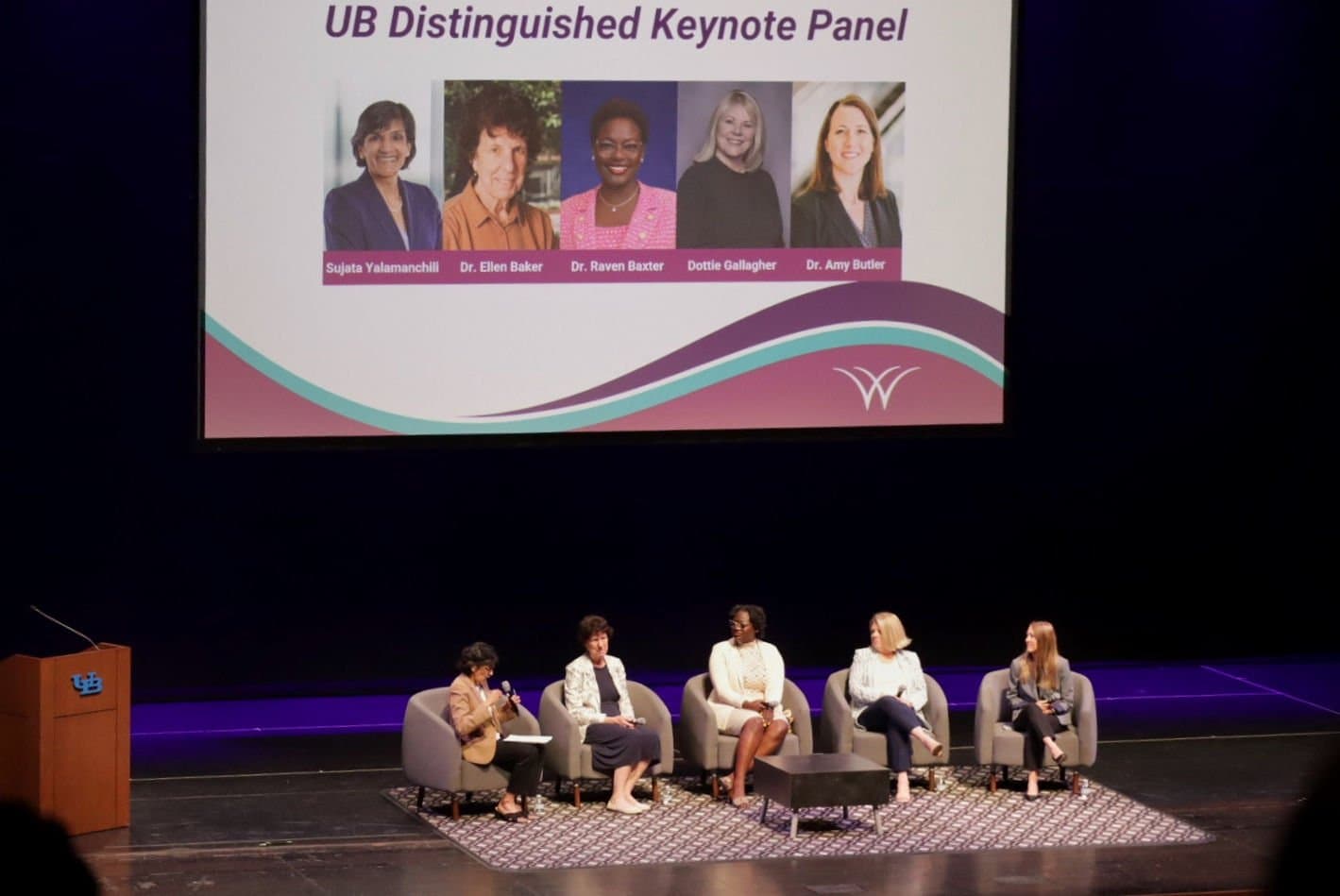
Baxter, a molecular biologist and science communicator, once taught biology at SUNY Erie. Her Ph.D., earned at the University at Buffalo in 2022, is in curriculum, instruction and the science of learning.
The California Science Education Conference returns to Sacramento Nov. 6 to 8, 2026.