Raven Baxter gave a keynote at VOICES 2021, an online conference on teaching science, technology, engineering and math with song, on Sept. 26, 2021. Her featured talk, "Unapologetically You in STEM," ran about 23 minutes on Zoom and was followed by audience questions.
She opened with a lesson from her career. "One of the most important lessons I've learned is how important it is to arrive authentically into science spaces," Baxter told attendees. She said music is one of her tools for arriving authentically.
Less than two weeks before the talk, on Sept. 13, Nicki Minaj tweeted a claim about the COVID-19 vaccine that drew wide backlash. Global Voices reported that "in one judgement-free post" Baxter reposted her rap explaining how the vaccines work.
Her years in industry research
Baxter said she had positive experiences with science as a student. That changed in her first years as a research scientist in corporate America, when she faced many microaggressions. "People were telling me that I didn't look like a scientist, that I didn't have a place in the career," she said.
In April 2021, Pew Research Center found that Black workers made up 11% of all employed adults but 9% of STEM workers, with no change since 2016.
She thought of the Buffalo Public Schools students she had taught as a substitute during her master's program. "I want to be a part of this culture shift that's necessary to create more safe spaces so that people like me can show up in science spaces authentically," she said. She left the lab for a doctorate in curriculum, instruction and the science of learning, with a concentration in science education.
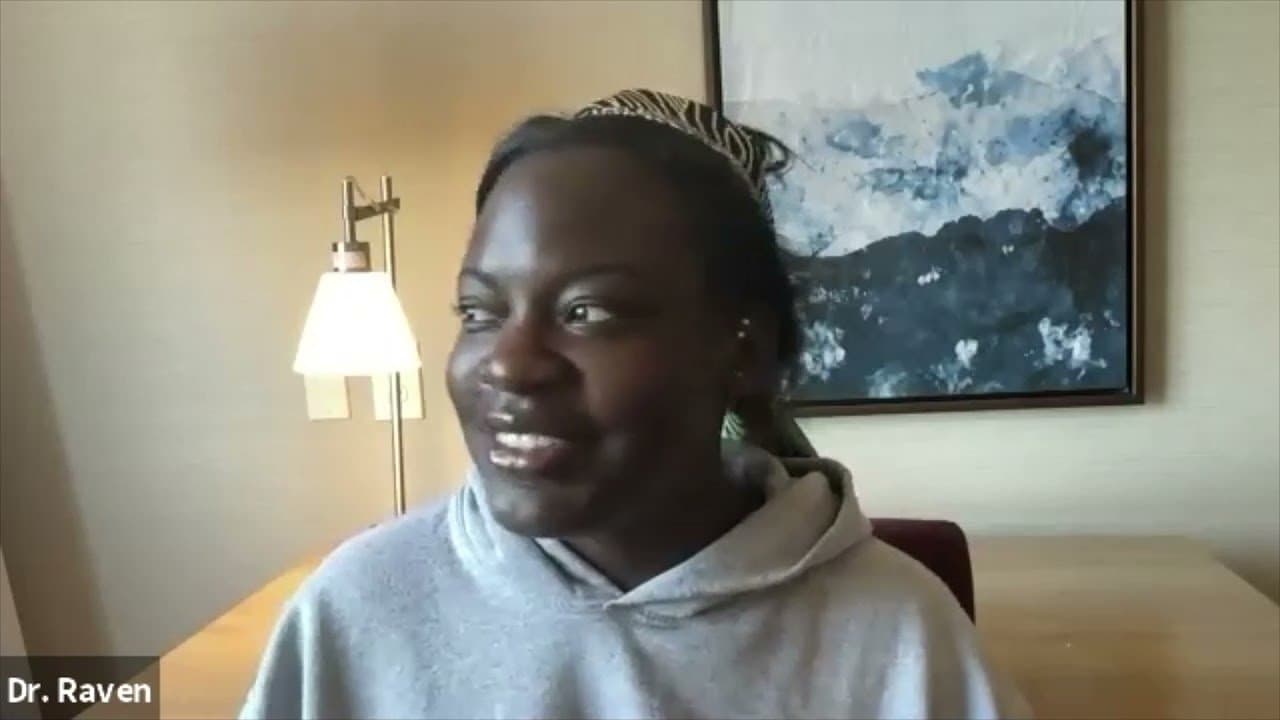
 Baxter describes leaving industry research for science education. Image: VOICES / CAUSEweb video
Creative projects in her biology classes
While teaching non-majors biology at Erie Community College and lecturing at Buffalo State College, Baxter replaced some exams with creative projects. One student made a board game about the digestive system. Another performed spoken word poetry about the circulatory system. Theater students staged a mini musical about the menstrual cycle.
"There's more than one way to demonstrate how you know something, and it's not always with a pen and paper," she said. She then moved her own science communication from explainer videos to music. She said she has made beats and rapped since high school.
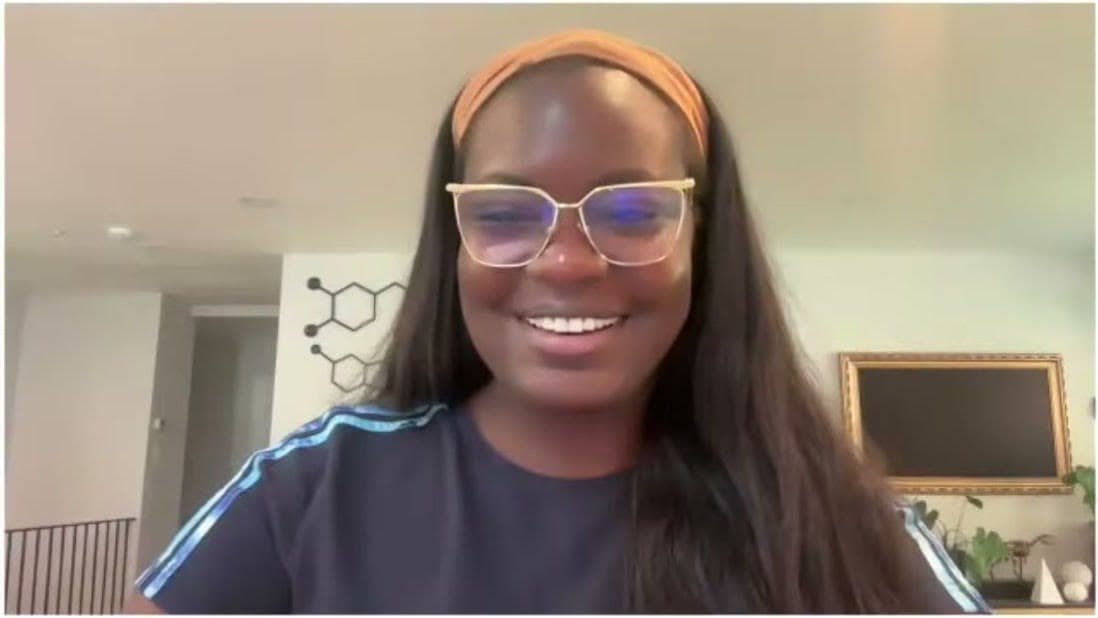
 Baxter describes the creative projects her non-majors biology students made. Image: VOICES / CAUSEweb video
Her science songs
Baxter called Big Ole Geeks, released in 2019, her statement on being yourself in science. The video is "unapologetically hip-hop," she said, with club scenes and luxury cars, and scientifically thorough. "You can have all of these dimensions to who you are but still be a part of the science community," she said.
She said she made Wipe It Down in 2020, the day after New York sent people home, and the conference played it immediately before her talk. Within a day of posting, she said, viewers wrote that they had seen it on the news in Honolulu, Michigan and Nevada. "You don't have to be afraid, but you do need to be informed, so why don't we just dance while we're getting information," she said.
Her antibody song, on the adaptive immune system, went viral in 2020 and again "about a week ago," she said. She said the goal is to make people curious. "If you can just get one person to say, what now, what did she say in that song, or I'm gonna go look that up, it can make a huge difference," Baxter said.
Questions from attendees
An attendee asked whether teaching with songs is easier for white male instructors, and whether she had faced pushback from administrators. Baxter called Big Ole Geeks a necessary risk and said administrators at the high school where she taught Regents chemistry loved the video. "You have to challenge the norm to shift it," she said. "If we all continue to do the same things, when are things going to change?"
Asked about the role of organizations, she said each person should ask how they use their voice, and leaders should back inclusion and amplify individual examples. "It's definitely a community effort, but it starts with us as individuals," she said.
For teachers new to songs, she advised clear learning objectives and freedom to choose any genre, from opera to techno. She also suggested partnering with music teachers.
VOICES and CAUSEweb
VOICES stands for Virtual Ongoing Interdisciplinary Collaborations on Educating with Song. It began as a live-streamed meeting in September 2017, and the 2021 edition was its fourth. It is hosted on CAUSEweb, home of the Consortium for the Advancement of Undergraduate Statistics Education, which grew out of a 2001 American Statistical Association initiative.
The National Science Foundation funded the organizers' Project SMILES, on student-made songs in introductory statistics. Larry Lesser of the University of Texas at El Paso introduced Baxter. The day's program also included a featured talk by Lana Israel of Muzology.
Baxter, a molecular biologist who makes science music, was then finishing her doctorate at the University at Buffalo. In 2020 she made Fortune's 40 Under 40 in health list.
The keynote page is on the VOICES website, and the full recording is on the VOICES YouTube channel.
https://www.youtube.com/watch?v=v7O4Ymnv9Z4