Raven Baxter gave the opening keynote at the Intrepid Museum's Girls in Science and Engineering Day on March 6, 2021. The New York museum held the annual festival online that year and streamed it live on YouTube.
Three high school interns from the museum's GOALS for Girls program interviewed her. "Don't shrink yourself to fit in a space," she said.
The festival fell less than a month after the United Nations' International Day of Women and Girls in Science and two days before International Women's Day.
Interview with the GOALS interns
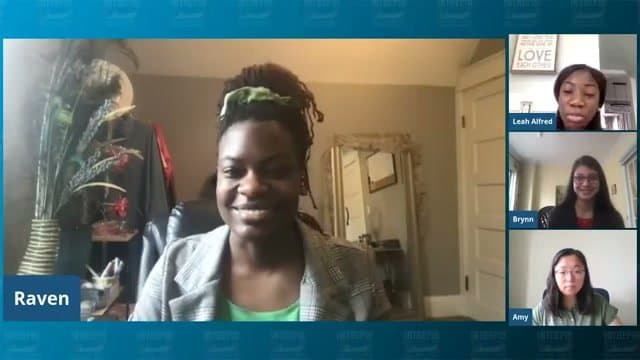
 Baxter and GOALS interns Amy, Leah and Brynn as the interview opens. Image: Intrepid Museum video
One intern asked what she would tell young women of color who feel held back by stereotypes about women in science. Baxter said people can often sense a bad fit. She urged listeners to look for places where they fit. She pointed to sociology research on the harm people suffer when they squeeze themselves into boxes.
For people who cannot leave a hard place right away, she said, "Just realize that your feelings are valid." She added, "You still belong, you still deserve to be there, and it's also not your job to fix everything." She told them to find networks and people they trust.
"That is a really good statement," the intern answered. "I'm going to start using that."
Asked what she is most proud of, Baxter said the mark she wants to leave "is for people to feel like they belong, and for people to feel like they belong as they are, and that they don't have to change who they are to be in this field."
Diversity and creativity
Institutions can help, Baxter said. She called for diversity training for new hires, because some people hold unconscious biases that affect others' experience in STEM. She also said people need room to share who they are when they arrive at work or school.
Diversity, she said, is "about everything that you bring to the table." For her, that includes art and music. "Being creative and being able to think outside of the box does help me be a better scientist," she said.
Advice on careers and social media
Asked how to narrow down many interests, she said, "If you're worried about narrowing down it might mean that you haven't quite explored enough." She did not settle on her own path until she finished her master's degree.
Her public career, she said, started with science rap videos she had shared only with friends. One friend urged her to post them publicly. The first one went viral, and the next day it was on TV in Hawaii. She said she was trying to write more raps tied to current events, such as NASA's Perseverance landing on Mars that February.
Social media can teach, she said, but people can get on it and say anything. "We really need to make sure we teach students how to fact check, how to source information," she said. "If they hear something, don't believe it immediately."
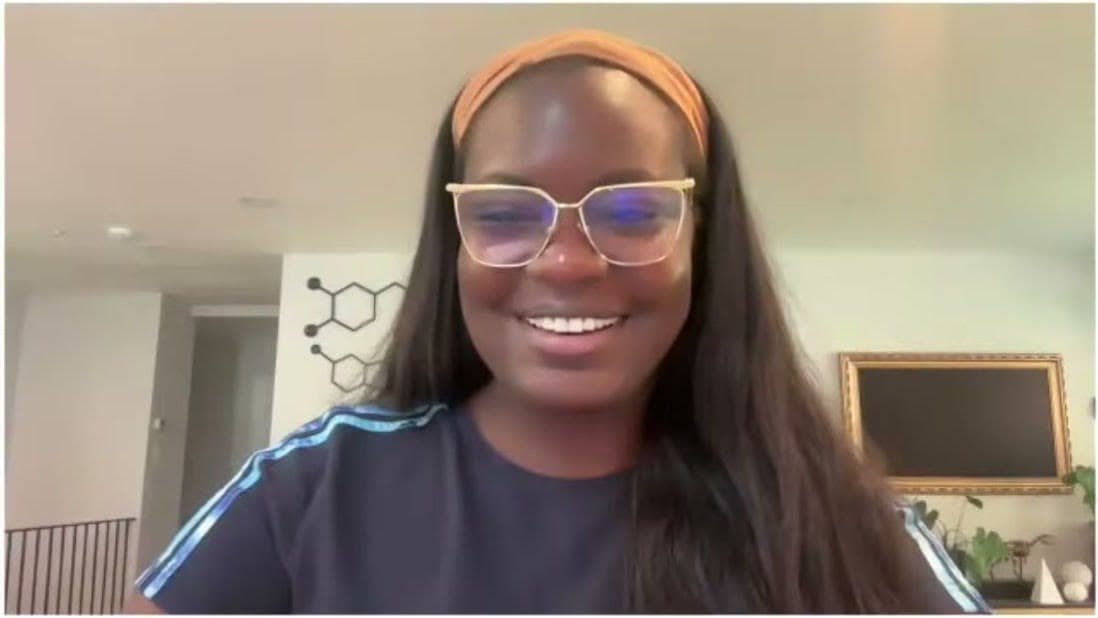
 Baxter answers a question about failure. Image: Intrepid Museum video
On setbacks, she said, "I like to tell people that I eat my failures for breakfast." Failure, she told the interns, means "you still have room to grow." A viewer asked about self-doubt. "The last thing that I ever want is to be the thing that's in the way of me achieving my goals," Baxter said.
Intrepid Museum
The Intrepid Museum is a private nonprofit founded in 1982 with the acquisition of the aircraft carrier Intrepid, now a National Historic Landmark. It displays the Space Shuttle Enterprise and welcomes more than 1 million visitors a year, according to its about page.
The festival returns each March. The museum called its 2024 edition the 10th annual. In its 2026 announcement, it said the festival "aims to bridge the gender gap in STEM by fostering an inclusive space for girls and youth to discover their potential." Its GOALS for Girls program pairs a six-week STEM course with internships for girls.
Known online as Raven the Science Maven, Baxter was then a doctoral student at the University at Buffalo. Months earlier, Fortune had named her to its 40 Under 40 list in health.
The Intrepid Museum posted the full festival stream on its YouTube channel. Baxter's interview begins at about 25 minutes.
https://www.youtube.com/watch?v=Y5-1bHNbYx8