Raven Baxter gave the keynote for the My STEMM Future celebration event on Oct. 20, 2021. The program, run by Wellcome Connecting Science with the Youth STEMM Award, supports UK secondary students from groups historically excluded from science.
October 2021 was Black History Month in the UK. Black History Month UK magazine named "Proud To Be" as the theme for that year. Its campaign invited Black and Brown people of all ages across the UK to share what they are proud to be. People could take part by letter, email or social media.
Her talk, recorded in advance and shown at the virtual celebration, ran about 25 minutes. Baxter opened her own story with a setback. She finished high school at 16 and went straight to college. "I ended up failing out of college actually. And a lot of people are surprised to hear that," she told the students.
Retaking failed classes
Baxter spent a year at a community college retaking the classes she had failed. She then transferred to a four-year school and, she said, graduated with honors. She called it a huge improvement from where she started.
Experiments rarely work the first time, she told the students, and that says nothing about a scientist's ability. "It's okay to fail. Failure is a part of science, one of the biggest parts of science, and it's how we learn things in science," she said.
Impostor syndrome
Impostor syndrome can come from other people, Baxter said. Some colleagues she worked with did not understand the importance of diversity. "I felt like I didn't belong, but not because necessarily I thought I didn't belong, but because other people were signaling to me that they didn't feel like I belonged there," she said. She advised students to know who they are and stand firm in their passion for science.
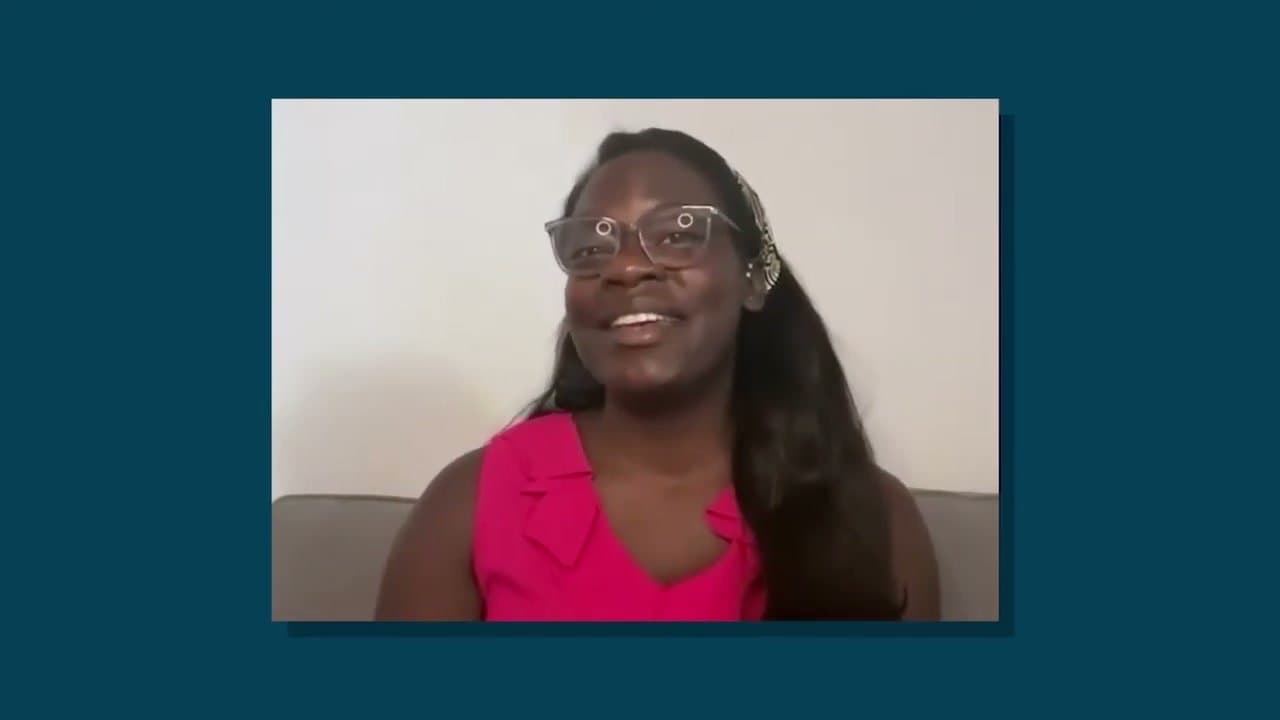
 Baxter describes the work of molecular biologists early in her keynote. Image: Wellcome Connecting Science video
She described a recent fireside chat with medical students at Johns Hopkins. They asked what worthwhile sacrifice she had made along the way. She said it was her comfort. "Sometimes you have to be uncomfortable to grow. And sometimes you have to make other people uncomfortable to make institutions grow," she said.
As a student, she gave up some comfort "to speak up for giving graduate students livable stipends and wages," she said. As a professional, she was "advocating for people to have spaces at work to breastfeed."
Her path into science
Baxter traced her path for the students. At Space Camp, she trained as a junior astronaut and found she was afraid of heights. She turned her sights to the environment when she began college.
A required genetics class later drew her to the world of molecules. She described "little protein machines in our cells that are doing work to keep us alive." She went on to a master's degree studying protein folding, then worked in a cancer research lab.
After years of working in higher education, she said, one of the things she most enjoys is seeing students find their voices. "Each of us are special, each of us belong somewhere. And each of us have a voice that should be valued and heard," she said. She closed with a message about the path ahead. "Your journey matters and don't be afraid to take the scenic route."
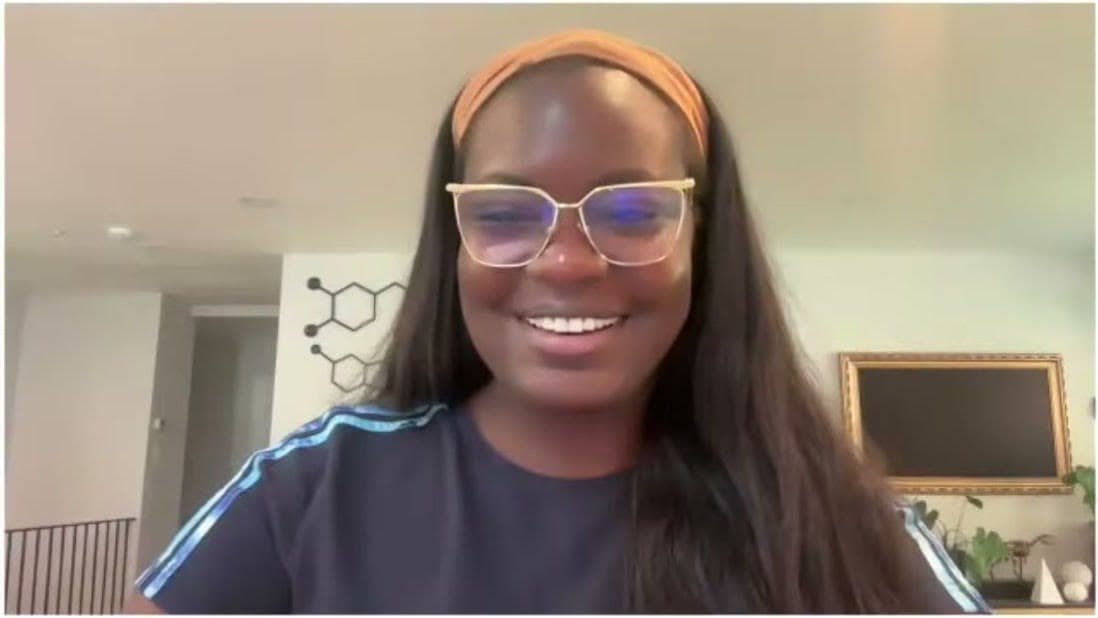
 Baxter near the close of her keynote. Image: Wellcome Connecting Science video
Wellcome Connecting Science and My STEMM Future
Wellcome Connecting Science is the learning, training and engagement program of the Wellcome Sanger Institute, established in 2014. It is based on the Wellcome Genome Campus at Hinxton, Cambridgeshire. The Sanger Institute sequenced about a third of the human genome, which the campus calls the largest single contribution to the Human Genome Project.
My STEMM Future helps students earn Bronze or Silver Youth STEMM Awards. It pays for enrollment, supports teachers and offers genomics resources, careers webinars and campus visits. The program began as Black STEMM Futures. It took its new name in September 2021 "to better reflect the diversity of students and scientists involved." In 2022, it was nominated for STEM Initiative of the Year at the Cambridge Independent Science and Technology Awards. The Youth STEMM Award was founded at the John Innes Centre in Norwich.
Baxter, then a doctoral candidate at the University at Buffalo, is a molecular biologist and science communicator. She is known online as Raven the Science Maven.
Wellcome Connecting Science posted the full recording of her keynote on YouTube on Oct. 21, 2021.
https://www.youtube.com/watch?v=XICcWWq9vXg