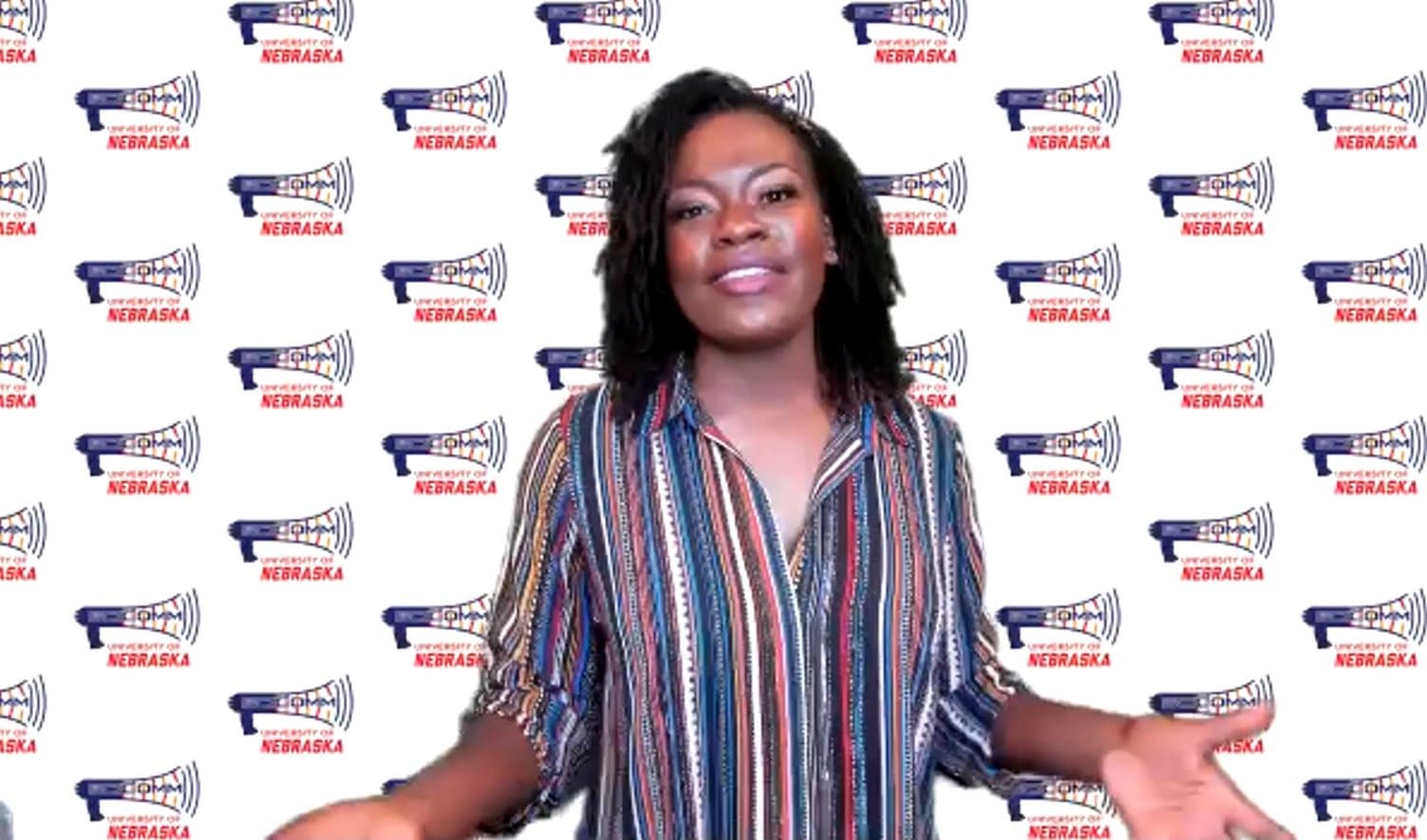
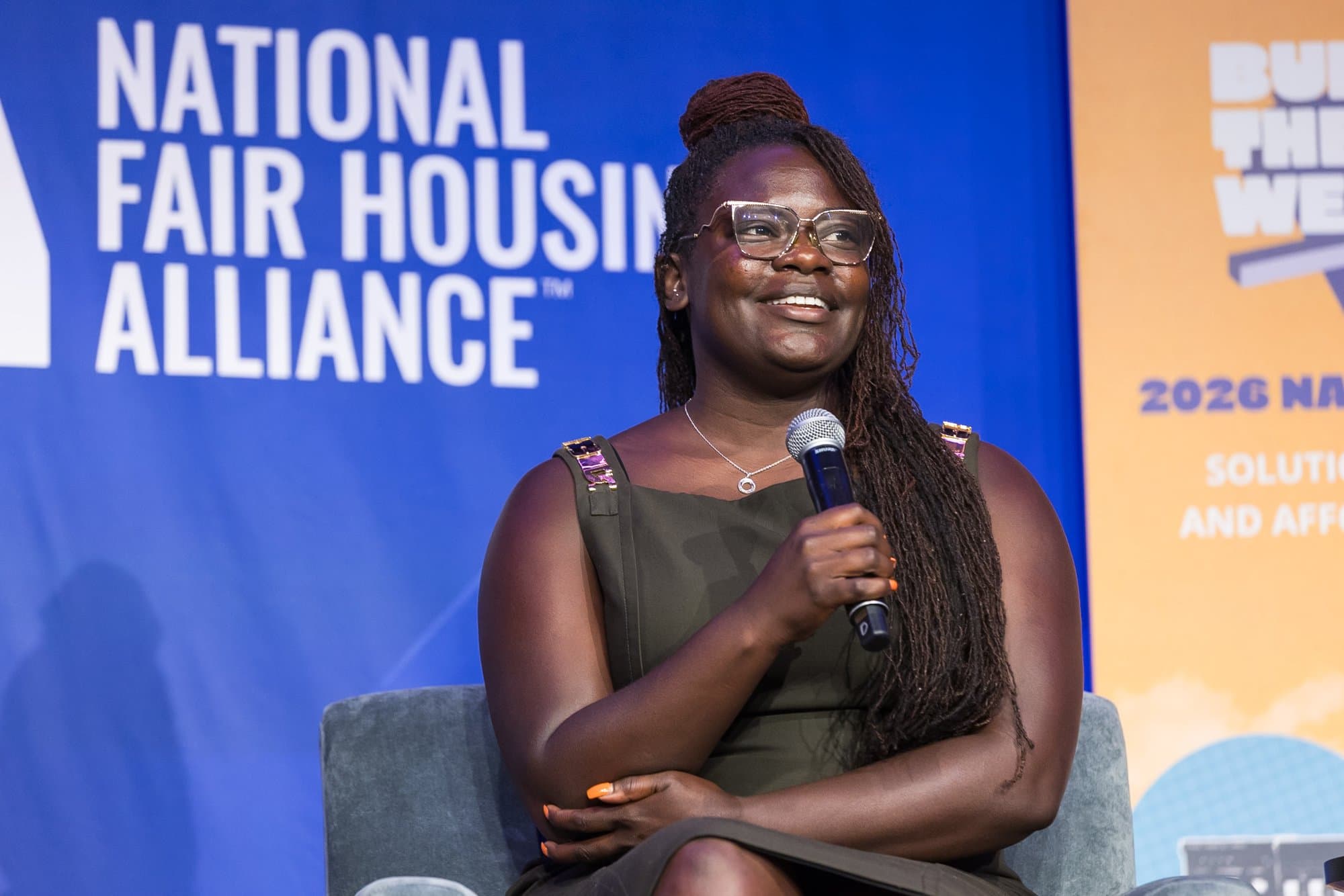
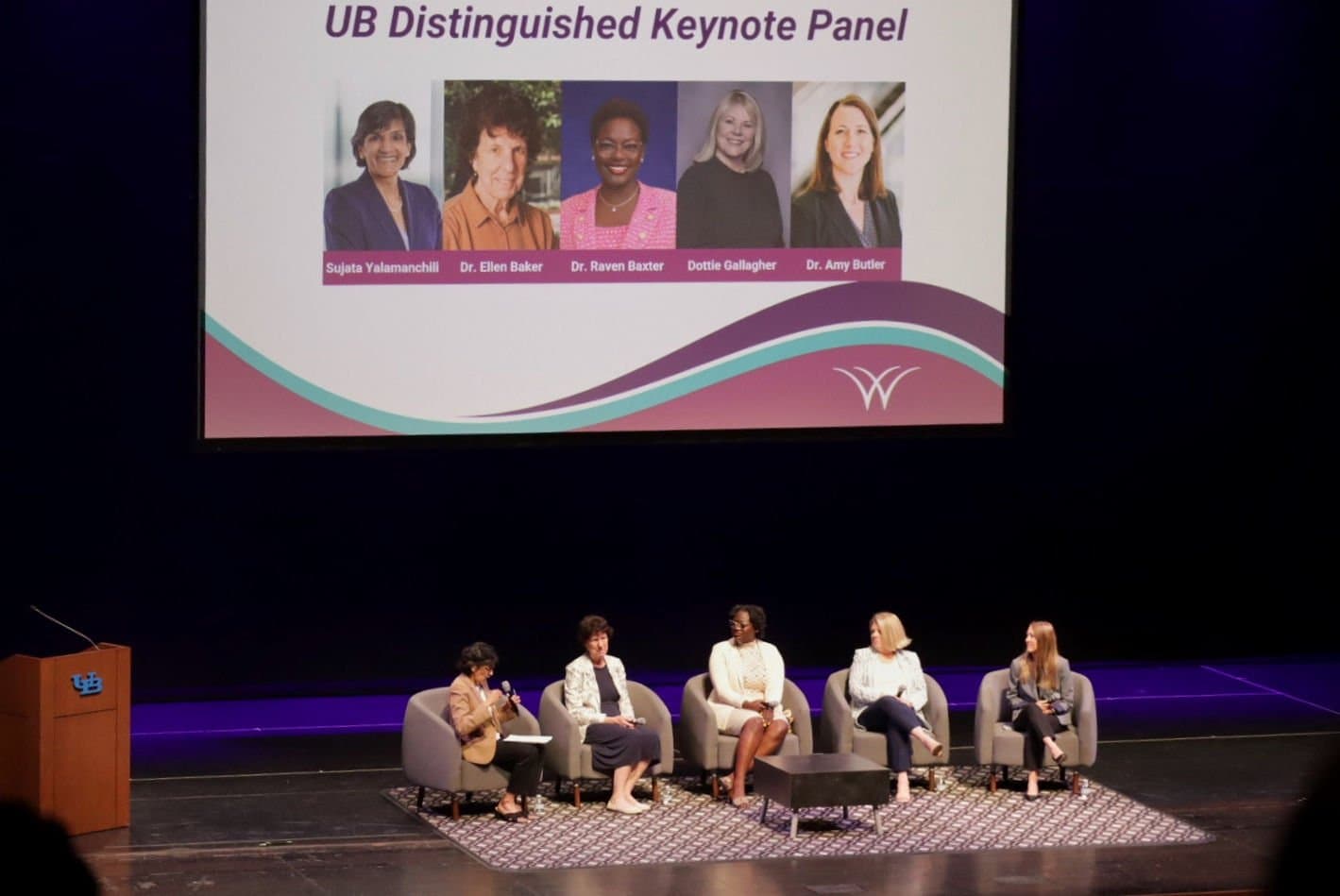
Raven Baxter gave the opening keynote of SciComm 2020 on Aug. 14, 2020. The University of Nebraska-Lincoln (UNL) held the three-day science communication conference on Zoom from Aug. 14 to 16.
Organizing committee chair Eileen Hebets welcomed attendees, and Jocelyn Bosley introduced Baxter as "our first keynote speaker." Baxter asked the audience to imagine unmuting and screaming into their microphones. "That's really going to be the center of my talk today, is how to find your voice as a science communicator," she said.
Her early career
At her first job out of graduate school, a corporate molecular science lab, Baxter was the only person who looked like her, she told the audience. On her first day as a college instructor, she said, a co-worker called her faculty ID fake and threatened to call the police.
"My philosophy is always that if you love science, if you want to do science, then you belong in science, and that's it," Baxter said.
She then began a Ph.D. in science education. In her research she found almost 50 years of studies on public images of scientists. In the media, she said, scientists have mostly been shown as white men. "I made it my mission to redefine what the image of a scientist is in America, at least, and I wanted to make a statement to the world that anybody can do science," she said.
Big Ole Geeks
Baxter played a clip from "Big Ole Geeks," her July 2019 rap music video. It pairs club scenes and fast cars with lab work and lyrics packed with science.
 Baxter tells the online audience how she found her voice as a science communicator. Image: No Coast SciComm video
"As I formed my identity as a science communicator, I really wanted to be my unapologetic self. It was so important to me that I shatter literally every box that I felt I was being confined to," she said.
She studied the video's impact in her doctoral research. She surveyed and interviewed 50 Black women, she said, 25 with STEM careers and 25 without. Women in STEM said the video encouraged them to persevere. "Almost 80 percent of the people who did not have STEM careers said that they at least would have tried to pursue a STEM career if they had that type of representation earlier in their lives," Baxter said.
She closed by urging communicators to look at the boxes others place them in, and at the ones in their own heads. "It's so important that we not only focus on the science but also the communication aspect, and a part of communicating is making sure that you are involved in the communities," she said.
Questions on media and skepticism
In the question-and-answer session, Bosley relayed a question from a shark scientist about the lack of women and people of color on Shark Week. Baxter urged communicators to tag the Discovery Channel and hold that conversation in public.
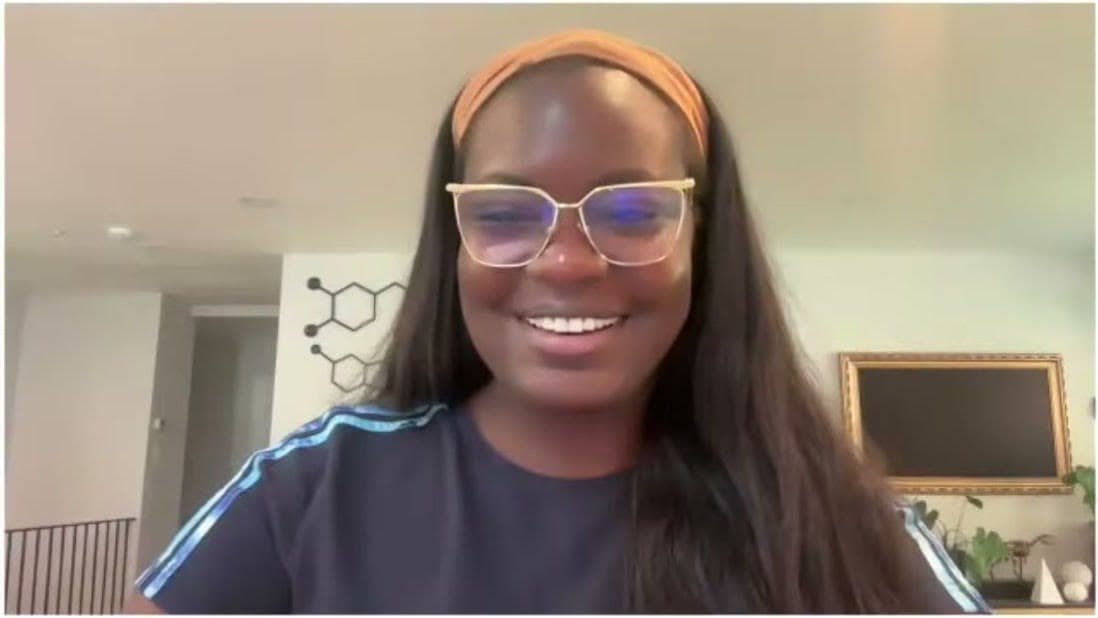
An anonymous attendee asked how to approach rising skepticism toward science. "We as science communicators now more than ever have a true responsibility to actually serve, like provide a service and serve our country with information, accurate, correct information, facts," Baxter said. Communicators also have a duty to be approachable, she said, and to start conversations pleasantly.
 Baxter answers a question on skepticism toward science. Image: No Coast SciComm video
"Now is really the time to perfect your skills as a science communicator, and as a communicator in general, because we have a lot of healing to do here in our country, a lot of bridges to build," she said.
Bosley closed the session. "I can't think of a better way to end the beginning than that," she said.
SciComm at the University of Nebraska-Lincoln
SciComm began in 2015 as a one-day symposium led by Dr. Matthew Wilkins, then a UNL postdoctoral fellow. UNL made it a two-day professional conference in 2018. By 2020 it alternated with Kansas State University, which hosted in 2019.
UNL's recap counted 658 participants from 34 countries and 44 U.S. states. Baxter shared the keynote program with Dr. Uché Blackstock, Andrew Revkin and Dr. Christopher Volpe. Six featured speakers and 23 oral presenters joined the keynote speakers. According to the recap, Baxter's message was that "your 'scicomm' should reflect your personality, passions, and lifestyle."
At the time, the molecular biologist known as Raven the Science Maven was a University at Buffalo doctoral candidate. UNL's announcement also noted that she founded STEMbassy. In September, Fortune named her to its 40 Under 40 in health.
No Coast SciComm posted the 54-minute recording on YouTube, and UNL shared it with the other keynote videos on Sept. 9, 2020.
https://www.youtube.com/watch?v=eEj6yLfMVCs