The Washington Post's Science section published a Q&A with Raven Baxter on Sept. 24, 2021. Reporter Dawn Fallik asked her about her path into science, her research, her work on social media and the country's doubts about science.
Asked whether the pandemic's doubts about scientists, vaccines and masks surprised her, Baxter said no. "I am not surprised. I do not feel that the current and past states of our school systems have been focused enough on science literacy for it to be a surprise," she told the Post.
"We must learn from what is happening today regarding trust in science to move forward and build the country's science literacy through education," Baxter said.
She told Fallik she grew up in Buffalo watching Bill Nye and Al Roker. "I don't think I learned that there were female scientists until I went to space camp when I was around 10 years old, and then I learned about Mae Jemison," she said. Asked about now being that picture of a scientist herself, she said, "I will have like a presence in many spaces. So by default I can totally see how I would become the image of a scientist."
The Post noted her music video "Antibodyody," her guest role in NASA's TechRise Student Challenge and her series on Facebook's Bulletin, a platform for independent writers that launched that June. She planned biweekly audio chats on topics from aliens to elitism in science. "My goal is to build a science community, and Facebook has 3 billion users. I want to do all I can to make sure they are informed and involved," she said. She added that social media had not found a way to protect marginalized people. "But I'm not going to leave 3 billion people out just because I have an issue."
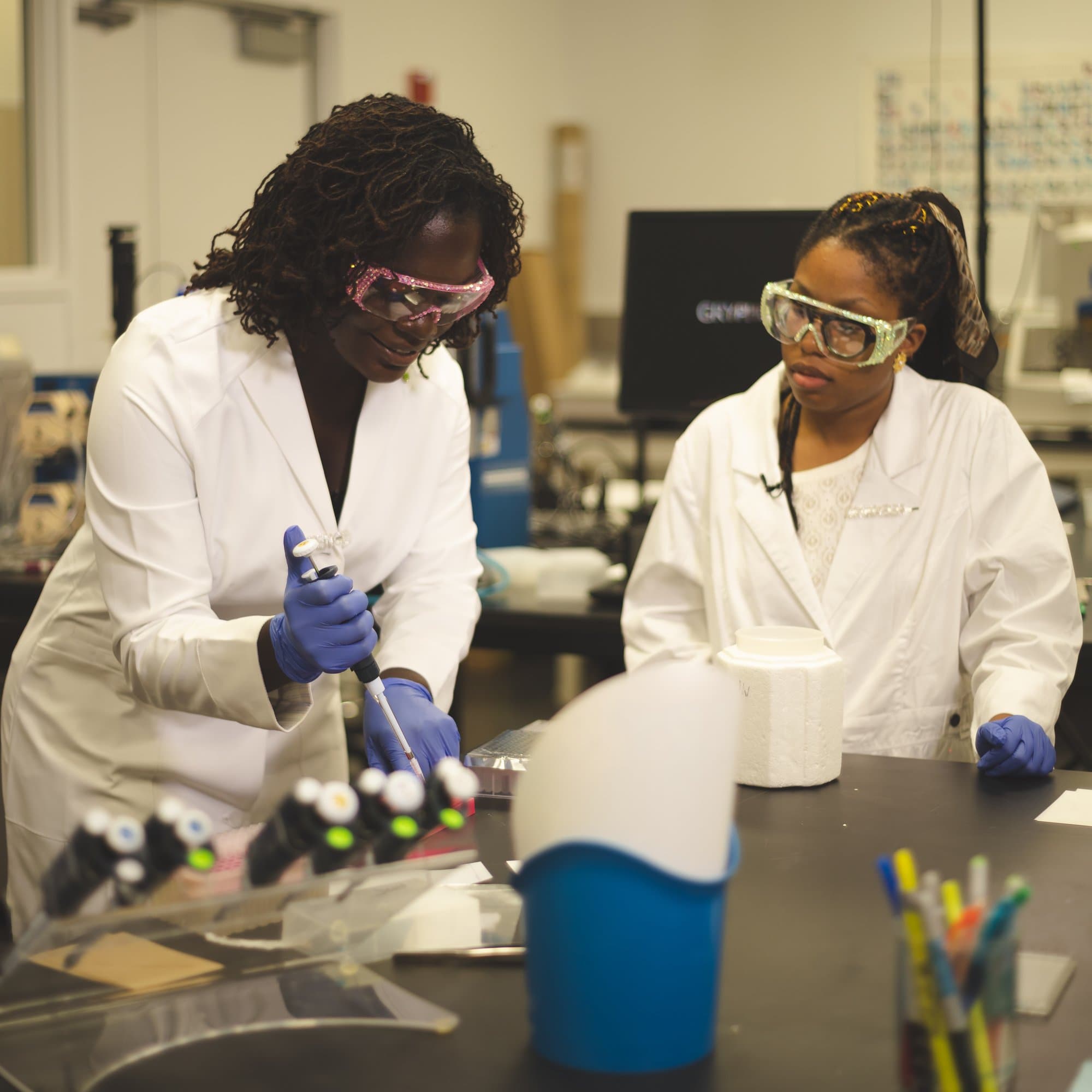
She also described her master's research on a molecular chaperone, a protein that helps other proteins work, and its twin, called an isoform. On her Smarty Pants clothing line and rhinestone goggles, she said, "this is one way you can shine in science, and we don't see enough of that."
The Post, founded by Stilson Hutchins, has published since Dec. 6, 1877. Fallik is a Philadelphia-based medical reporter and an associate professor at the University of Delaware. After the story ran, YouTube CEO Susan Wojcicki wrote on Twitter, "Congrats @ravenscimaven - loved this feature of you in the @washingtonpost!"
Baxter, a molecular biologist who goes by Raven the Science Maven online, was then a Ph.D. candidate at the University at Buffalo. That summer she had begun a new role at the University of California, Irvine's School of Biological Sciences.
The full Q&A is on the Washington Post's website.