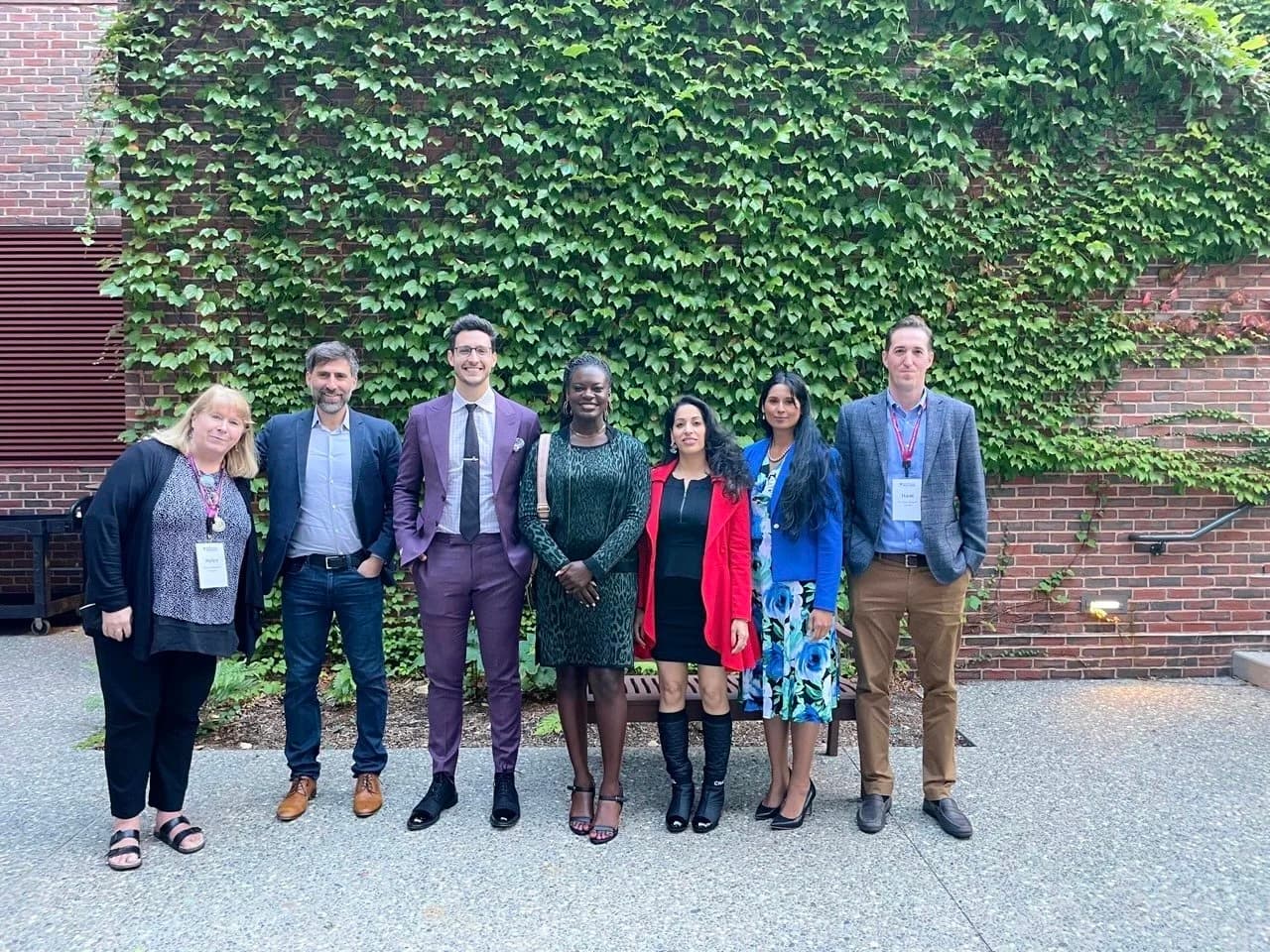
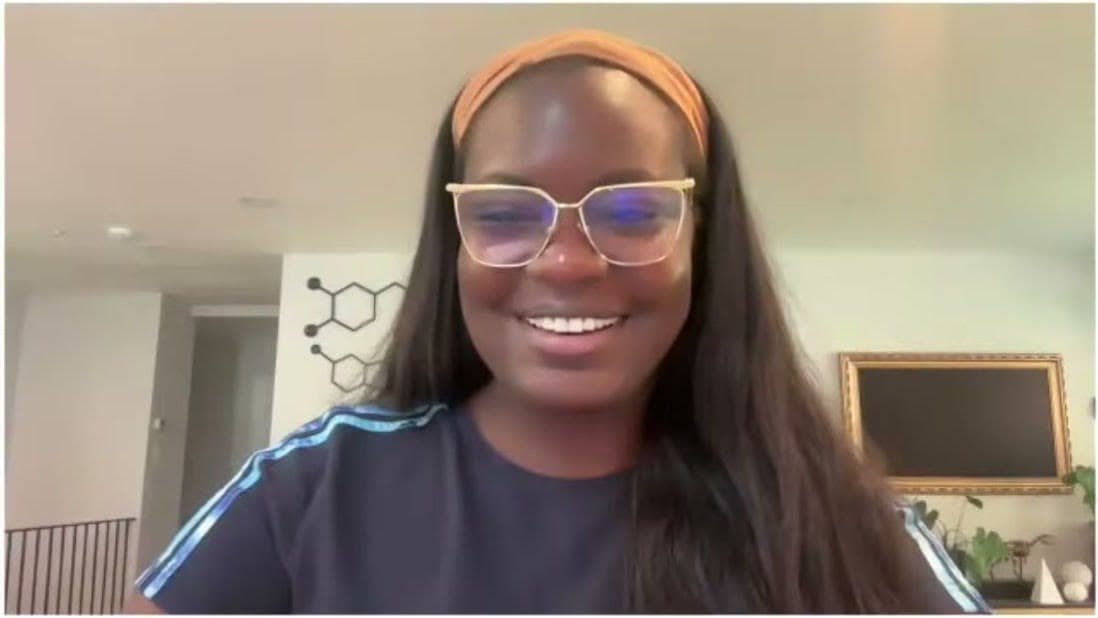
Two reporters, three physicians and Dr. Raven Baxter met at Harvard Kennedy School on Sept. 27, 2022, to discuss communicating science and risk during outbreaks. Belfer Center fellow Dr. Syra Madad, an epidemiologist, moderated the seminar, titled "Science and Risk Communication During Outbreaks: From Science Communicators to Journalists."
In a 60 Minutes interview aired nine days earlier, President Joe Biden said, "The pandemic is over." COVID-19 deaths were still averaging about 400 a day, CBS News reported. A KFF poll taken Sept. 15 to 26 found about half of adults had heard only "a little" or "nothing at all" about the new boosters. In July, the World Health Organization had declared the spread of mpox, then called monkeypox, a global health emergency.
In August, Centers for Disease Control and Prevention Director Rochelle Walensky announced an agency overhaul. She told staff that "our performance did not reliably meet expectations." Helen Branswell of STAT, who joined the Belfer panel six weeks later, reported that story.
Belfer's event page called outbreak communication "a cornerstone of effective outbreak control." It said COVID-19 and mpox had shown "both good practice examples as well as challenges."
The reporters were Branswell, a senior writer at STAT, and Dan Diamond, a national health reporter at The Washington Post. The physicians were Dr. Seema Yasmin, Dr. Isaac Bogoch and Dr. Mikhail Varshavski. Yasmin directed the Stanford Health Communication Initiative, and Bogoch was an infectious diseases specialist at the University of Toronto. Varshavski is known on YouTube as Doctor Mike.
 The Belfer Center's flyer billed Baxter as the panel's science communicator. Image: Belfer Center
In July 2021, Madad and Eleanor J. Murray wrote in a Belfer article that risk communication was "changing from the older, top-down model." Independent scientists, clinicians "and even trainees" were "being called on to help the public understand," they wrote.
Belfer's speaker bio called Baxter a molecular biologist "known for effortlessly merging science with pop culture." It said she "challenges the status quo to prove that science communicators aren't all one and the same."
Belfer held the seminar on the record for Harvard faculty, fellows, staff and students. It barred audio and video recording without written permission, and no recording has been published. On a Harvard T.H. Chan School of Public Health panel on disinformation, posted that June, Baxter described her own approach. "There's no one-size-fits-all approach, of course," she said. "But what I have always focused on is listening."
Founded in 1973 as Harvard's Program for Science and International Affairs, the center soon became, by its own account, the Kennedy School's first research center. In 2022, Madad was also senior director of the special pathogens program at NYC Health + Hospitals, which calls itself the nation's largest municipal health system. Her Belfer programming that year included sessions on the mpox outbreak in July and Uganda's Ebola outbreak in December.
A molecular biologist, Baxter had received her Ph.D. from the University at Buffalo that February, with research on culturally responsive science communication.
Belfer's event page carries the full speaker biographies. The next day, Baxter gave the first Amplifying Voices Distinguished Lecture at Princeton University.