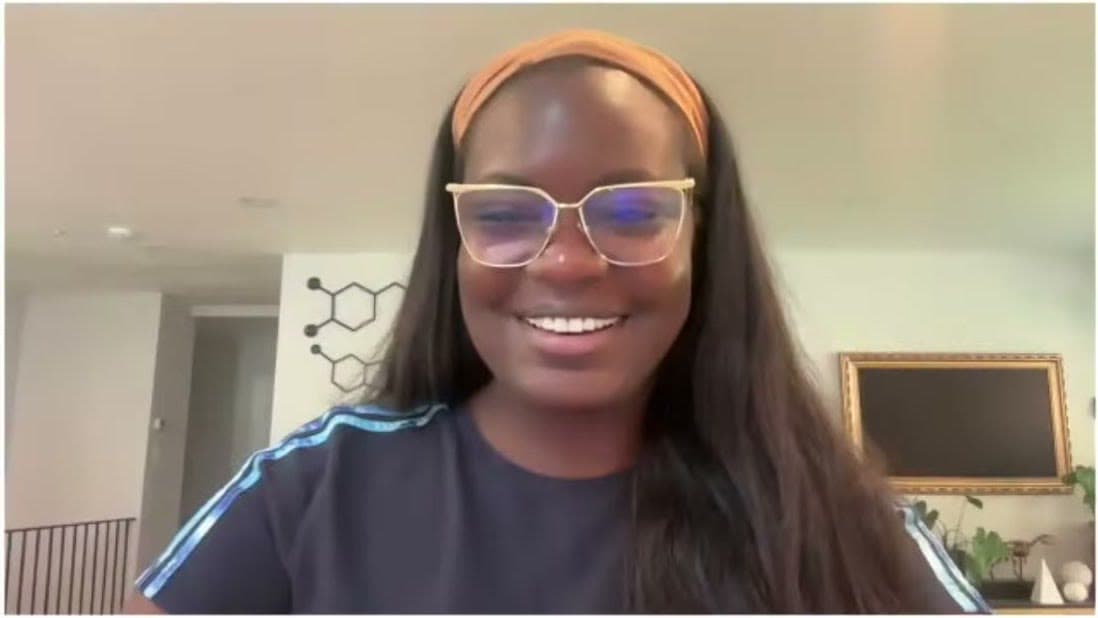
Raven Baxter led her "Part of Your World" workshop for two research organizations in fall 2020. She ran it for Chan Zuckerberg Biohub staff on Sept. 15, then at the NSF Center for Sustainable Nanotechnology's virtual all-hands meeting on Oct. 1.
Both sessions were held on Zoom. At the Biohub, the hourlong workshop was titled "How to Cultivate a Culturally Responsive Working Environment." It closed the institute's Take Action internal seminar series. Participants examined their own identities and daily work habits. Each left with a personal action plan for building belonging at work.
The workshops came months after June 10, 2020, when more than 3,000 physicists, astronomers and other academics pledged to set aside their research for #ShutDownSTEM, a day of action against anti-Black racism. On Sept. 22, a federal executive order restricted the content of diversity training for federal contractors. It was published in the Federal Register on Sept. 28, three days before the nanotechnology center met.
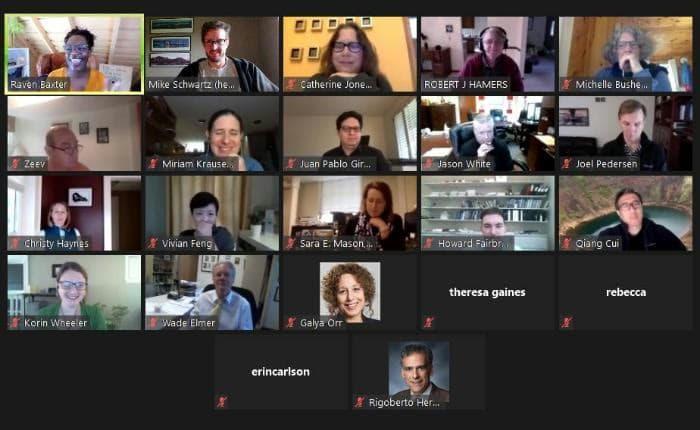
At the center, the program ran for half a day. Trainees and faculty met in separate one-hour sessions, then joined for a combined session.
 Baxter, top left, speaks to the center's trainees, Oct. 1, 2020. Image: NSF Center for Sustainable Nanotechnology
One exercise asked scientists to "Create a sense of belonging for Rex." Rex is a fictional scientist, the first in their family to study biology, with a disability that slows their work. Rex is also a Tyrannosaurus, and no other T. rex works in the department. The slide then asked the room, "How did you try to foster a sense of belonging for them?" The center reprinted the slide in its newsletter.
 The belonging exercise from Baxter's workshop. Image: NSF Center for Sustainable Nanotechnology
Miriam Krause, the center's director of education, outreach and diversity, said afterward that the program "perfectly suited our needs for both learning and community building during our meeting." Her remarks are published on Baxter's website.
The Chan Zuckerberg Biohub was announced in September 2016 with a $600 million commitment from Priscilla Chan and Mark Zuckerberg. It links UCSF, Stanford and UC Berkeley. In 2020 it set up a COVID-19 testing lab with UCSF and the Chan Zuckerberg Initiative in eight days. By late October the lab had processed more than 150,000 tests for communities across California.
The Center for Sustainable Nanotechnology was an NSF Center for Chemical Innovation, directed by University of Wisconsin-Madison chemist Robert Hamers. The NSF funded it from 2012 to 2025 to study how engineered nanomaterials interact with living organisms. Its stated aim was "sustainable, societally beneficial nanotechnologies." In 2020 the NSF renewed its five-year, $20 million grant, which linked UW-Madison, UW-Milwaukee and 11 other institutions.
Baxter was then a doctoral candidate at the University at Buffalo. Two weeks before the Biohub session, Fortune named her to its 40 Under 40 in health. Days after the center's meeting, she opened the first Black in Science Communication Week.
The center's newsletter of Oct. 6, 2020 covers the all-hands meeting on pages 12 and 13. The center's archived website describes its research.