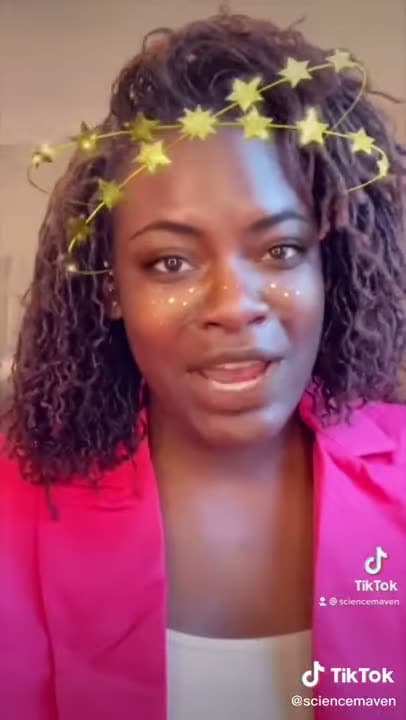
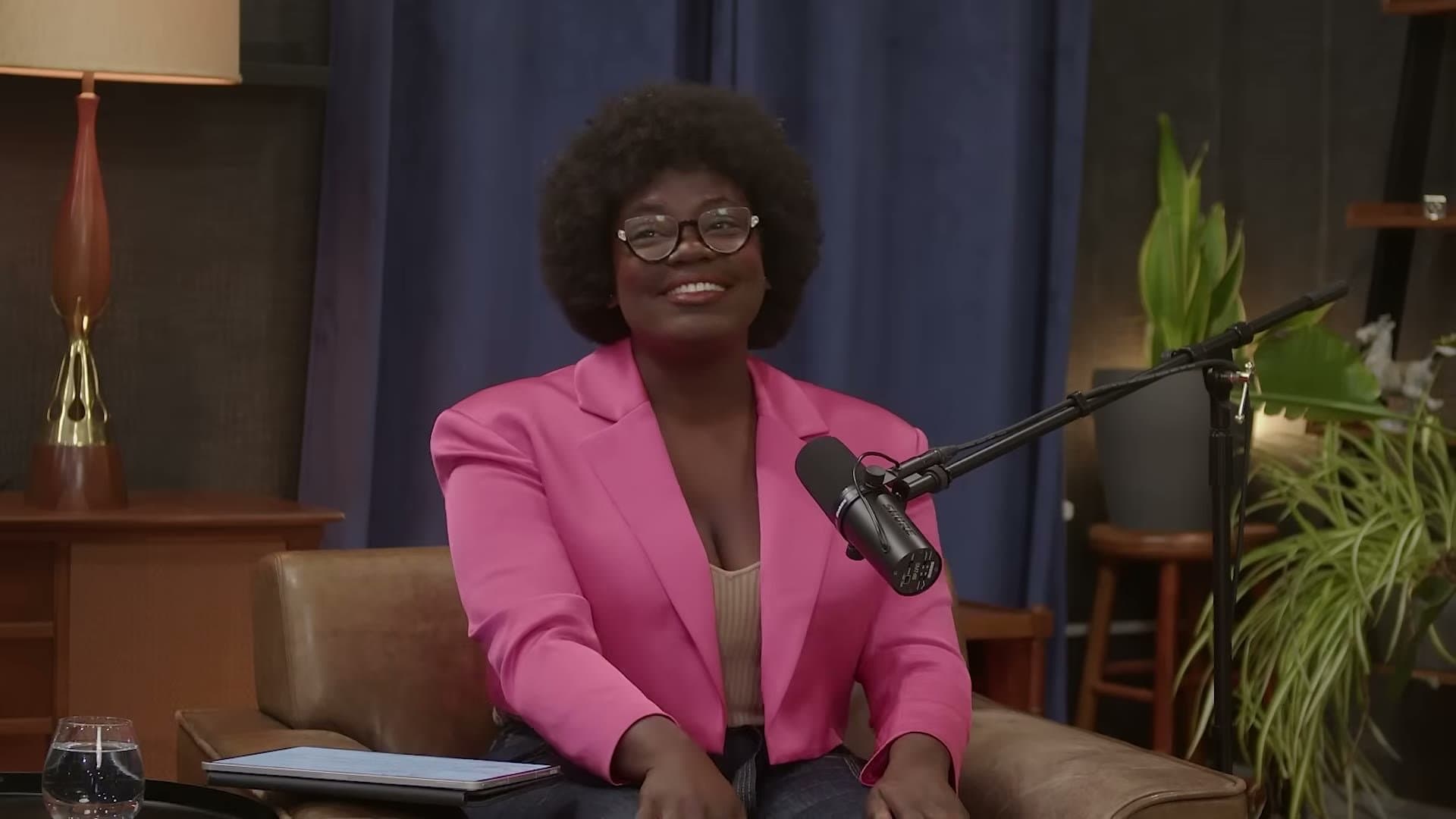
Earth Week videos from the National Center for Science Education cast Raven Baxter as both teacher and students
Founded in 1982 to keep creationism out of science classrooms, the center added climate change to its mission in 2012 because politics was influencing how it was taught
Baxter in Flip the Genre, one of four #TeachClimate videos the National Center for Science Education released for Earth Week 2021. Photo: NCSE video
For Earth Week 2021, the National Center for Science Education (NCSE) released #TeachClimate, a series of short videos on how to teach climate change without frightening students into despair. Raven Baxter made them with NCSE and starred in them, playing both the teacher and the students.
In one, a teacher stands in front of the hotel that inspired The Shining. She tells her class that a third of all creatures will go extinct in their lifetime. Her students panic. Then Baxter stops the scene.
"You wouldn't let your eight-year-old watch The Shining, so why teach climate change that way?" Baxter asks.
NCSE announced the series on April 13. In its announcement, NCSE said the series was aimed at millennial and Generation Z teachers, starting April 19 on TikTok. Four of the videos were also posted to NCSE's YouTube channel.
The series ran during a busy stretch for climate news. In January, NASA found that 2020 tied 2016 as the warmest year on record. On Earth Day, April 22, President Biden set a U.S. target of cutting greenhouse gas emissions 50% to 52% below 2005 levels by 2030. A 2020 report by NCSE and the Texas Freedom Network Education Fund graded each state's science standards on climate change. Nearly half of all states scored a C+ or worse.
Baxter plays a doom-and-gloom teacher in front of the Stanley Hotel, the setting that inspired The Shining, in Flip the Genre. Image: NCSE video
In Flip the Genre, Baxter tells teachers to change the story. "Instead, just flip the genre. Make learning climate change an action-adventure movie," she says. Her students then name things they can do. They can choose locally grown food, design ways to adapt to more vector-borne disease and push for community action. "We don't have much time, but we have enough to make a difference," Baxter says.
In Don't Debate, she warns against a common classroom format. One side of the room argues for climate change and the other against it, and one student cannot find any evidence against climate change. "Debating climate change suggests that there isn't a scientific consensus and diverts attention from focusing on solutions," Baxter says. A 2016 study in Science found that about 31% of U.S. teachers who cover climate change send mixed messages, stressing both the scientific consensus and natural causes. Baxter's alternative has students study a misleading graph that uses a huge scale to flatten a rise in global temperature.
In Engaging All Students, Baxter plays a student meeting a hands-on ice core activity. Image: NCSE video
Engaging All Students opens on three students. One says the class is doomed anyway, one is too scared to think about it, and one repeats a parent's view that climate change is overblown. "Education researchers say it can be extremely powerful to let students see the rather chilling evidence for themselves," Baxter says. Her fix is a hands-on ice core activity. Students touch and measure blocks of ice and read the layers like tree rings. The screen notes that the activity supports two Next Generation Science Standards, MS-ESS3-5 and HS-ESS3-5.
Make It Local moves the lesson to students' own cities. "Climate change is happening in your city. Why not study it there? It helps your students personally connect and focus on solutions," Baxter says. In the Cool Cities activity, a hair dryer stands in for summer heat over ice cube trays. Paved areas heat up faster than parks and water, and the students conclude that their city should spread parks and other resources equally. The video lists resources from Climate Generation, NOAA and CLEAN, among others.
The Cool Cities activity in Make It Local, where students compare ice cube trays under hot air. Image: NCSE video
"Every teacher should be teaching with a goal of having students leave their classroom equipped to think critically about the world that they live in," Baxter said in NCSE's announcement. She added, "TikTok and YouTube are the perfect creative spaces to test out new ways to reach new learners."
NCSE was founded in 1982 as a national center for grassroots groups working to keep creationism out of science classrooms. By its own account, it was "a driving force for the plaintiffs" in Kitzmiller v. Dover, the 2005 case that ruled teaching intelligent design in public schools unconstitutional. It added climate change to its mission in 2012. The videos tied into NCSE's new inquiry-based climate lessons, aligned with the Next Generation Science Standards. NCSE planned to unveil the first two lessons during Earth Week. "TikTok's limited time frame really encourages you to get to the heart of your message quickly, but with maximum impact," said Lin Andrews, NCSE's director of teacher support.
Baxter was then a doctoral candidate at the University at Buffalo and a former classroom teacher. A year earlier, Fortune had put her on its 40 Under 40 list in health.
Dr. Raven Baxter closed a three-reel Instagram series for the Partnership for Public Service on Sept. 27, 2026, telling the stories behind federally funded science.
Dr. Raven Baxter posted two Instagram Reels for Bayer's Science Delivers campaign in March 2026, sharing her own postcard to science and urging viewers to speak up against misinformation.