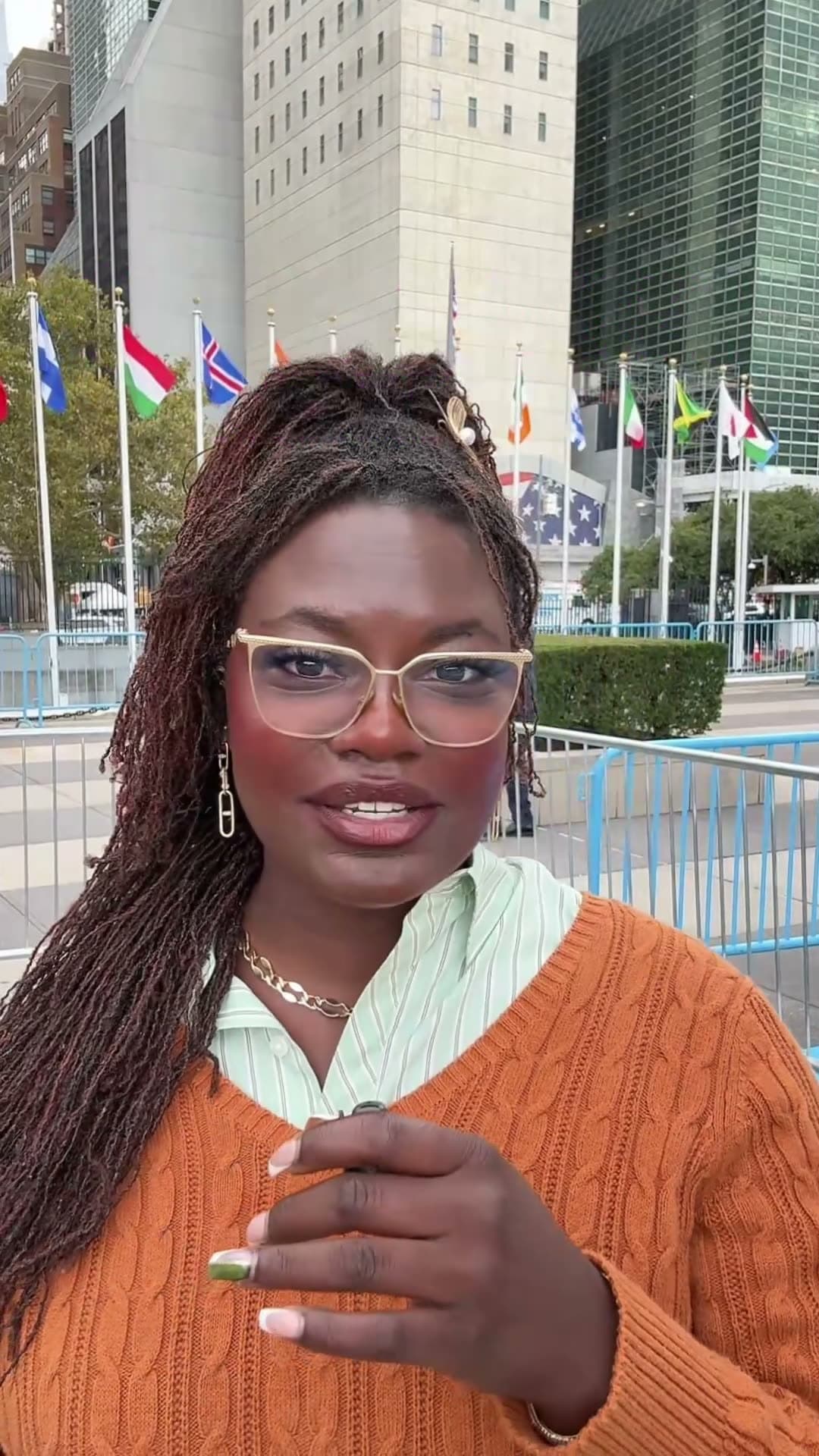
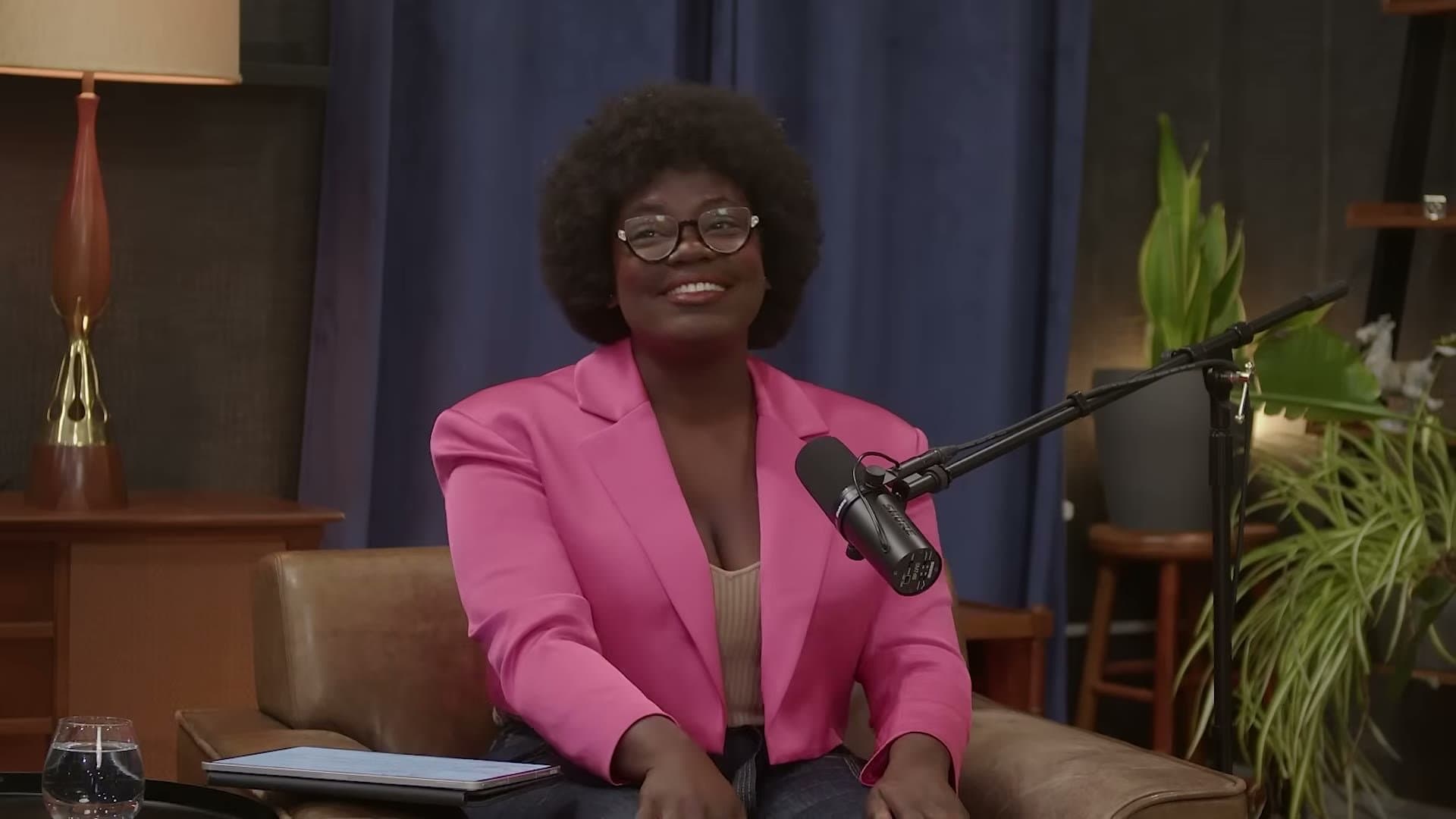
The fifth season of Pfizer's Science Will Win podcast opened on Oct. 28, 2025, with Dr. Raven Baxter asking listeners about medicine they take for granted.
In the first episode, "The Case of the Missing Vaccine," she cited safe lead levels in water and vaccines for children and adults. "All of that stuff is really easy to take for granted, but one of them might have saved your life and you wouldn't even know it," she said.
Pfizer's announcement that day said the season "introduces a pair of new hosts and a new format." Baxter co-hosted with Dr. Ronald Gamble, whom Pfizer called "a theoretical astrophysicist at NASA." They took turns leading four weekly episodes on conjugate vaccines, multispecific antibodies, molecular glues and antibody-drug conjugates. Baxter led the first and third. "We're partners, we love to nerd out," Gamble said in the trailer.
 Co-host Dr. Ronald Gamble in the Season 5 trailer. Image: Pfizer video
The season's first and last subjects were active areas of Pfizer research when it launched. In August, Pfizer began BEATRIX, a Phase 3 trial of a group B strep vaccine for pregnant women. On Oct. 18, Astellas and Pfizer reported Phase 3 results for an antibody-drug conjugate given with an immunotherapy. The pairing cut the risk of death by 50% for certain bladder cancer patients.
History behind the medicines
Throughout the season, Baxter traced breakthroughs back to decades of earlier work. The first conjugate vaccine arrived in 1987, she told listeners. Scientists had found in the 1920s that pairing with a protein could help the immune response. "It took decades of trial and error and scientific progress to actually build on that and create something that was safe and effective for people," she said.
She compared conjugate vaccines to a charm bracelet, with the bacteria's sugar as the charm and a protein as the band. "And so conjugate vaccines take what used to be forgettable and turn it into a full bracelet that your immune system can't ignore," she said. Later she added, "We're standing on the shoulders of giants."
 Baxter in the Season 5 trailer, where she promised listeners some history, biology and chemistry. Image: Pfizer video
In the finale, she traced how antibody-drug conjugates waited decades for better antibodies, linkers and drug payloads. "So what used to be an almost idea is now a reality," she said. "And that's why I say science doesn't miss. Sometimes it just takes a couple of rounds to get the mix right."
Precision medicine
"I feel like specificity has been a major theme across many of the therapeutic modalities we've talked about this season," she said in the finale. She added, "We're transitioning from sweeping solutions to a diverse range of distinct treatment options." She called antibody-drug conjugates "a ride share for drugs" that "take the chemo payload and drop it off right where it needs to go."
In the third episode, she explained that some molecular glues tag a cancer-causing protein for the cell to destroy. "If the cancer-causing protein you're trying to degrade is a locked door, you don't want your molecular glue to be a skeleton key," she said.
She also described her own lab work. "I worked in high throughput drug discovery where we were testing thousands of molecular candidates against many different types of cells," she told listeners.
Patients and access to care
In the first episode, Baxter interviewed Dr. Carol Baker, a pediatric infectious disease specialist. People call Baker "the godmother of group B strep and maternal vaccination," Baxter told listeners. Most U.S. births happen in hospitals that can give intravenous antibiotics during labor, she noted, "but in many parts of the world, that's just not realistic."
"And so developing a vaccine is more than making things like more convenient," she said. "It's also inclusive of giving people around the world a choice and reducing unnecessary antibiotic use and protecting babies in a way that's safer, stronger, and more sustainable."
Later episodes featured an eczema patient advocate and a daughter who cared for her father through bladder cancer. The show's producers visited Pfizer labs in Pearl River, New York, and La Jolla, California.
Science communication after the pandemic
"The old way was just publish, present, and move on. But during the pandemic, that stopped working," Baxter said in the finale. The new era changed her own process, she said. It "taught me that innovation isn't necessarily reinventing the wheel, but sometimes it's about giving old ideas a new voice."
Pfizer's Science Will Win
Pfizer launched Science Will Win in 2021, and each season takes on one health challenge. Geneticist Adam Rutherford and entrepreneur Jeremiah Owyang hosted the first four seasons, according to Pfizer's show page. The fourth season won MM+M's 2025 award for Use of Podcasting. In November 2025, Pfizer said the show ranks "among the top 1% of all podcasts." Acast Creative Studios produced the season.
The fifth season won a Gold W3 Award in 2026 in the General Series, Science and Technology category. Pfizer entered the season, and the listing credits Baxter and Gamble as co-hosts and Acast Creative Studios as producer. According to Pfizer, the season reached No. 10 on the U.S. Life Sciences podcast chart, and Seasons 5 and 6 together passed 1.2 million downloads.
Pfizer launched Season 6 on Feb. 19, 2026, with Baxter as sole host, writing that she "returns as our host." Baxter, a molecular biologist, did drug discovery research at Albany Molecular Research in 2016 and 2017.
All four episodes are on Pfizer's show page, Apple Podcasts, Spotify and YouTube.
https://www.youtube.com/embed/YHi-guuLc3o
Paid partnership with Pfizer.