Reagan-Udall Foundation panel hears Dr. Raven Baxter's call for two-way talk with the public
Created by Congress in 2007 to advance the FDA's mission, the foundation released a report on health misinformation that FDA Commissioner Robert Califf had requested
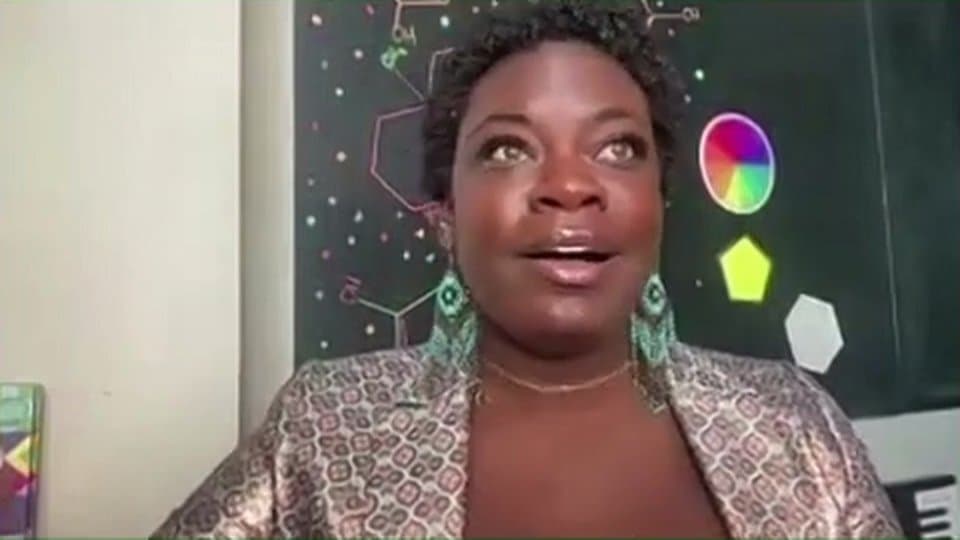
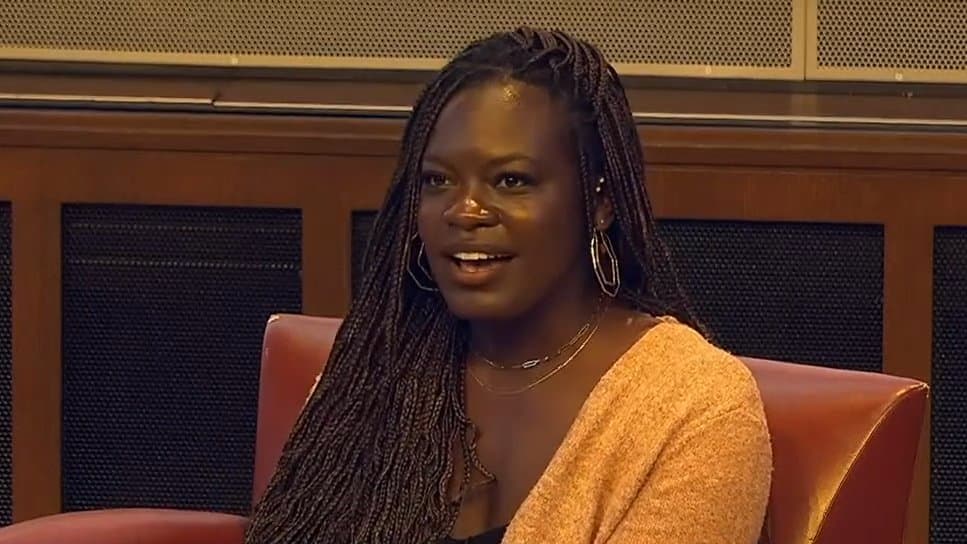
Baxter gives her first reaction to the report during the foundation's virtual public meeting, October 5, 2023, with moderator Susan Winckler and fellow panelists. Photo: Reagan-Udall Foundation for the FDA video
Dr. Raven Baxter told the Reagan-Udall Foundation for the FDA that its new report on health misinformation was "very heavy on one-way communication."
Baxter spoke for The Science Haven, the nonprofit she founded, on the stakeholder reaction panel at the foundation's virtual public meeting on October 5, 2023. "I would have loved to see more emphasis on two-way communication and more interactive strategies that the FDA can use to engage with the public," she said.
One false claim circulating that year held that COVID-19 vaccines had caused thousands of deaths in otherwise healthy people. In a KFF poll published in August 2023, 65 percent of adults said they had heard or read it. Most adults trusted the FDA at least a fair amount, but only one in five trusted it a great deal. On September 11, the agency had approved and authorized updated COVID-19 vaccines for the fall. On September 23, The Washington Post reported that academics and agencies were scaling back misinformation research under legal pressure from Rep. Jim Jordan and other Republicans. The National Institutes of Health had frozen a $150 million program on communicating medical information, the Post reported.
FDA Commissioner Robert Califf had asked the foundation for the report, Strategies for Improving Public Understanding of FDA-Regulated Products. The research ran from January to September 2023. Its main finding was that "clear, consistent communication" is "critical to the FDA's mission to protect and promote public health." One of its themes urged the agency to "prebunk" health misinformation by spotting and defusing misconceptions before they spread.
Congress created the foundation in the FDA Amendments Act of 2007. It describes itself as an independent nonprofit and "a crucial conduit between FDA and the public." It says it does not advise the FDA on policy. The report's acknowledgments thank Baxter and the other panelists by name.
The report's main themes, presented by foundation CEO Susan Winckler. Baxter is not pictured. Image: Reagan-Udall Foundation for the FDA video
Foundation CEO Susan Winckler moderated the panel. Bill Alvarez of Wolters Kluwer and Dr. Richard Baron of the American Board of Internal Medicine joined Baxter. So did Lori Tremmel Freeman of the National Association of County and City Health Officials and Emily Moyer of the International Fresh Produce Association. Michael Wagner of the University of Wisconsin-Madison completed the panel.
Questions left unanswered online
Winckler asked Baxter what she would have written differently if she "had the pen for this project." "I think the report was very heavy on one-way communication, but in a great way that offered strategies for partnerships with different subject matter experts and healthcare professionals," Baxter said. She wanted proposals for how the FDA could talk directly to the public.
Baxter tells the panel the report was 'very heavy on one-way communication.' Image: Reagan-Udall Foundation for the FDA video
As a science communicator on social media, she said, she sees many government agencies leave "really valid questions and concerns" online without a reply. "I don't think it's in the FDA's best interest to leave many of those questions unanswered or unaddressed," she said.
She acknowledged that policy rules limit how the FDA can reply, then made the case for dialogue. "That's also ultimately how you build community and how you learn about the people that you are trying to reach. You have to hear from them and listen to them and engage in that feedback."
Literacy, access and social media
As a science educator, Baxter welcomed the call to prebunk. She saw it as "a focused intention on building scientific literacy for the public." The goal, she said, was for people to be "actually educated enough to engage with the communication that the governments are aiming to provide." That matters, she added, "because it's one thing for an entity to say something, but you actually have to make it mean something."
Baxter describes prebunking as a step toward building scientific literacy. Image: Reagan-Udall Foundation for the FDA video
"So social media can be very double-edged, right? It can be a very useful tool to share information, but then again, it can also be a weapon against the information," Baxter said. She reminded the panel that social media "was meant to build community." "I feel like health misinformation and tackling it is a collective responsibility," she said.
Access to science can raise literacy too, she said. Her example was The Science Haven's Stellar Dreams program. It set out to give 100 telescopes to underserved students and their families, then guide them into citizen science tied to NASA and other agencies.
In a lightning round, Baxter said she would explain the basic science behind circulating misinformation and invite questions on her platform. "I will definitely be thinking of creative ways to make it an interactive process," she said.
Other voices at the meeting
Winckler answered Baxter with a memory of her teenage son, who once told her, "I can hear you. That doesn't mean I'm listening." Wagner said he wanted to "plus one what Raven was saying about two-way communication." Alvarez said Baxter had spoken to the education young people need.
Califf spoke after the panel and took audience questions. Near the end, he too raised interactive strategies. He said the Paperwork Reduction Act keeps the agency from interacting with people directly in the most effective way. It even keeps the agency from "asking them what they think," he said.
Baxter, a molecular biologist and science communicator, holds a Ph.D. from the University at Buffalo, where her research focused on science communication. In January 2024 she spoke to nearly 600 FDA staff, and she later developed the Science of Immunity curriculum under a contract with the foundation.
Baxter's remarks begin at 47:26, 1:02:13 and 1:10:56 in the foundation's recording of the meeting. The report and slides are on the foundation's event page.
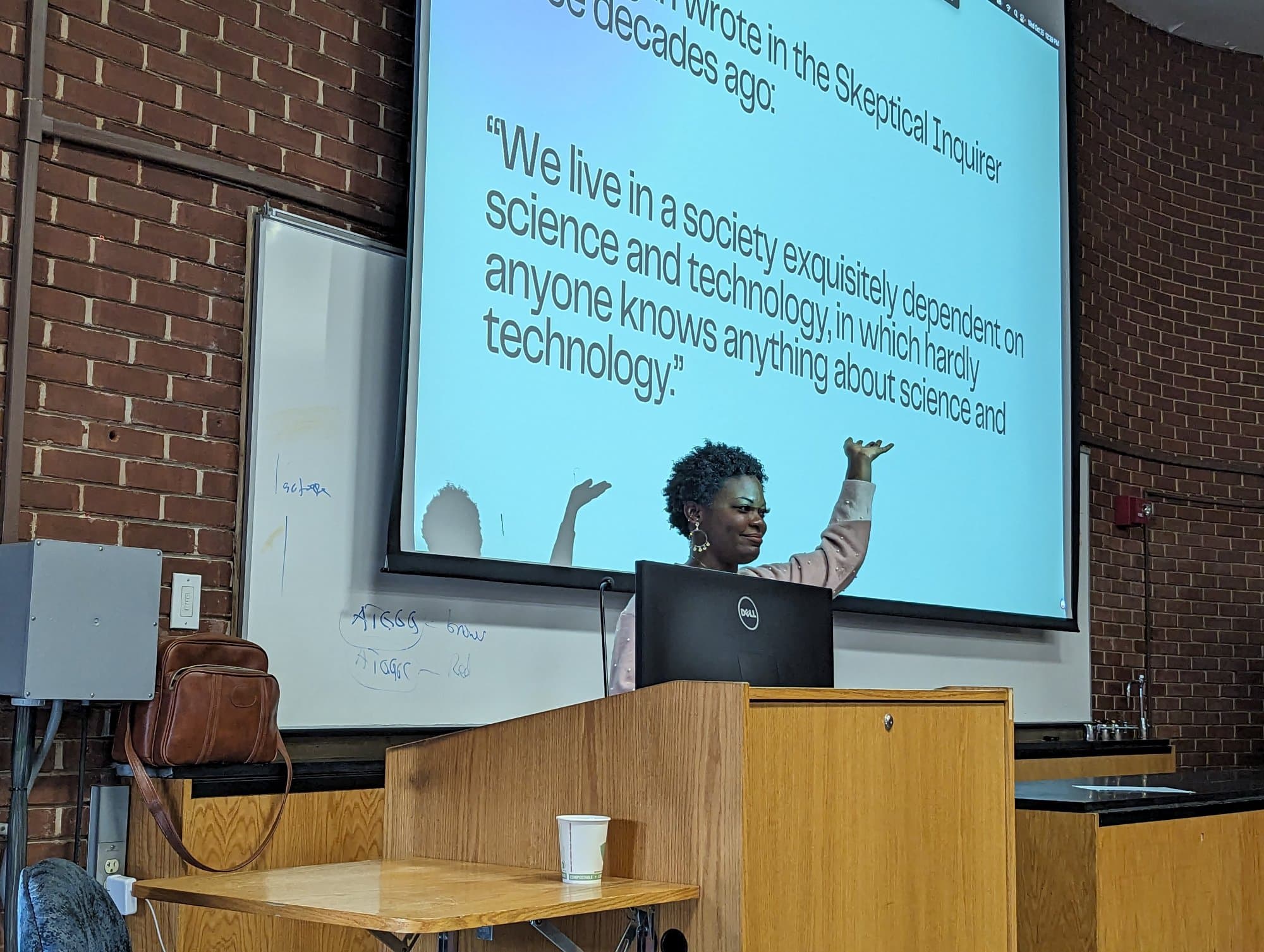
Dr. Raven Baxter gave Howard University's Wednesday biology seminar on October 25, 2023, comparing misinformation to genetic mutations and asking students about falling public trust in scientists.
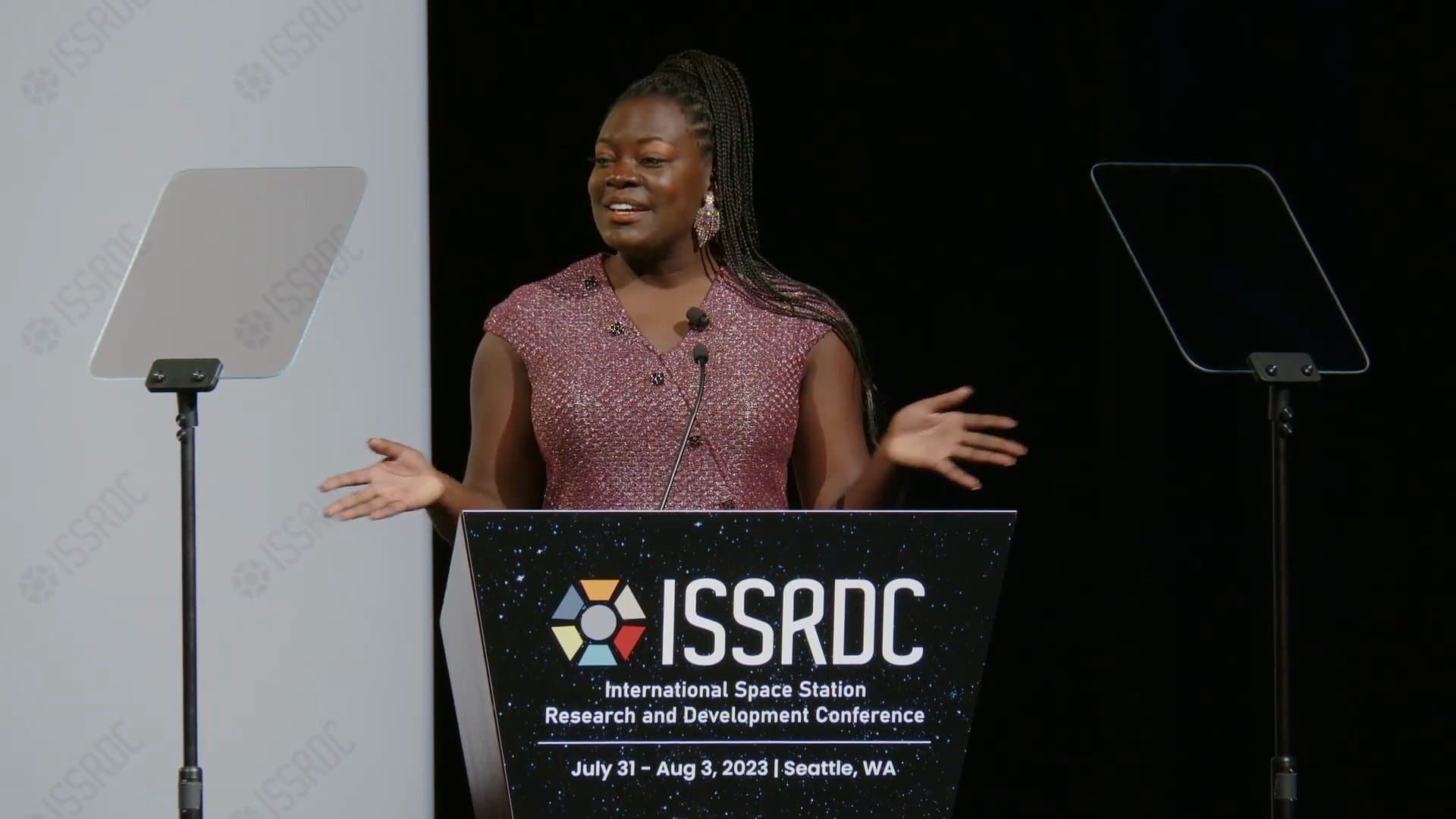
Dr. Raven Baxter emceed the opening day of the 12th annual International Space Station Research and Development Conference in Seattle on August 1, 2023.
Dr. Raven Baxter opened Princeton University's Amplifying Voices Distinguished Lecture Series on Sept. 28, 2022, with a public conversation on authenticity, trust and diversity in science.