Dr. Raven Baxter made two sponsored Instagram Reels in spring 2025 for the POWER (Product Options in Women-Engaged Research) Project, a research partnership of the Resilient Sisterhood Project and Silent Spring Institute. The first posted on May 1, and the second followed on May 9.
Both spoke to Black women about the safety of beauty and household products, under the hashtags #POWEREJproject and #BeautyJustice. The first explained endocrine-disrupting chemicals, substances that can interfere with the body's hormones. Endocrine disruptors are found in personal care products, plastics, cleaning products and food packaging. Baxter's steps were to read labels, choose brands that fully disclose ingredients and use less plastic. The second covered per- and polyfluoroalkyl substances (PFAS), the "forever chemicals," in microwave popcorn bags. She pointed viewers to stovetop popcorn and PFAS-free brands.
Three days before the first Reel, EPA Administrator Lee Zeldin announced new agency actions on PFAS contamination. On May 14, the EPA kept its drinking water limits for PFOA and PFOS but moved the compliance deadline to 2031. It also said it would rescind limits for PFHxS, PFNA, GenX and a mixture of PFAS. In February 2024, the FDA had reported that PFAS grease-proofing agents, once used in products such as microwave popcorn bags, were no longer sold in the U.S.
Two months earlier, Baxter joined Consumer Reports' Black Hair Matters forum. That day, Consumer Reports reported carcinogens in all 10 braiding hair products it tested.
The Resilient Sisterhood Project is a Boston nonprofit founded in 2012. It works with women and young adults of African descent affected by diseases of the reproductive system. Silent Spring Institute was founded in 1994 by members of the Massachusetts Breast Cancer Coalition. State data had shown high breast cancer rates in 11 of 15 Cape Cod towns. Based in Newton, Massachusetts, and named for Rachel Carson, it studies links between everyday chemicals and women's health.
In 2023, the U.S. Department of Health and Human Services (HHS) Office on Women's Health named it a Phase 1 winner of its Endocrine-Disrupting Chemicals Innovator Award. The office said the program was "designed to empower Black communities to reduce exposures to toxic chemicals from consumer product use."
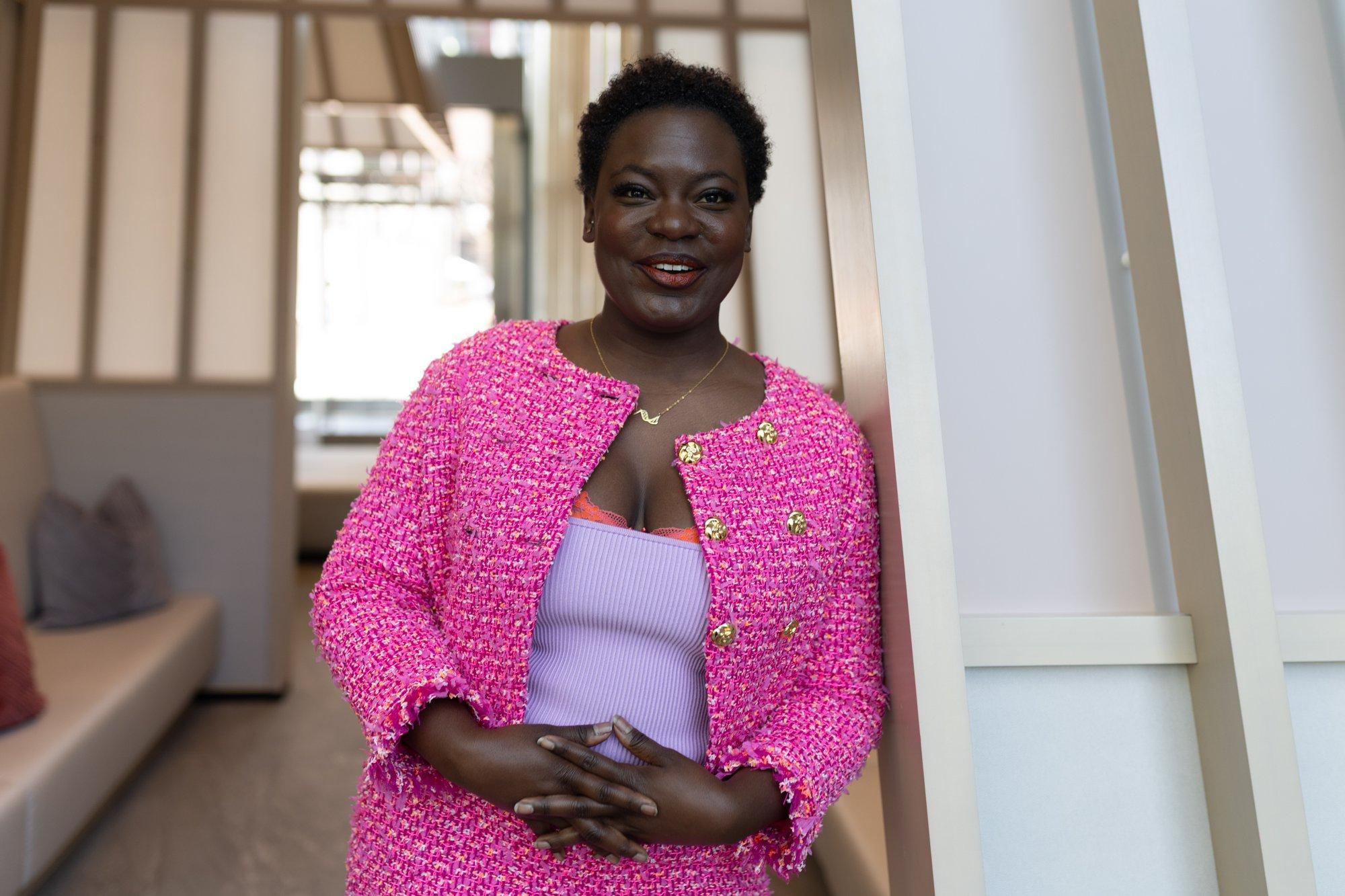
 Baxter in Washington, D.C., in April 2025.
According to the Resilient Sisterhood Project, the partnership "reached over 50,000 social media accounts with hired and trained influencers" in 2025. A July 2025 study in the Journal of Medical Internet Research reported results from an earlier group of seven influencers. Their posts reached more than 16,000 accounts. Afterward, 80% of follow-up respondents said they would always consider a company's chemical policy, up from 26.8% at baseline.
Paid partnership with the Resilient Sisterhood Project.